

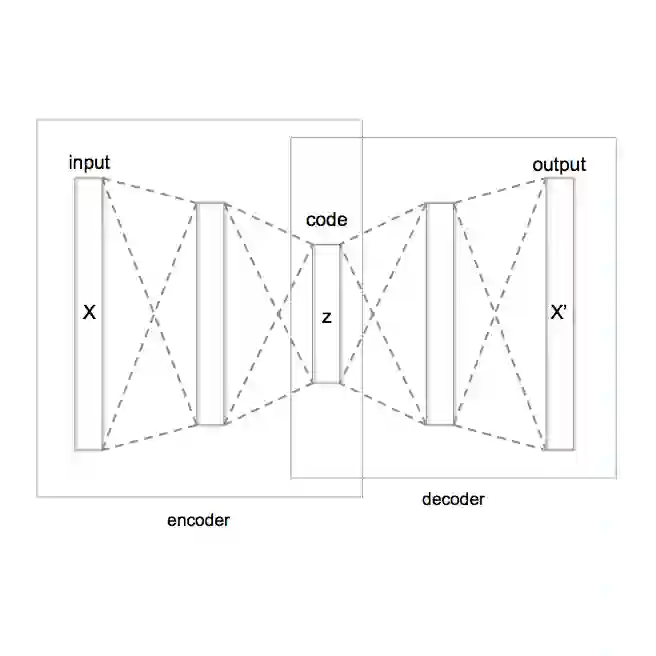
We propose a variational autoencoder (VAE) approach for parameter estimation in nonlinear mixed-effects models based on ordinary differential equations (NLME-ODEs) using longitudinal data from multiple subjects. In moderate dimensions, likelihood-based inference via the stochastic approximation EM algorithm (SAEM) is widely used, but it relies on Markov Chain Monte-Carlo (MCMC) to approximate subject-specific posteriors. As model complexity increases or observations per subject are sparse and irregular, performance often deteriorates due to a complex, multimodal likelihood surface which may lead to MCMC convergence difficulties. We instead estimate parameters by maximizing the evidence lower bound (ELBO), a regularized surrogate for the marginal likelihood. A VAE with a shared encoder amortizes inference of subject-specific random effects by avoiding per-subject optimization and the use of MCMC. Beyond pointwise estimation, we quantify parameter uncertainty using observed-information-based variance estimator and verify that practical identifiability of the model parameters is not compromised by nuisance parameters introduced in the encoder. We evaluate the method in three simulation case studies (pharmacokinetics, humoral response to vaccination, and TGF-$β$ activation dynamics in asthmatic airways) and on a real-world antibody kinetics dataset, comparing against SAEM baselines.
翻译:本文提出一种基于变分自编码器(VAE)的参数估计方法,用于处理利用多受试者纵向数据建立的非线性混合效应常微分方程模型(NLME-ODEs)。在中等维度下,基于随机近似EM算法(SAEM)的似然推断被广泛采用,但该方法依赖马尔可夫链蒙特卡洛(MCMC)来近似受试者特异性后验分布。随着模型复杂度增加或每个受试者的观测数据呈现稀疏性与不规则性,由于复杂多峰的似然曲面可能导致MCMC收敛困难,算法性能往往下降。我们转而通过最大化证据下界(ELBO)——边际似然的正则化代理目标——来估计参数。采用共享编码器的VAE通过避免逐受试者优化和MCMC的使用,实现了受试者特异性随机效应的摊销推断。除点估计外,我们利用基于观测信息的方差估计量量化参数不确定性,并验证模型参数的实际可辨识性不会因编码器引入的冗余参数而受损。我们在三个仿真案例研究(药代动力学、疫苗接种体液免疫应答、哮喘气道TGF-β激活动力学)和一个真实世界抗体动力学数据集上评估了该方法,并与SAEM基线进行了比较。




相关内容



 微信扫码咨询专知VIP会员