

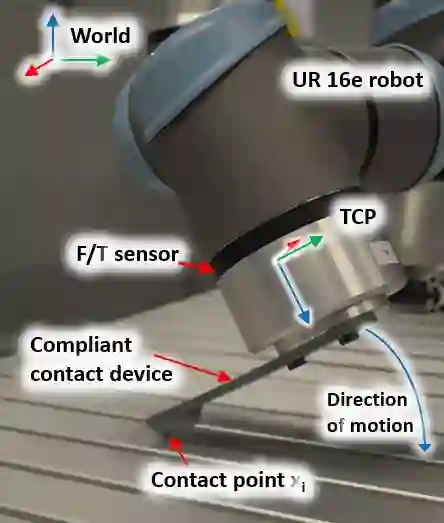
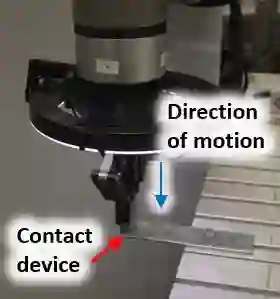
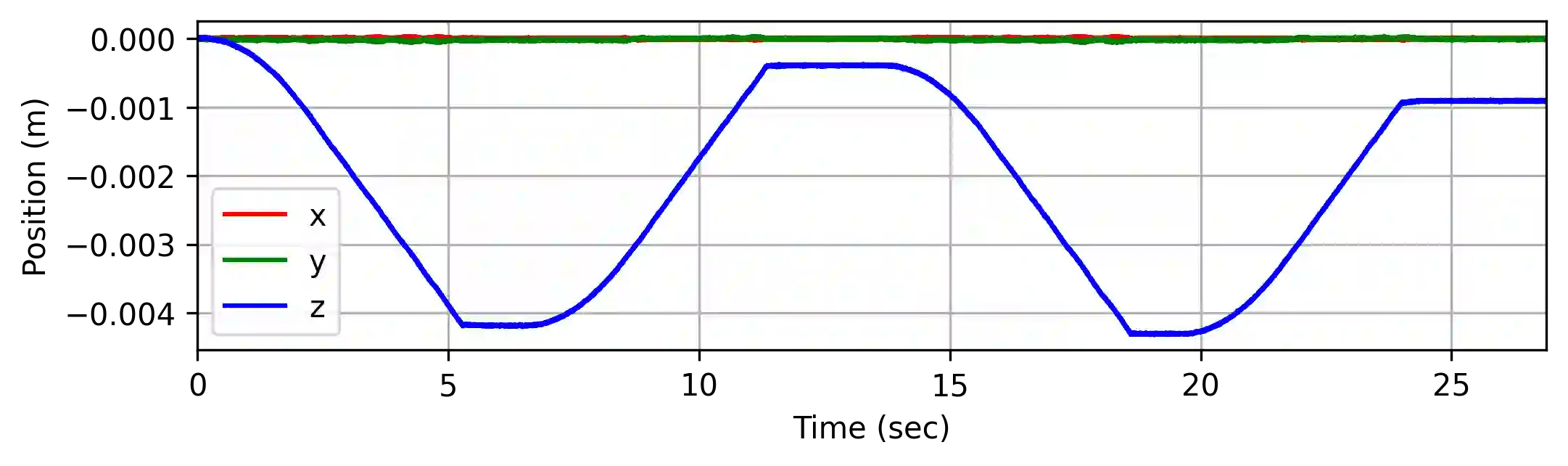
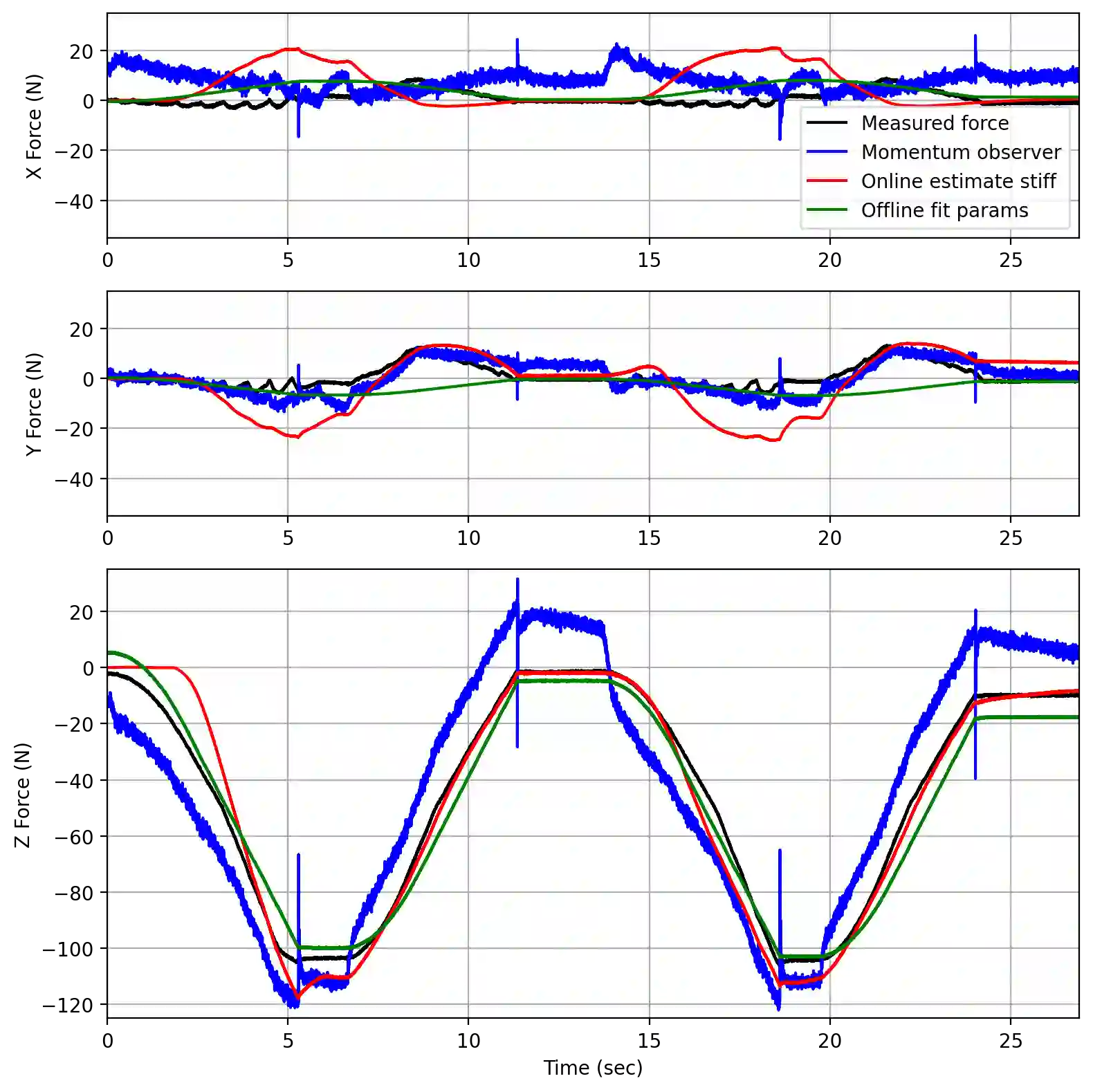
In contact-rich manipulation, the robot dynamics are coupled with an environment that has application-specific dynamic properties (stiffness, inertia) and geometry (contact normal). Knowledge of these environmental parameters can improve control and monitoring, but they are often unobserved and may vary, either online or between task instances. Observers, such as the extended Kalman filter, can be used to estimate these parameters, but such model-based techniques can require too much engineering work to scale up to complex environments, such as multi-point contact. To accelerate environment modeling, we propose environment primitives: parameterized environment dynamics that can be connected in parallel and are expressed in an automatic differentiation framework. This simplifies offline gradient-based optimization to fit model parameters and linearization of the coupled dynamics for an observer. This method is implemented for stiffness contact models, allowing the fitting of contact geometry and stiffness offline or their online estimation by an extended Kalman filter. This method is applied to a collaborative robot, estimating external force, contact stiffness, and contact geometry from the motor position and current. The estimates of external force and stiffness are compared with a momentum observer and direct force measurements.
翻译:在接触密集的操作中,机器人动力学与具有特定应用动态特性(刚度、惯性)和几何特性(接触法向)的环境耦合。这些环境参数的知识可以改善控制与监测,但它们通常不可观测,并且可能在在线过程中或任务实例之间发生变化。虽然可以使用扩展卡尔曼滤波器等观测器来估计这些参数,但此类基于模型的技术需要大量的工程工作才能扩展到复杂环境(如多点接触)。为加速环境建模,我们提出环境基元:一种可并行连接并在自动微分框架中表达的参数化环境动力学。这简化了基于梯度的离线优化以拟合模型参数,以及为观测器对耦合动力学进行线性化。该方法针对刚度接触模型实现,允许离线拟合接触几何与刚度,或通过扩展卡尔曼滤波器进行在线估计。该方法应用于协作机器人,从电机位置和电流中估计外力、接触刚度和接触几何。外力和刚度的估计结果与动量观测器及直接力测量进行了比较。




相关内容


 微信扫码咨询专知VIP会员