

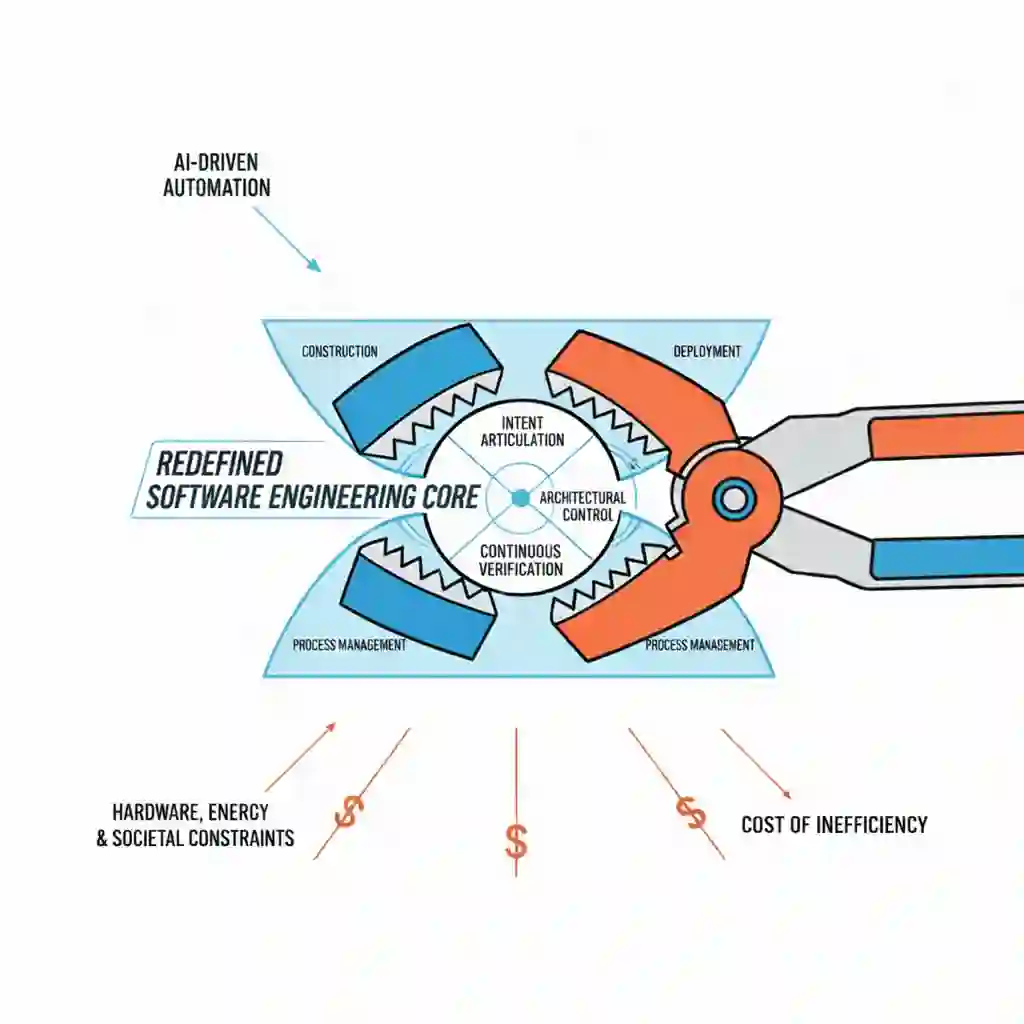
Software Engineering (SE) faces simultaneous pressure from AI automation (reducing code production costs) and hardware-energy constraints (amplifying failure costs). We position that SE must redefine itself around human discernment-intent articulation, architectural control, and verification-rather than code construction. This shift introduces accountability collapse as a central risk and requires fundamental changes to research priorities, educational curricula, and industrial practices. We argue that Software Engineering, as traditionally defined around code construction and process management, is no longer sufficient. Instead, the discipline must be redefined around intent articulation, architectural control, and systematic verification. This redefinition shifts Software Engineering from a production-oriented field to one centered on human judgment under automation, with profound implications for research, practice, and education.
翻译:软件工程(SE)正同时面临来自AI自动化(降低代码生产成本)和硬件-能源约束(放大故障成本)的双重压力。我们认为,SE必须围绕人类判断-意图表达、架构控制和验证(而非代码构建)进行自我重新定义。这一转变引入了责任崩溃作为核心风险,并要求对研究重点、教育课程和工业实践进行根本性改变。我们认为,传统上围绕代码构建和过程管理定义的软件工程已不再足够。相反,该学科必须围绕意图表达、架构控制和系统化验证进行重新定义。这一重新定义将软件工程从以生产为导向的领域,转变为以自动化背景下的人类判断为中心的领域,并对研究、实践和教育产生深远影响。




相关内容





 微信扫码咨询专知VIP会员