

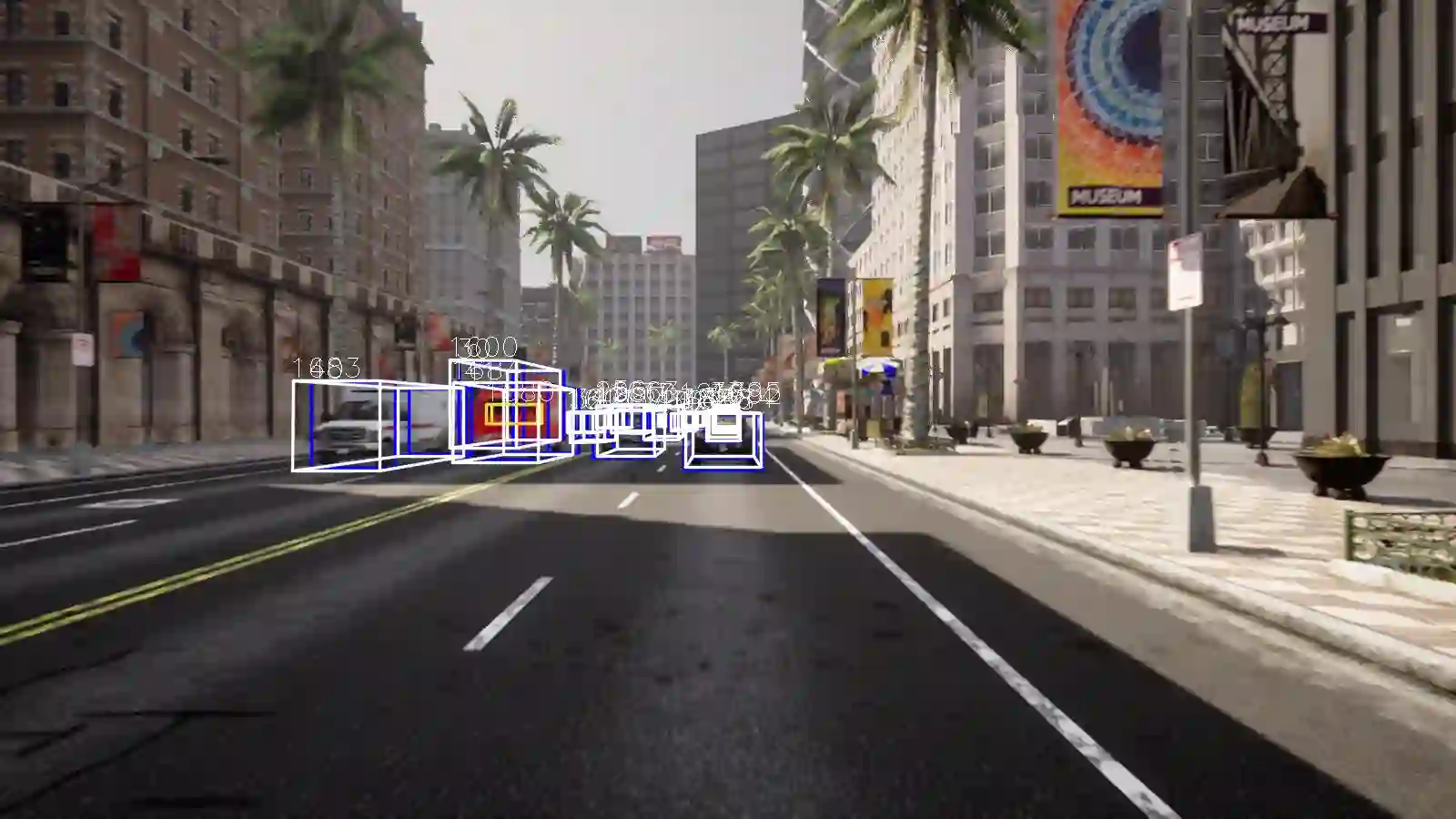
The performance and safety of autonomous vehicles (AVs) deteriorates under adverse environments and adversarial actors. The investment in multi-sensor, multi-agent (MSMA) AVs is meant to promote improved efficiency of travel and mitigate safety risks. Unfortunately, minimal investment has been made to develop security-aware MSMA sensor fusion pipelines leaving them vulnerable to adversaries. To advance security analysis of AVs, we develop the Multi-Agent Security Testbed, MAST, in the Robot Operating System (ROS2). Our framework is scalable for general AV scenarios and is integrated with recent multi-agent datasets. We construct the first bridge between AVstack and ROS and develop automated AV pipeline builds to enable rapid AV prototyping. We tackle the challenge of deploying variable numbers of agent/adversary nodes at launch-time with dynamic topic remapping. Using this testbed, we motivate the need for security-aware AV architectures by exposing the vulnerability of centralized multi-agent fusion pipelines to (un)coordinated adversary models in case studies and Monte Carlo analysis.
翻译:自动驾驶汽车(AV)在恶劣环境和对抗性行为下的性能与安全性会下降。投入多传感器、多智能体(MSMA)自动驾驶技术旨在提升出行效率并降低安全风险。然而,针对开发具有安全意识的MSMA传感器融合管线投入甚微,导致其易受对手攻击。为推进自动驾驶汽车的安全分析,我们基于机器人操作系统(ROS2)开发了多智能体安全测试平台MAST。该框架可扩展至通用自动驾驶场景,并集成了最新多智能体数据集。我们首次构建了AVstack与ROS之间的桥梁,并开发了自动化AV管线构建流程以实现快速原型设计。通过动态主题重映射技术,我们解决了启动时按需部署可变数量的智能体/对手节点这一挑战。借助该测试平台,我们通过案例研究与蒙特卡洛分析揭示了集中式多智能体融合管线在(非)协同对手模型下的脆弱性,从而论证了开发安全感知型AV架构的必要性。




相关内容



 微信扫码咨询专知VIP会员