

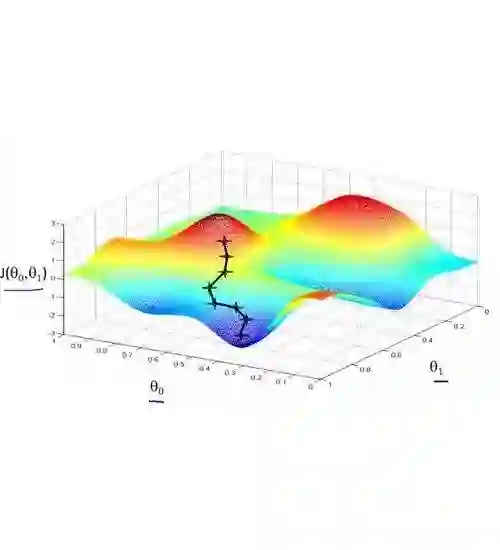
One of the most common problem-solving heuristics is by analogy. For a given problem, a solver can be viewed as a strategic walk on its fitness landscape. Thus if a solver works for one problem instance, we expect it will also be effective for other instances whose fitness landscapes essentially share structural similarities with each other. However, due to the black-box nature of combinatorial optimization, it is far from trivial to infer such similarity in real-world scenarios. To bridge this gap, by using local optima network as a proxy of fitness landscapes, this paper proposed to leverage graph data mining techniques to conduct qualitative and quantitative analyses to explore the latent topological structural information embedded in those landscapes. By conducting large-scale empirical experiments on three classic combinatorial optimization problems, we gain concrete evidence to support the existence of structural similarity between landscapes of the same classes within neighboring dimensions. We also interrogated the relationship between landscapes of different problem classes.
翻译:最常见的解决问题启发式方法之一是通过类比。对于给定问题,求解器可被视为在其适应度景观上的策略性行走。因此,若求解器适用于某一问题实例,我们预期它也将适用于其他适应度景观在本质上共享结构相似性的实例。然而,由于组合优化的黑箱特性,在实际场景中推断此类相似性绝非易事。为弥合这一差距,本文提出以局部最优网络作为适应度景观的代理,利用图数据挖掘技术进行定性与定量分析,探索潜藏于这些景观中的拓扑结构信息。通过对三个经典组合优化问题开展大规模实证实验,我们获得了具体证据,支持同一问题类别的景观在相邻维度间存在结构相似性。我们还审视了不同问题类别景观之间的关系。




相关内容




 微信扫码咨询专知VIP会员