We show that convex-concave Lipschitz stochastic saddle point problems (also known as stochastic minimax optimization) can be solved under the constraint of $(\epsilon,\delta)$-differential privacy with \emph{strong (primal-dual) gap} rate of $\tilde O\big(\frac{1}{\sqrt{n}} + \frac{\sqrt{d}}{n\epsilon}\big)$, where $n$ is the dataset size and $d$ is the dimension of the problem. This rate is nearly optimal, based on existing lower bounds in differentially private stochastic optimization. Specifically, we prove a tight upper bound on the strong gap via novel implementation and analysis of the recursive regularization technique repurposed for saddle point problems. We show that this rate can be attained with $O\big(\min\big\{\frac{n^2\epsilon^{1.5}}{\sqrt{d}}, n^{3/2}\big\}\big)$ gradient complexity, and $O(n)$ gradient complexity if the loss function is smooth. As a byproduct of our method, we develop a general algorithm that, given a black-box access to a subroutine satisfying a certain $\alpha$ primal-dual accuracy guarantee with respect to the empirical objective, gives a solution to the stochastic saddle point problem with a strong gap of $\tilde{O}(\alpha+\frac{1}{\sqrt{n}})$. We show that this $\alpha$-accuracy condition is satisfied by standard algorithms for the empirical saddle point problem such as the proximal point method and the stochastic gradient descent ascent algorithm. Further, we show that even for simple problems it is possible for an algorithm to have zero weak gap and suffer from $\Omega(1)$ strong gap. We also show that there exists a fundamental tradeoff between stability and accuracy. Specifically, we show that any $\Delta$-stable algorithm has empirical gap $\Omega\big(\frac{1}{\Delta n}\big)$, and that this bound is tight. This result also holds also more specifically for empirical risk minimization problems and may be of independent interest.


翻译:我们证明凸-凹Lipschitz随机鞍点问题(也称为随机极小极大优化)可在$(\epsilon,\delta)$-差分隐私约束下求解,其\emph{强(原始-对偶)间隙}率达到$\tilde O\big(\frac{1}{\sqrt{n}} + \frac{\sqrt{d}}{n\epsilon}\big)$,其中$n$为数据集规模,$d$为问题维度。基于现有差分隐私随机优化的下界,该速率接近最优。具体而言,我们通过针对鞍点问题重新设计的递归正则化技术的新颖实现与分析,证明了强间隙的紧上界。我们表明,该速率可在$O\big(\min\big\{\frac{n^2\epsilon^{1.5}}{\sqrt{d}}, n^{3/2}\big\}\big)$的梯度复杂度下达到,且若损失函数光滑,则梯度复杂度可降至$O(n)$。作为方法的副产品,我们提出通用算法:给定一个黑盒子访问满足关于经验目标的特定$\alpha$原始-对偶精度保证的子程序,该算法可得到随机鞍点问题具有$\tilde{O}(\alpha+\frac{1}{\sqrt{n}})$强间隙的解。我们证明此$\alpha$精度条件可通过经验鞍点问题的标准算法(如近端点方法和随机梯度下降上升算法)满足。进一步,我们证明即使对于简单问题,算法也可能具有零弱间隙但承受$\Omega(1)$强间隙。我们还证明稳定性与准确性之间存在根本性权衡:任何$\Delta$-稳定算法均具有经验间隙$\Omega\big(\frac{1}{\Delta n}\big)$,且该界为紧的。该结果同样适用于经验风险最小化问题,并可能具有独立研究价值。


0
下载
关闭预览

相关内容

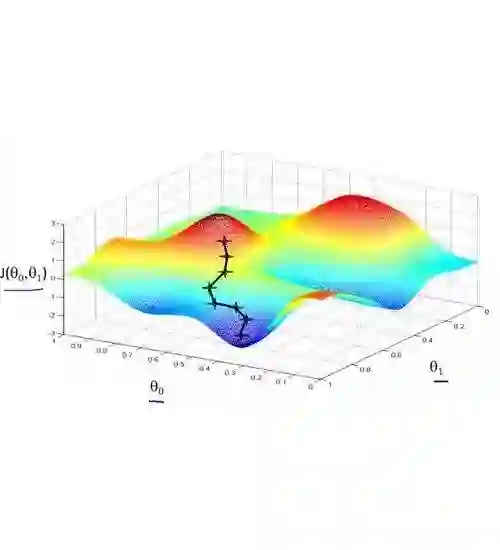
在数学中,鞍点或极大极小点是函数图形表面上的一点,其正交方向上的斜率(导数)都为零,但它不是函数的局部极值。鞍点是在某一轴向(峰值之间)有一个相对最小的临界点,在交叉轴上有一个相对最大的临界点。
不可错过!《机器学习100讲》课程,UBC Mark Schmidt讲授
专知会员服务
76+阅读 · 2022年6月28日
专知会员服务
78+阅读 · 2021年3月16日
机器学习组合优化
专知会员服务
111+阅读 · 2021年2月16日
Linux导论,Introduction to Linux,96页ppt
专知会员服务
82+阅读 · 2020年7月26日
专知会员服务
162+阅读 · 2020年1月16日
强化学习最新教程,17页pdf
专知会员服务
182+阅读 · 2019年10月11日
VCIP 2022 Call for Demos
CCF多媒体专委会
1+阅读 · 2022年6月6日
强化学习三篇论文 避免遗忘等
CreateAMind
20+阅读 · 2019年5月24日
Hierarchically Structured Meta-learning
CreateAMind
27+阅读 · 2019年5月22日
Transferring Knowledge across Learning Processes
CreateAMind
29+阅读 · 2019年5月18日
强化学习的Unsupervised Meta-Learning
CreateAMind
18+阅读 · 2019年1月7日
Unsupervised Learning via Meta-Learning
CreateAMind
44+阅读 · 2019年1月3日
A Technical Overview of AI & ML in 2018 & Trends for 2019
待字闺中
18+阅读 · 2018年12月24日
disentangled-representation-papers
CreateAMind
26+阅读 · 2018年9月12日
【论文】变分推断(Variational inference)的总结
机器学习研究会
39+阅读 · 2017年11月16日
国家自然科学基金
0+阅读 · 2014年12月31日
国家自然科学基金
0+阅读 · 2013年12月31日
国家自然科学基金
0+阅读 · 2012年12月31日
国家自然科学基金
0+阅读 · 2012年12月31日
国家自然科学基金
0+阅读 · 2011年12月31日
国家自然科学基金
0+阅读 · 2011年12月31日
国家自然科学基金
0+阅读 · 2011年12月31日
国家自然科学基金
0+阅读 · 2009年12月31日
国家自然科学基金
0+阅读 · 2008年12月31日
Arxiv
11+阅读 · 2022年9月1日
Arxiv
34+阅读 · 2022年2月15日
VIP会员
最新内容
无人机自主控制与人工智能:系统性综述
专知会员服务
2+阅读 · 59分钟前
巡飞弹与反无人机系统——现代战场的两大支柱
专知会员服务
1+阅读 · 今天6:54
《打造“黄金舰队”》57页报告
专知会员服务
1+阅读 · 今天6:52
《北约数字教官网络发展路径》128页报告
专知会员服务
1+阅读 · 今天6:33
ECCV 2026 | MIMFlow:MIM与归一化流统一图像生成
专知会员服务
6+阅读 · 6月25日
网状网络及其在军事领域的运用
专知会员服务
7+阅读 · 6月25日
无美国参与的欧洲战争方式(万字长文)
专知会员服务
8+阅读 · 6月25日
《国防领域敏感性分析白皮书》
专知会员服务
9+阅读 · 6月25日
综述 | 从问答到任务完成:Agent系统与Harness设计
Agentic RL:框架、实践与长程智能体训练
专知会员服务
10+阅读 · 6月24日
相关VIP内容
不可错过!《机器学习100讲》课程,UBC Mark Schmidt讲授
专知会员服务
76+阅读 · 2022年6月28日
专知会员服务
78+阅读 · 2021年3月16日
机器学习组合优化
专知会员服务
111+阅读 · 2021年2月16日
Linux导论,Introduction to Linux,96页ppt
专知会员服务
82+阅读 · 2020年7月26日
专知会员服务
162+阅读 · 2020年1月16日
强化学习最新教程,17页pdf
专知会员服务
182+阅读 · 2019年10月11日
相关资讯
VCIP 2022 Call for Demos
CCF多媒体专委会
1+阅读 · 2022年6月6日
强化学习三篇论文 避免遗忘等
CreateAMind
20+阅读 · 2019年5月24日
Hierarchically Structured Meta-learning
CreateAMind
27+阅读 · 2019年5月22日
Transferring Knowledge across Learning Processes
CreateAMind
29+阅读 · 2019年5月18日
强化学习的Unsupervised Meta-Learning
CreateAMind
18+阅读 · 2019年1月7日
Unsupervised Learning via Meta-Learning
CreateAMind
44+阅读 · 2019年1月3日
A Technical Overview of AI & ML in 2018 & Trends for 2019
待字闺中
18+阅读 · 2018年12月24日
disentangled-representation-papers
CreateAMind
26+阅读 · 2018年9月12日
【论文】变分推断(Variational inference)的总结
机器学习研究会
39+阅读 · 2017年11月16日
相关基金
国家自然科学基金
0+阅读 · 2014年12月31日
国家自然科学基金
0+阅读 · 2013年12月31日
国家自然科学基金
0+阅读 · 2012年12月31日
国家自然科学基金
0+阅读 · 2012年12月31日
国家自然科学基金
0+阅读 · 2011年12月31日
国家自然科学基金
0+阅读 · 2011年12月31日
国家自然科学基金
0+阅读 · 2011年12月31日
国家自然科学基金
0+阅读 · 2009年12月31日
国家自然科学基金
0+阅读 · 2008年12月31日
Top
微信扫码咨询专知VIP会员