

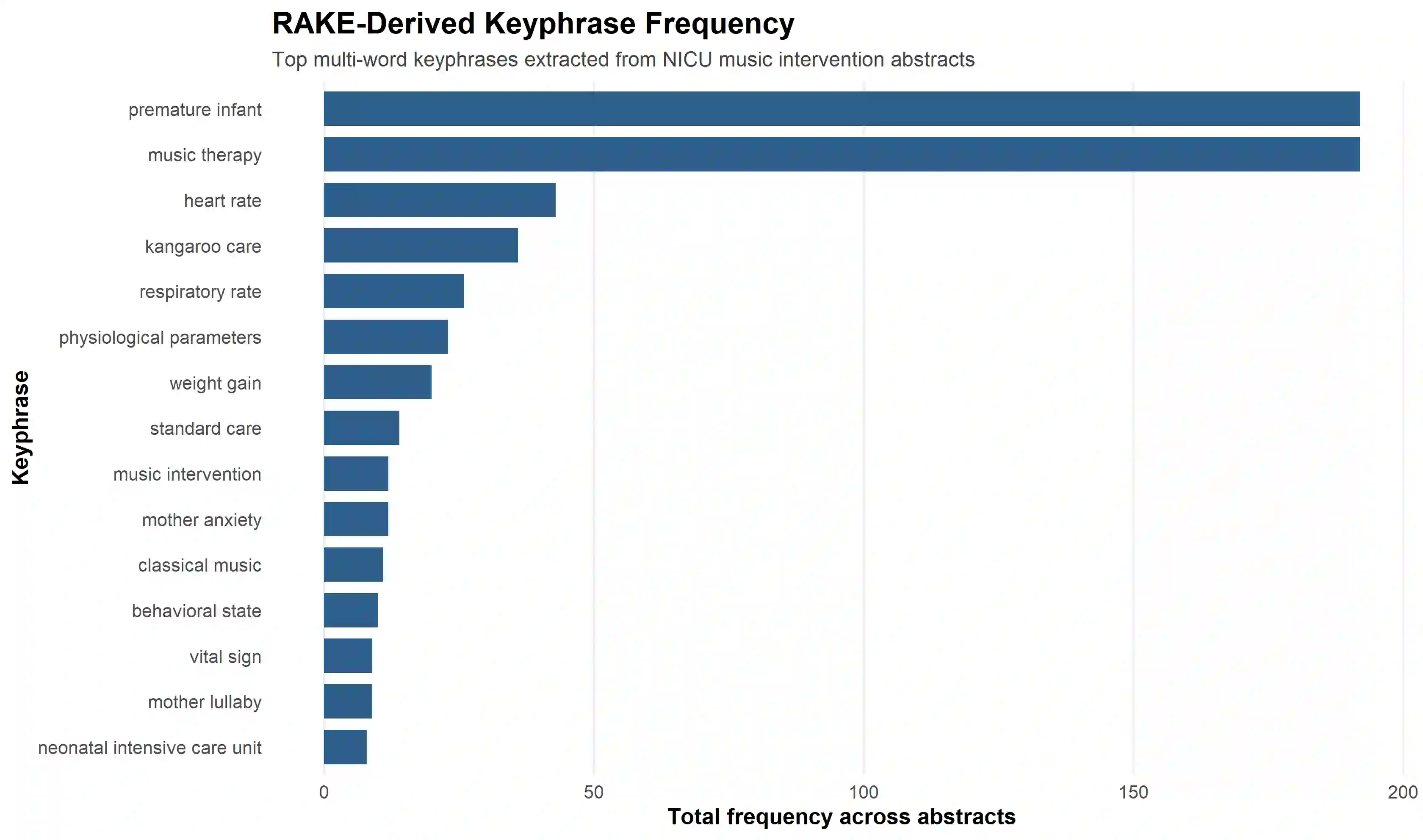
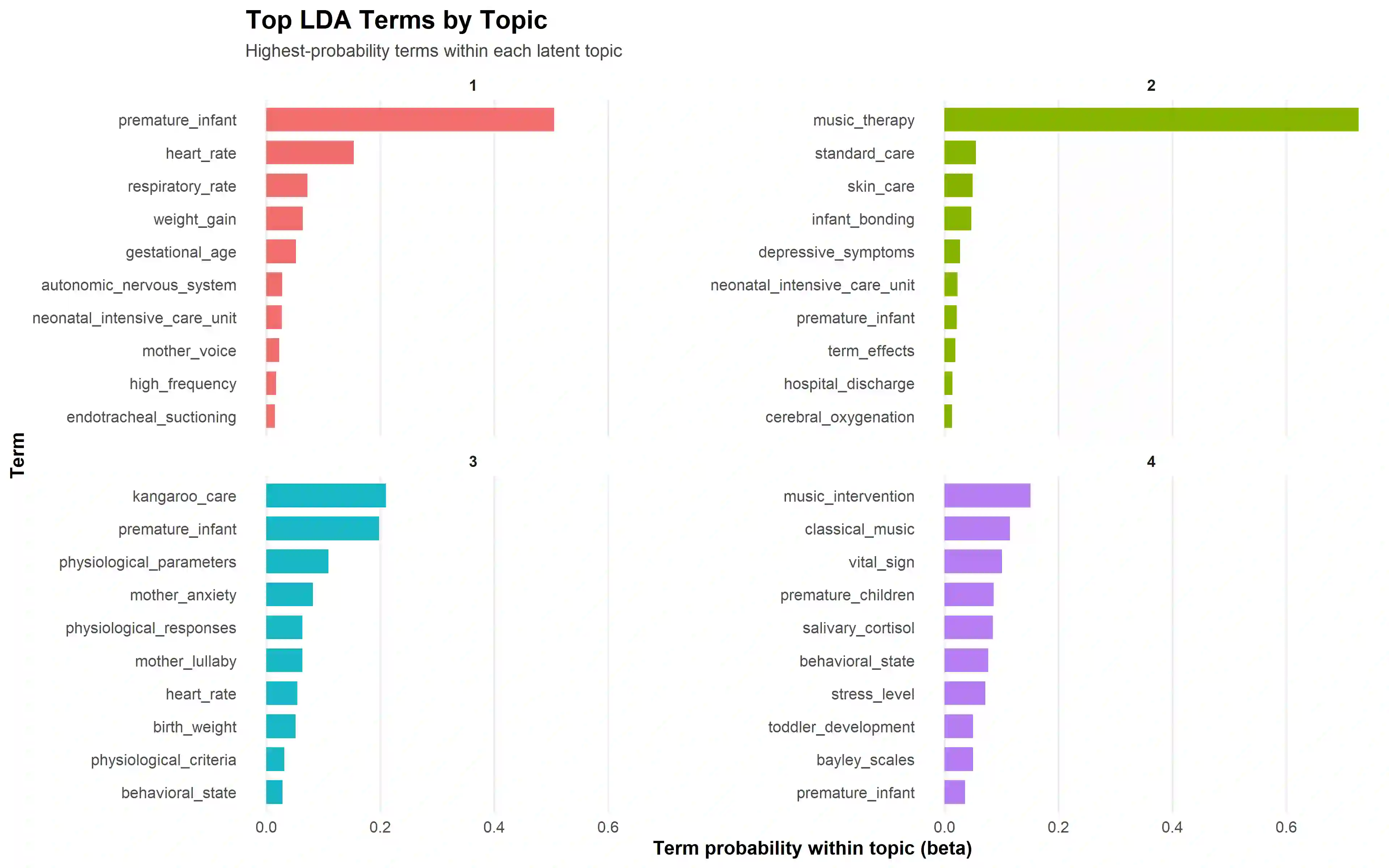
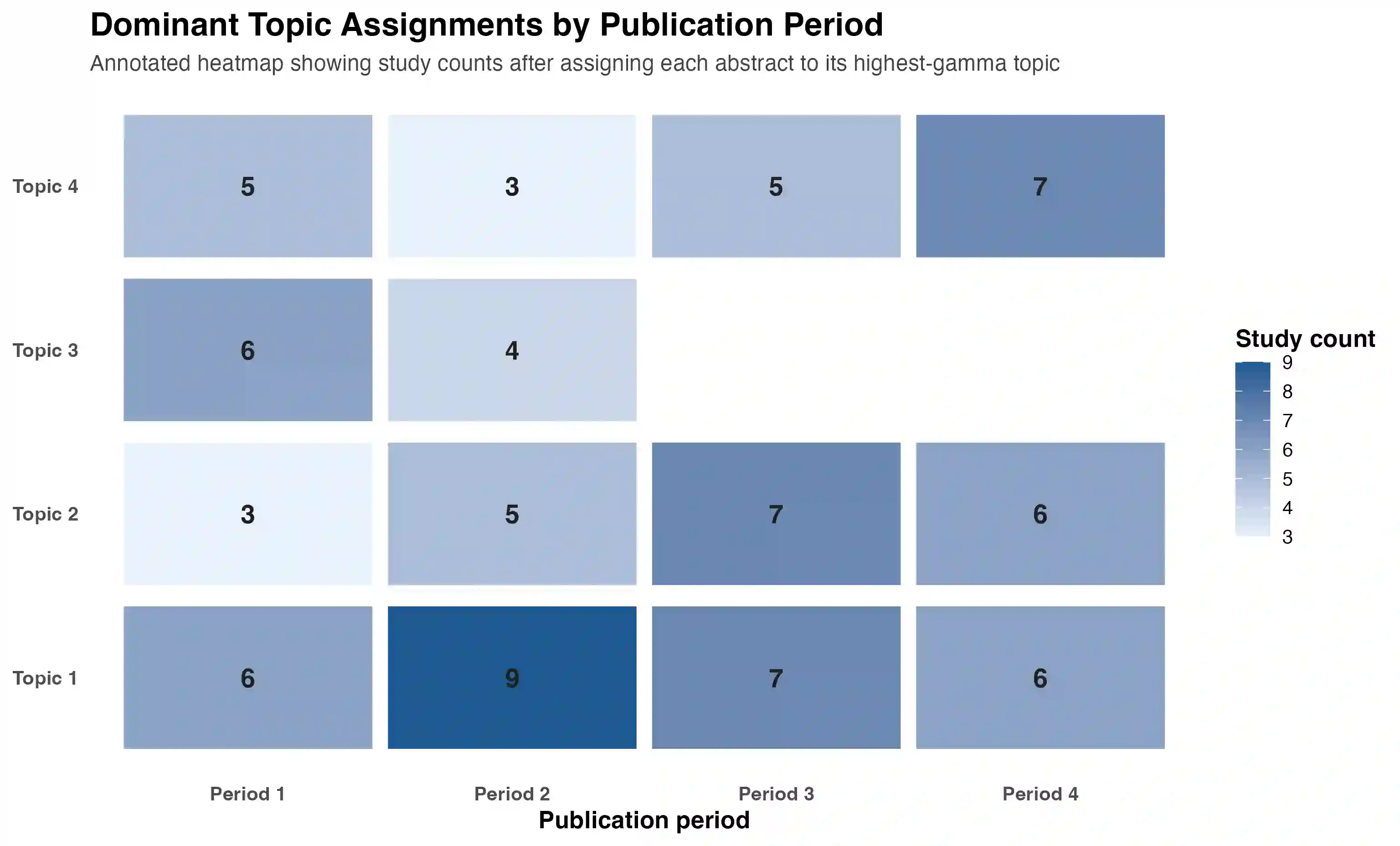
Background: Music-based interventions are increasingly used in neonatal intensive care units (NICUs), but the literature remains heterogeneous in intervention type, provider role, and research focus. This study examined research trends in NICU music-based intervention studies using text mining. Methods: We analyzed 83 abstracts from peer-reviewed studies published between 1998 and 2025. Methods included preprocessing, RAKE-based keyphrase extraction, keyword frequency analysis, temporal trend analysis, intervention-type comparison, and latent Dirichlet allocation topic modeling. The optimal number of topics was determined using the CaoJuan2009, Arun2010, and Deveaud2014 metrics. Results: Study volume increased steadily over time, with nearly half (38/83) published from 2020 onward. Early studies focused on passive music listening and short-term physiological outcomes, whereas recent studies increasingly examined singing, live music, and parent-involved interventions. Keyword analysis showed a shift from physiological stability and behavioral responses toward neurodevelopmental outcomes, parental emotional well-being, and parent-infant interaction. Music medicine studies emphasized passive auditory stimulation and immediate physiological outcomes, whereas music therapy studies addressed broader developmental, relational, and psychosocial topics. Topic modeling identified four major themes, with parent-involved physiological regulation and stress reduction the most frequent dominant topic. Conclusions: NICU music-based intervention research is becoming more interdisciplinary. The field has expanded from immediate physiological stabilization to broader developmental, relational, and psychosocial goals. Future work should clarify the distinction between music therapy and music medicine and promote interdisciplinary collaboration in NICU care.
翻译:背景:基于音乐的干预在新生儿重症监护室(NICUs)中的应用日益增多,但相关文献在干预类型、提供者角色及研究重点方面仍存在异质性。本研究通过文本挖掘方法,审视了NICU中基于音乐干预的研究趋势。方法:我们分析了1998年至2025年间发表的83篇同行评议研究摘要。分析方法包括预处理、基于RAKE的关键短语提取、关键词频率分析、时间趋势分析、干预类型比较以及潜在狄利克雷分配(LDA)主题建模。使用CaoJuan2009、Arun2010和Deveaud2014指标确定最优主题数量。结果:研究数量随时间稳步增长,其中近半数(38/83)发表于2020年之后。早期研究侧重于被动音乐聆听和短期生理结果,而近期研究越来越多地考察歌唱、现场音乐及父母参与的干预措施。关键词分析显示,研究焦点从生理稳定性和行为反应转向神经发育结局、父母情绪健康及亲子互动。音乐医学研究强调被动听觉刺激和即时生理结果,而音乐治疗研究则涉及更广泛的发展、关系及社会心理主题。主题建模识别出四个主要主题,其中父母参与的生理调节与压力减轻是最常见的优势主题。结论:NICU基于音乐干预的研究正变得更具跨学科性。该领域已从即时生理稳定扩展到更广泛的发展、关系及社会心理目标。未来工作应厘清音乐治疗与音乐医学之间的区别,并促进NICU护理中的跨学科合作。




相关内容


 微信扫码咨询专知VIP会员