

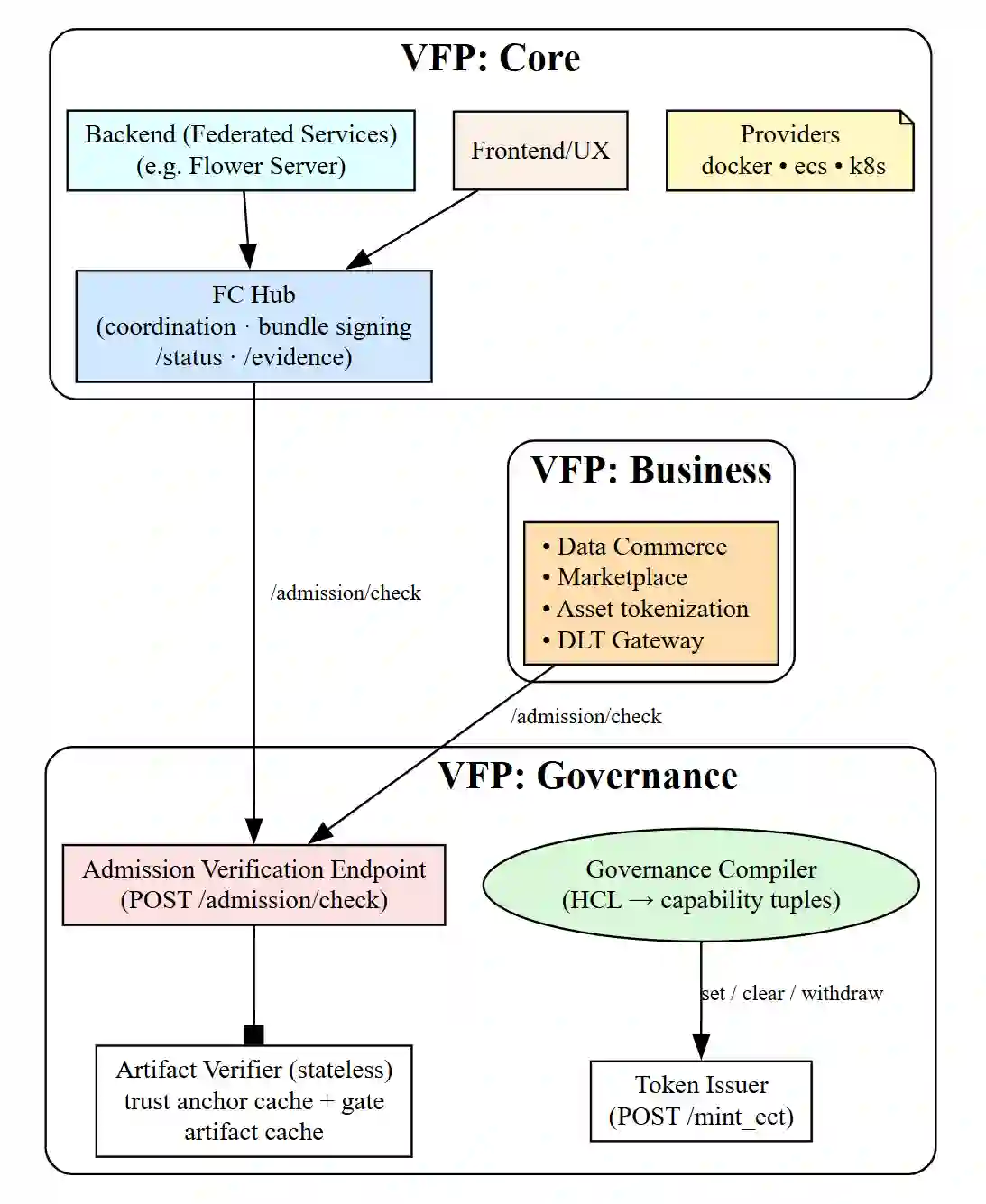
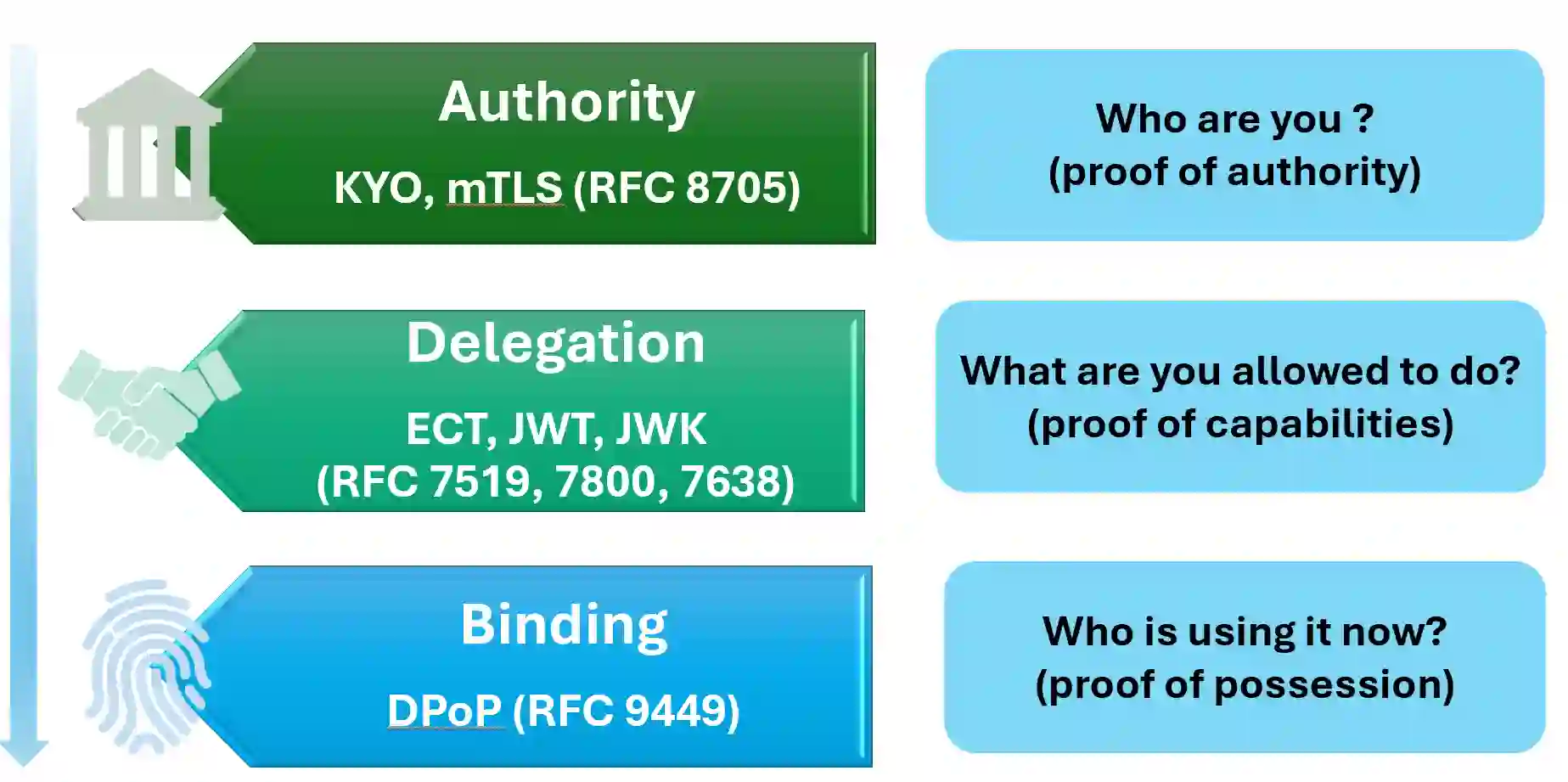
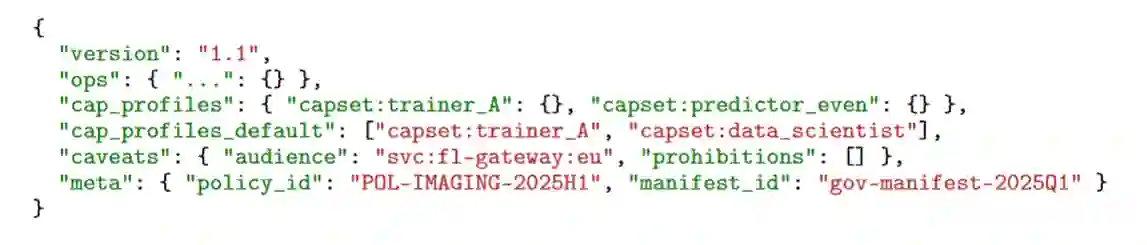
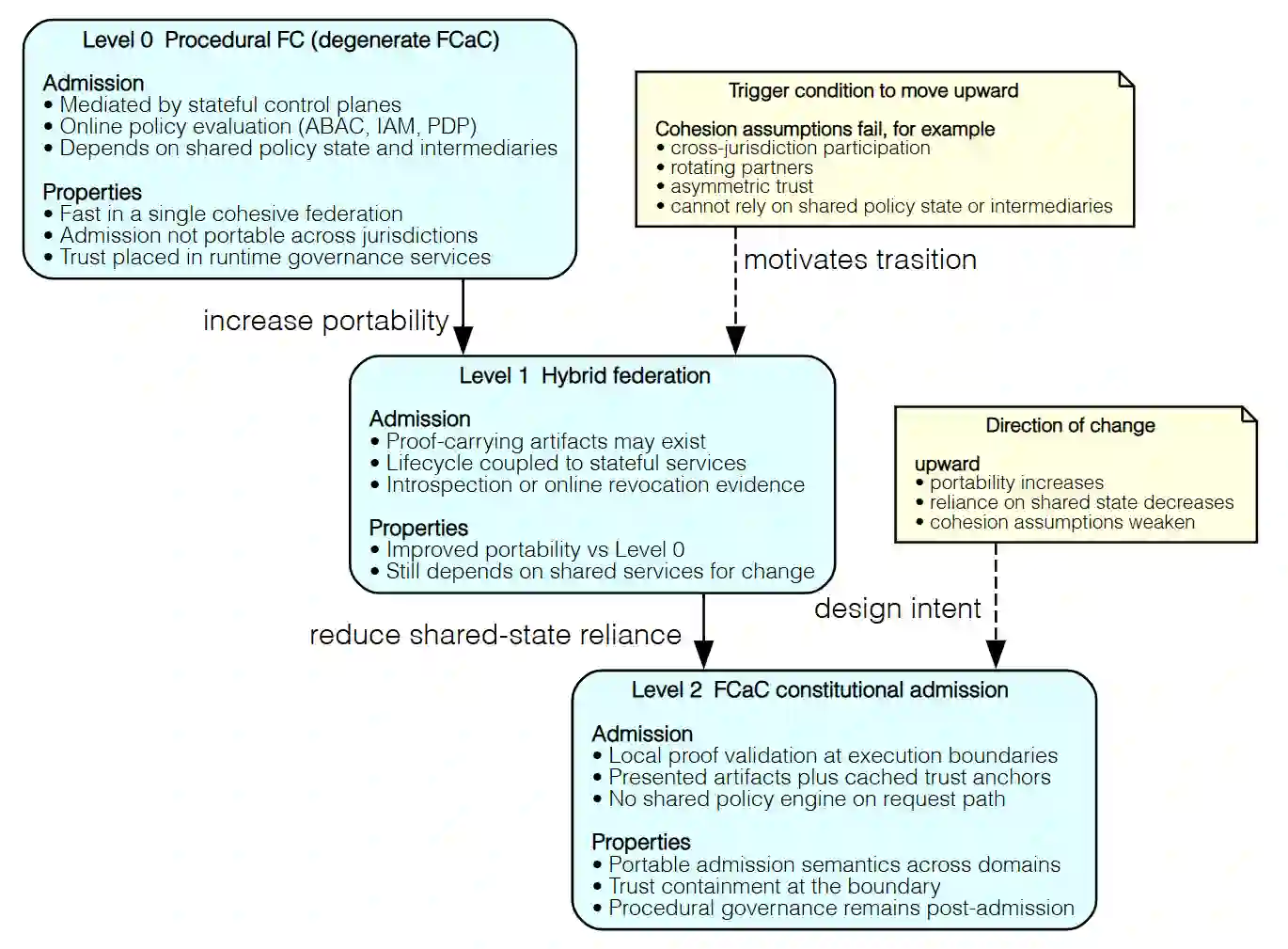
Federated computing (FC) enables collaborative computation such as machine learning, analytics, or data processing across distributed organizations keeping raw data local. Built on four architectural pillars, distributed data assets, federated services, standardized APIs, and decentralized services, FC supports sovereignty-preserving collaboration. However, federated systems spanning organizational and jurisdictional boundaries lack a portable mechanism for enforcing sovereignty-critical constraints. They often depend on runtime policy evaluation, shared trust infrastructure, or institutional agreements that introduce coordination overhead and provide limited cryptographic assurance. Federated Computing as Code (FCaC) is a declarative architecture that addresses this gap by compiling authority and delegation into cryptographically verifiable artifacts rather than relying on online policy interpretation. Boundary admission becomes a local verification step rather than a policy decision service. FCaC separates constitutional governance from procedural governance. Admission is validated locally at execution boundaries using proof-carrying capabilities, while stateful services may still implement post-admission controls such as ABAC, risk scoring, quotas, and workflow state. FCaC introduces Virtual Federated Platforms (VFPs), which combine Core, Business, and Governance contracts through a cryptographic trust chain: Key Your Organization (KYO), Envelope Capability Tokens (ECTs), and proof of possession (PoP). We demonstrate the approach in a proof-of-concept cross-silo federated learning workflow using MNIST as a surrogate workload to validate the admission mechanisms and release an open-source implementation showing envelope issuance, boundary verification, and envelope-triggered training.
翻译:联邦计算(FC)支持跨分布式组织在保持原始数据本地化的前提下,开展机器学习、数据分析或数据处理等协同计算。基于四大架构支柱——分布式数据资产、联邦服务、标准化API与去中心化服务——联邦计算实现了主权保护的协作。然而,跨越组织与司法管辖边界的联邦系统缺乏一种可移植的机制来强制执行主权关键约束。这类系统通常依赖于运行时策略评估、共享信任基础设施或机构间协议,这些方式不仅引入协调开销,且仅能提供有限的密码学保证。联邦计算即代码(FCaC)是一种声明式架构,通过将权限与委派关系编译为密码学可验证的构件(而非依赖在线策略解释)来弥补这一不足。边界准入由此转变为本地验证步骤,而非策略决策服务。FCaC将宪法治理与过程治理相分离。准入机制在执行边界处通过携带证明的能力进行本地验证,而有状态服务仍可在准入后实施诸如基于属性的访问控制(ABAC)、风险评分、配额及工作流状态等管控措施。FCaC引入了虚拟联邦平台(VFP),该平台通过密码学信任链——组织密钥认证(KYO)、封装能力令牌(ECT)及持有证明(PoP)——将核心合约、业务合约与治理合约相结合。我们通过概念验证的跨孤岛联邦学习工作流(以MNIST作为替代工作负载)演示了该方法,验证了准入机制的有效性,并发布了展示封装令牌签发、边界验证及令牌触发训练过程的开源实现。





相关内容


 微信扫码咨询专知VIP会员