

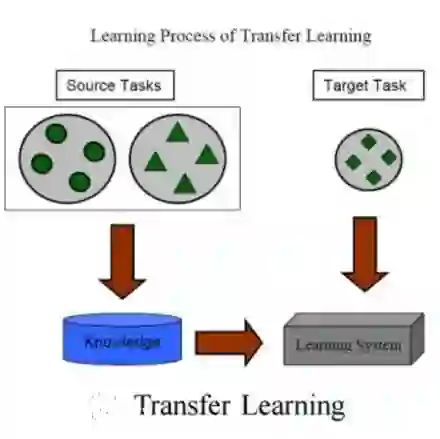
Mechanistic understanding and rational design of complex chemical systems depend on fast and accurate predictions of electronic structures beyond individual building blocks. However, if the system exceeds hundreds of atoms, first-principles quantum mechanical (QM) modeling becomes impractical. In this study, we developed FB-GNN-MBE by integrating a fragment-based graph neural network (FB-GNN) into the many-body expansion (MBE) theory and demonstrated its capacity to reproduce first-principles potential energy surfaces (PES) for hierarchically structured systems with manageable accuracy, complexity, and interpretability. Specifically, we divided the entire system into basic building blocks (fragments), evaluated their one-fragment energies using a QM model, and addressed many-fragment interactions using the structure-property relationships trained by FB-GNNs. Our investigation shows that FB-GNN-MBE achieves chemical accuracy in predicting two-body (2B) and three-body (3B) energies across water, phenol, and mixture benchmarks, as well as the one-dimensional dissociation curves of water and phenol dimers. To transfer the success of FB-GNN-MBE across various systems with minimal computational costs and data demands, we developed and validated a teacher-student learning protocol. A heavy-weight FB-GNN trained on a mixed-density water cluster ensemble (teacher) distills its learned knowledge and passes it to a light-weight GNN (student), which is later fine-tuned on a uniform-density (H2O)21 cluster ensemble. This transfer learning strategy resulted in efficient and accurate prediction of 2B and 3B energies for variously sized water clusters without retraining. Our transferable FB-GNN-MBE framework outperformed conventional non-FB-GNN-based models and provided a scalable and accurate route toward interaction energies of large molecular assemblies.
翻译:暂无翻译




相关内容




 微信扫码咨询专知VIP会员