

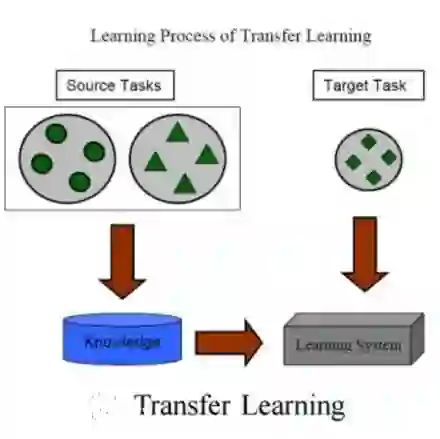
Transfer learning is a burgeoning concept in statistical machine learning that seeks to improve inference and/or predictive accuracy on a domain of interest by leveraging data from related domains. While the term "transfer learning" has garnered much recent interest, its foundational principles have existed for years under various guises. Prior literature reviews in computer science and electrical engineering have sought to bring these ideas into focus, primarily surveying general methodologies and works from these disciplines. This article highlights Bayesian approaches to transfer learning, which have received relatively limited attention despite their innate compatibility with the notion of drawing upon prior knowledge to guide new learning tasks. Our survey encompasses a wide range of Bayesian transfer learning frameworks applicable to a variety of practical settings. We discuss how these methods address the problem of finding the optimal information to transfer between domains, which is a central question in transfer learning. We illustrate the utility of Bayesian transfer learning methods via a simulation study where we compare performance against frequentist competitors.
翻译:迁移学习是统计机器学习中一个新兴的概念,旨在通过利用来自相关领域的数据,提升目标领域的推断和/或预测准确性。尽管“迁移学习”这一术语近期引起广泛关注,但其基本原理已在不同名称下存在多年。此前计算机科学和电气工程领域的文献综述尝试聚焦这些思想,主要从这些学科的角度综述一般性方法论与相关研究。本文重点介绍贝叶斯方法在迁移学习中的应用,尽管这些方法与利用先验知识指导新学习任务的概念具有天然契合性,但此前受到的关注相对有限。我们全面调研了适用于多种实际场景的贝叶斯迁移学习框架,探讨这些方法如何解决迁移学习的核心问题——跨领域最优信息的识别与迁移。通过仿真研究对比贝叶斯迁移学习方法与频率学派方法的性能,我们阐明了其实际效用。




相关内容




 微信扫码咨询专知VIP会员