

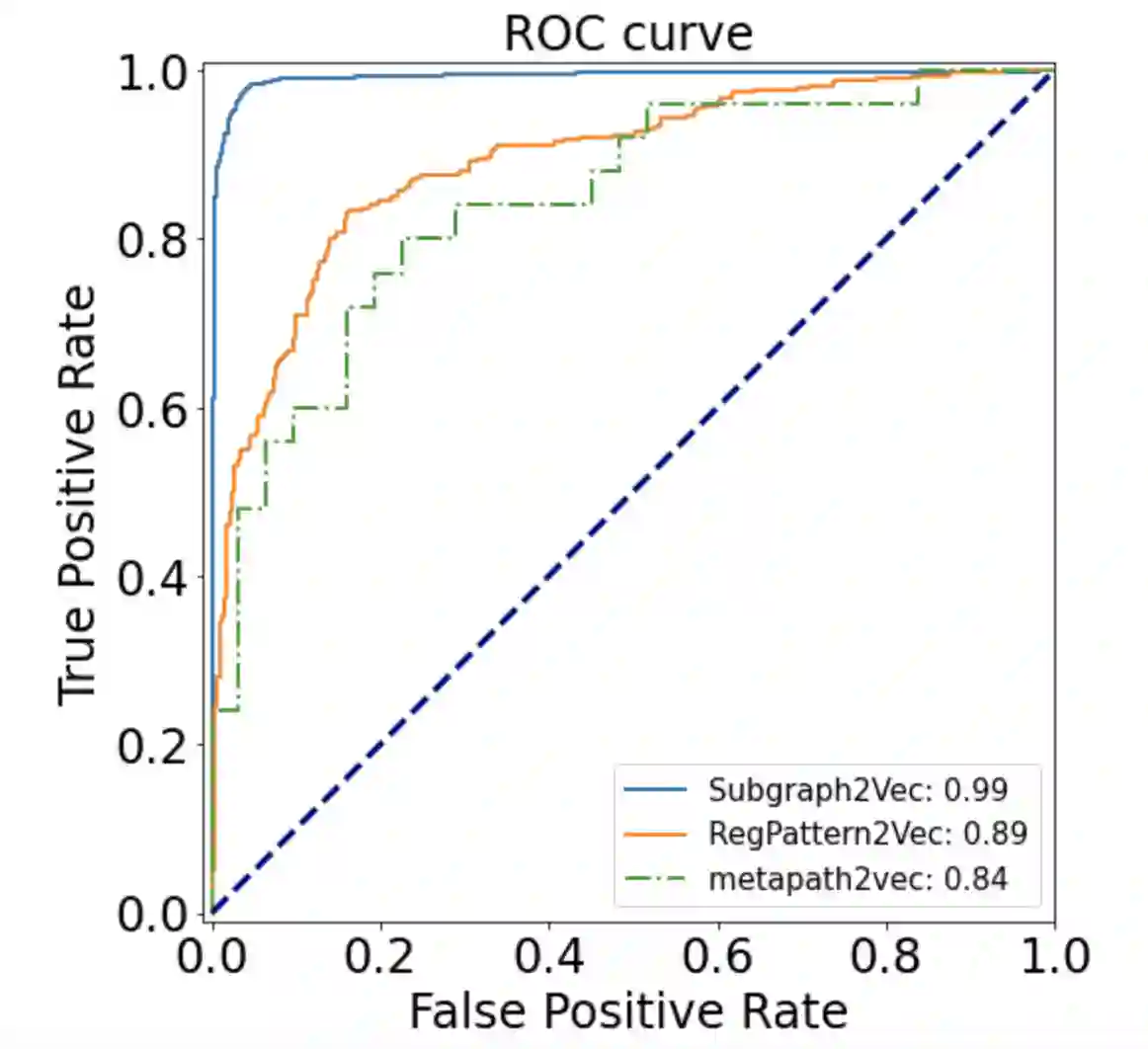
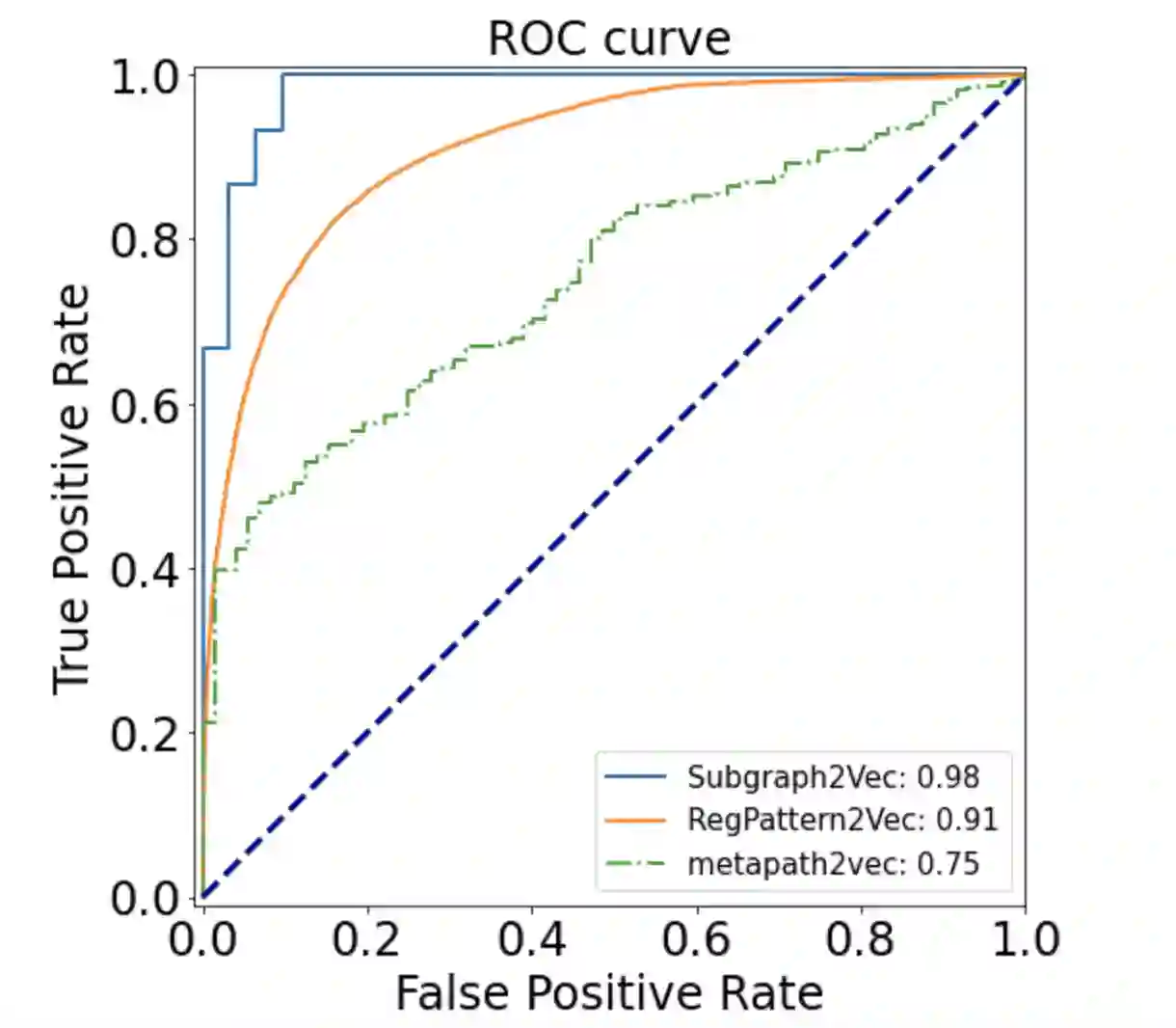
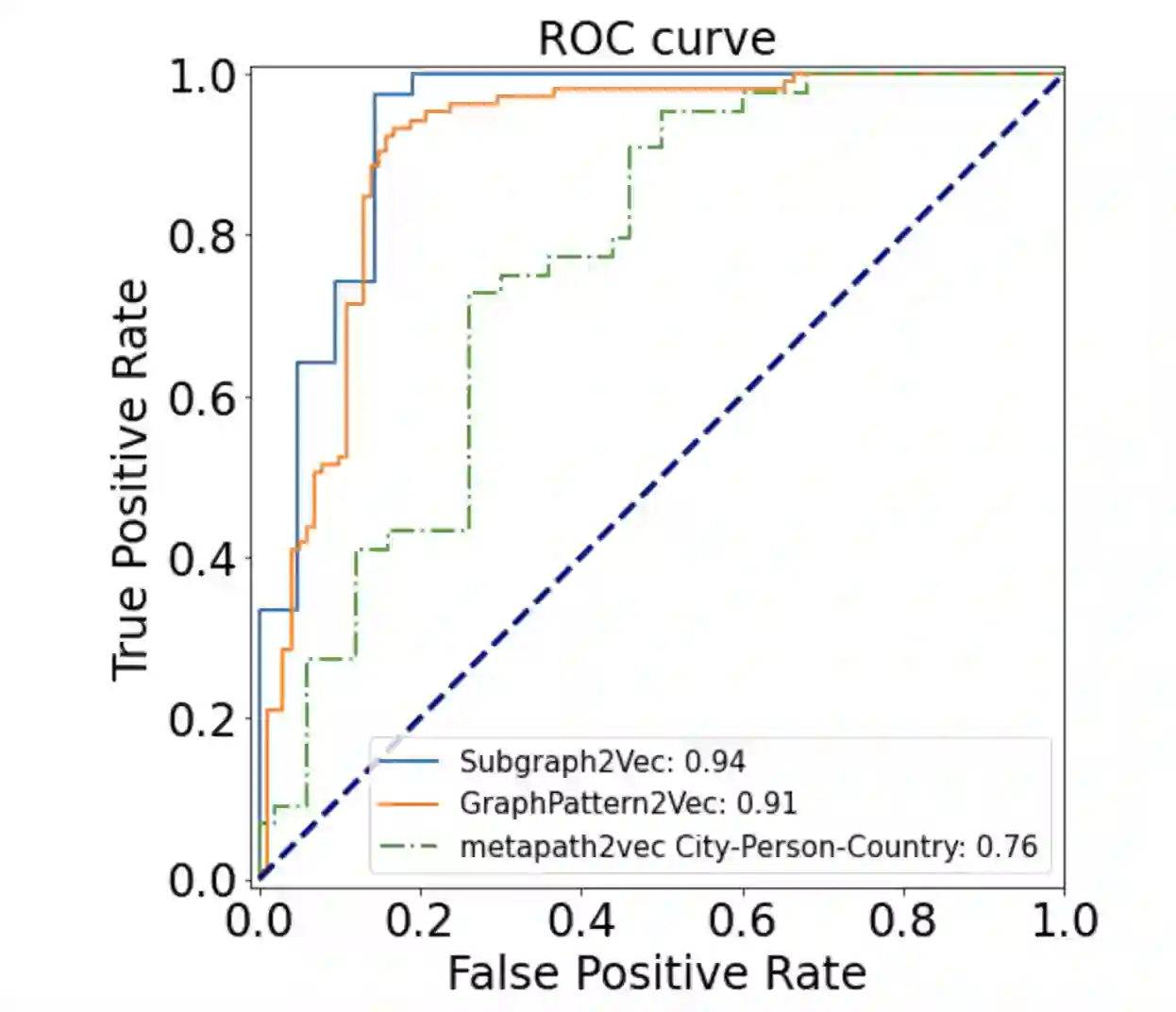
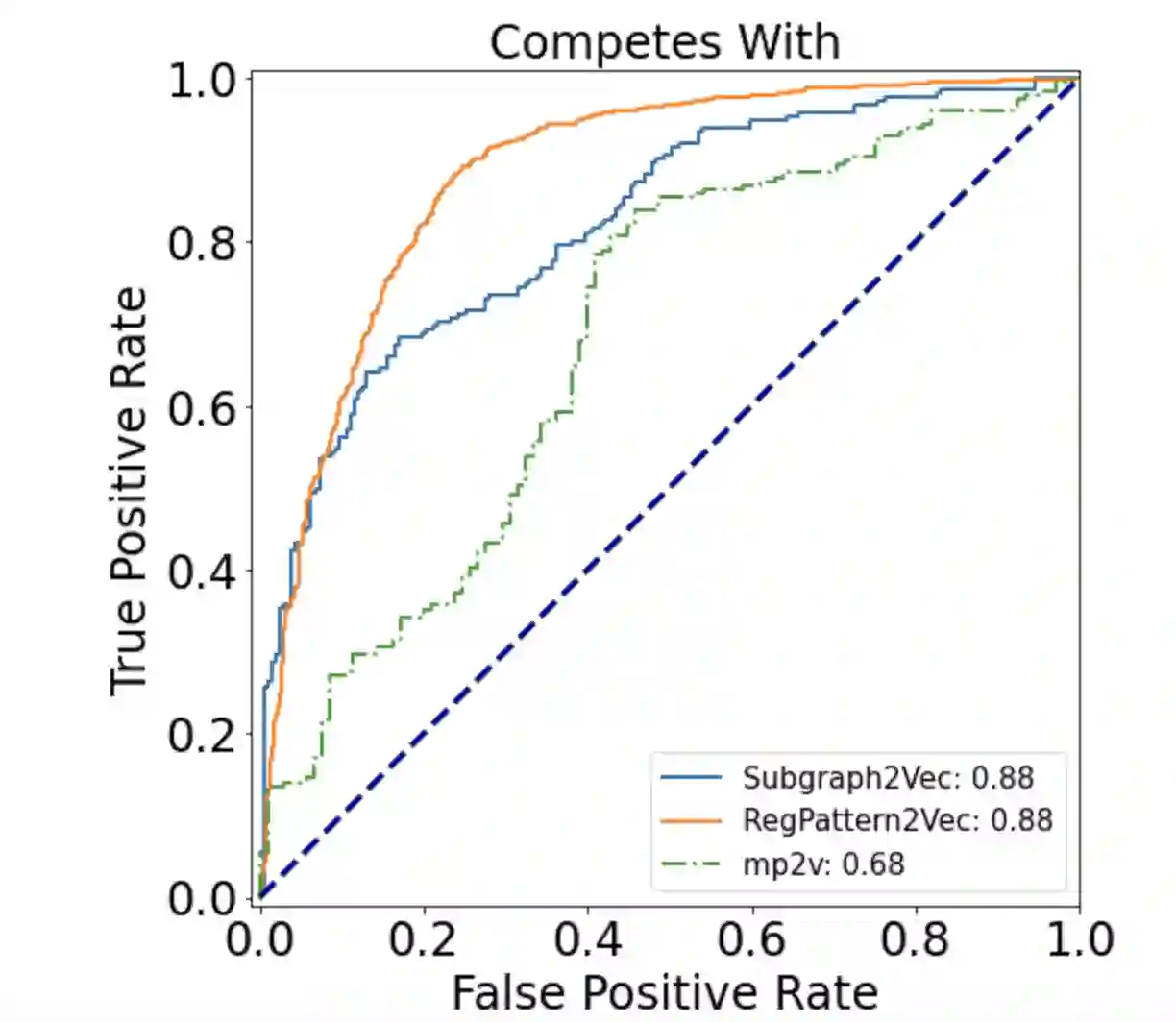
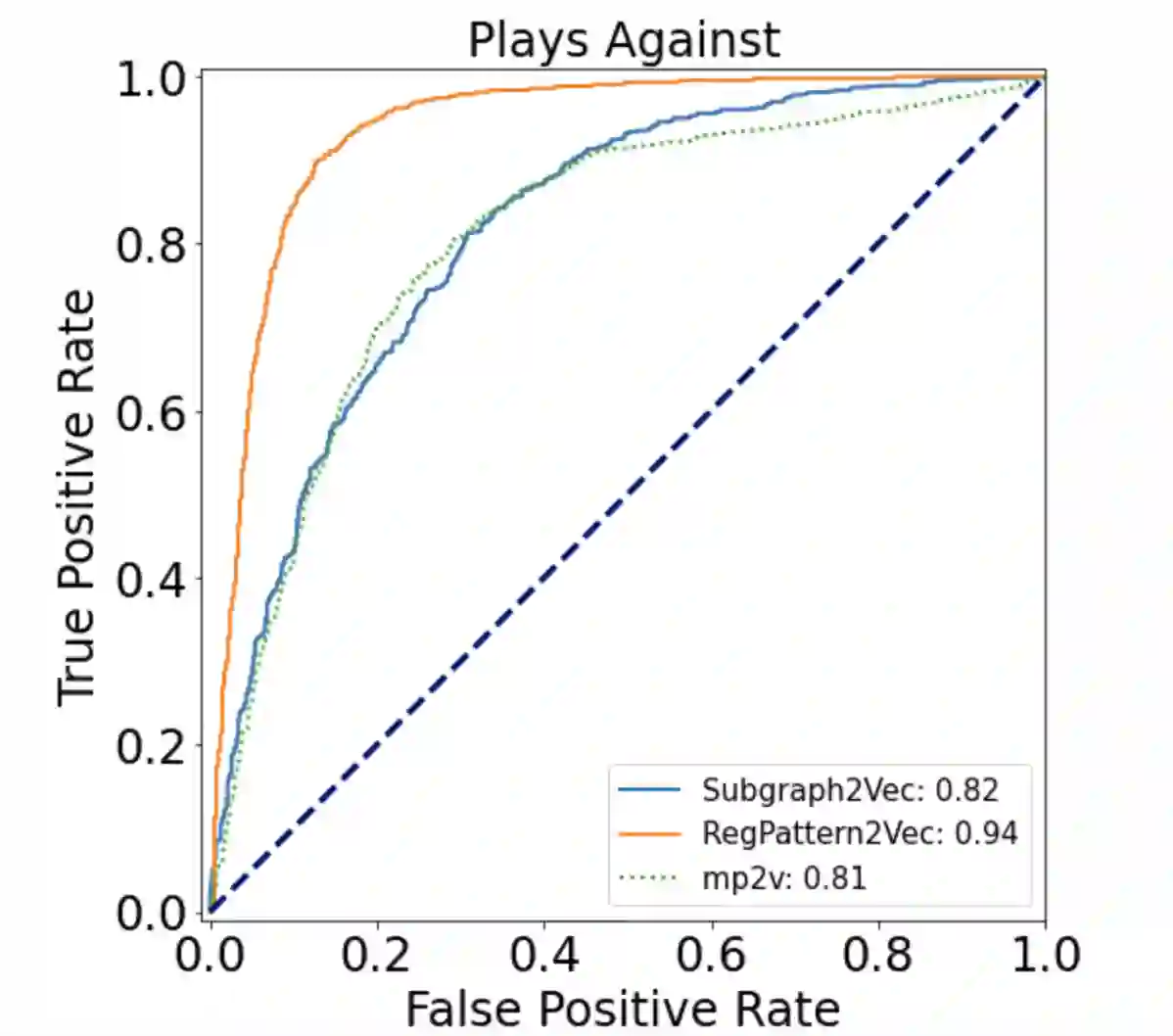
Graph is an important data representation which occurs naturally in the real world applications \cite{goyal2018graph}. Therefore, analyzing graphs provides users with better insights in different areas such as anomaly detection \cite{ma2021comprehensive}, decision making \cite{fan2023graph}, clustering \cite{tsitsulin2023graph}, classification \cite{wang2021mixup} and etc. However, most of these methods require high levels of computational time and space. We can use other ways like embedding to reduce these costs. Knowledge graph (KG) embedding is a technique that aims to achieve the vector representation of a KG. It represents entities and relations of a KG in a low-dimensional space while maintaining the semantic meanings of them. There are different methods for embedding graphs including random walk-based methods such as node2vec, metapath2vec and regpattern2vec. However, most of these methods bias the walks based on a rigid pattern usually hard-coded in the algorithm. In this work, we introduce \textit{subgraph2vec} for embedding KGs where walks are run inside a user-defined subgraph. We use this embedding for link prediction and prove our method has better performance in most cases in comparison with the previous ones.
翻译:图是一种重要的数据表示形式,在现实世界应用中自然存在\cite{goyal2018graph}。因此,图分析能够帮助用户在异常检测\cite{ma2021comprehensive}、决策制定\cite{fan2023graph}、聚类\cite{tsitsulin2023graph}、分类\cite{wang2021mixup}等不同领域获得更深入的见解。然而,大多数这些方法需要高昂的计算时间和空间成本。我们可以采用其他方式(如嵌入技术)来降低这些成本。知识图谱嵌入是一种旨在实现知识图谱向量表示的技术,它在低维空间中表示知识图谱的实体和关系,同时保留其语义含义。目前存在多种图嵌入方法,包括基于随机游走的方法,例如node2vec、metapath2vec和regpattern2vec。然而,这些方法大多基于通常在算法中硬编码的固定模式来偏向游走路径。在本工作中,我们提出了\textit{subgraph2vec}方法用于知识图谱嵌入,该方法在用户定义的子图内执行随机游走。我们将该嵌入方法应用于链路预测,并证明在大多数情况下,我们的方法相较于先前方法具有更优的性能。




相关内容




 微信扫码咨询专知VIP会员