

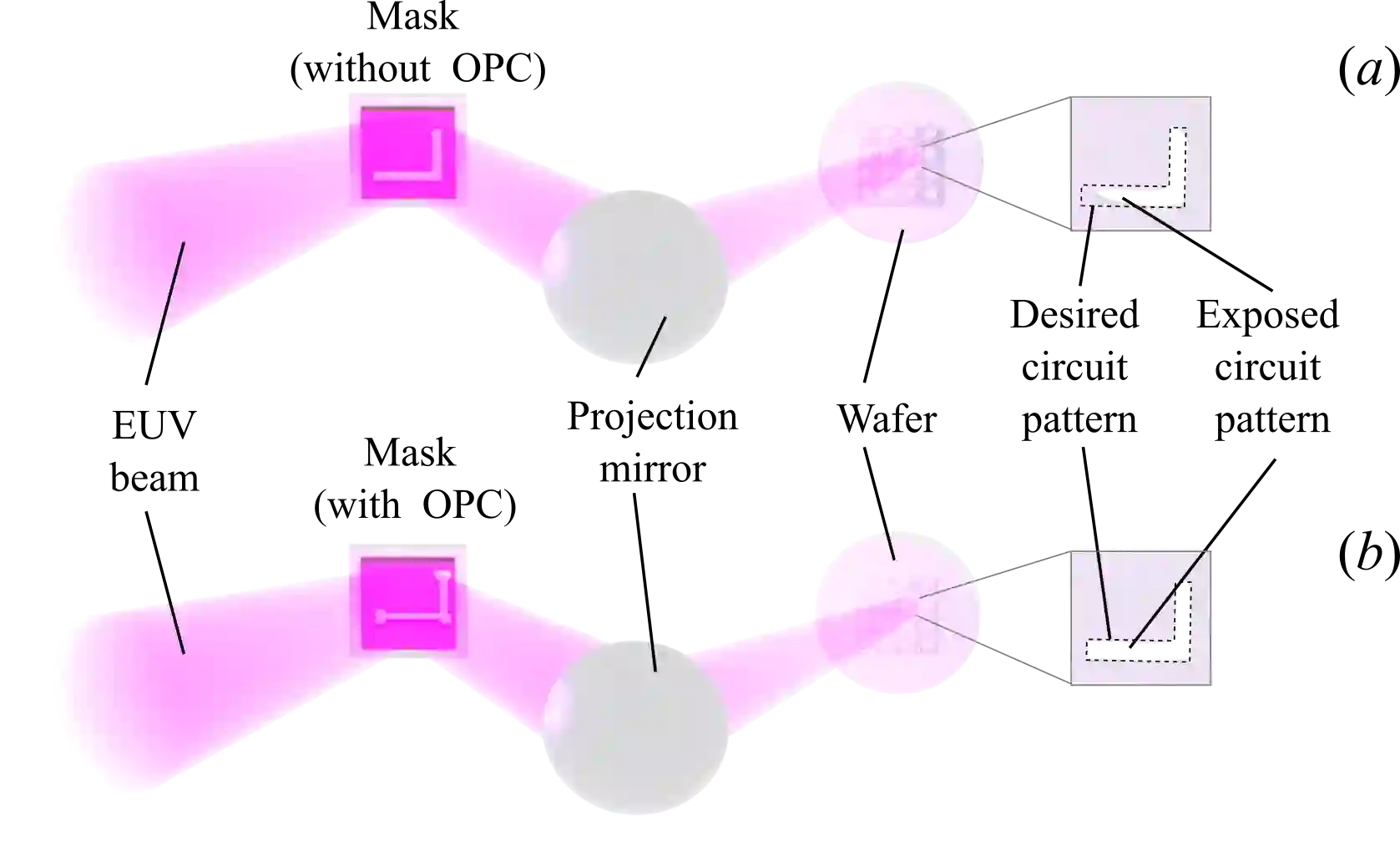
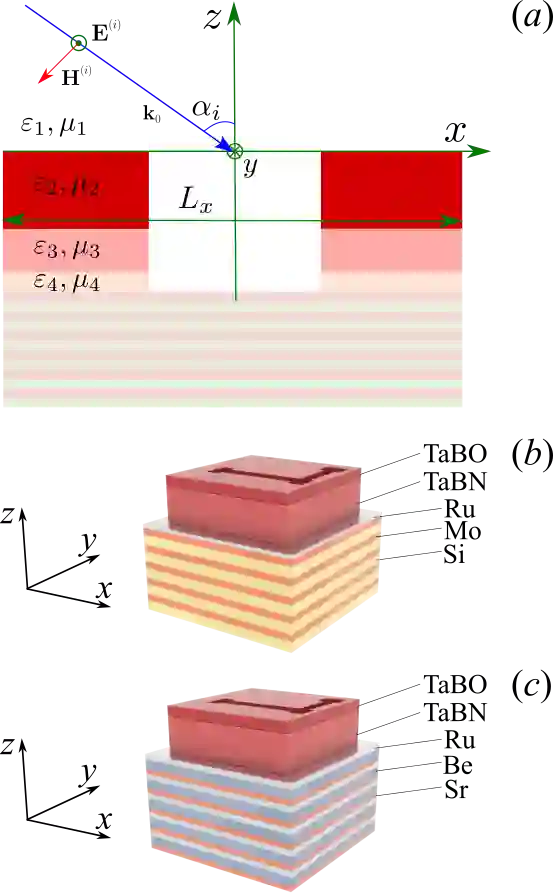
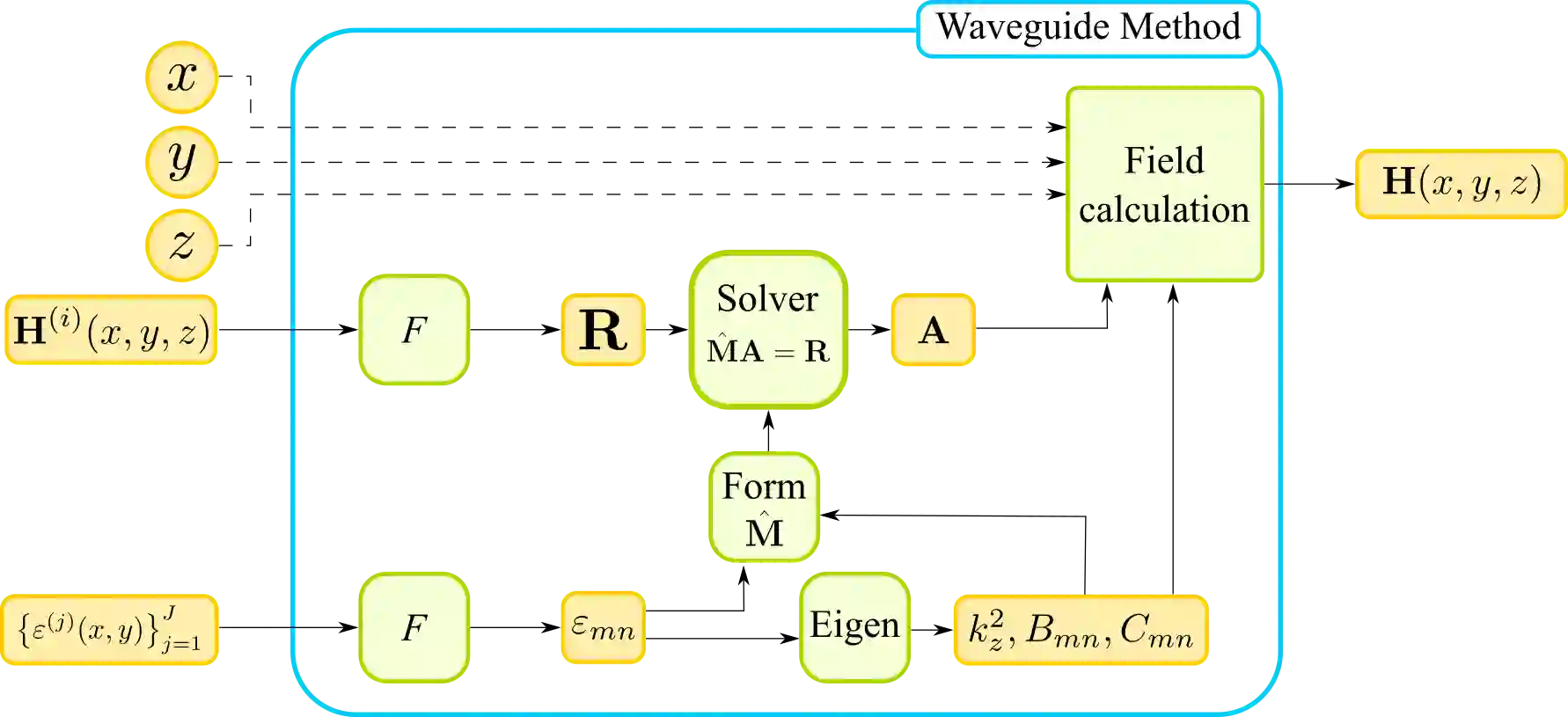
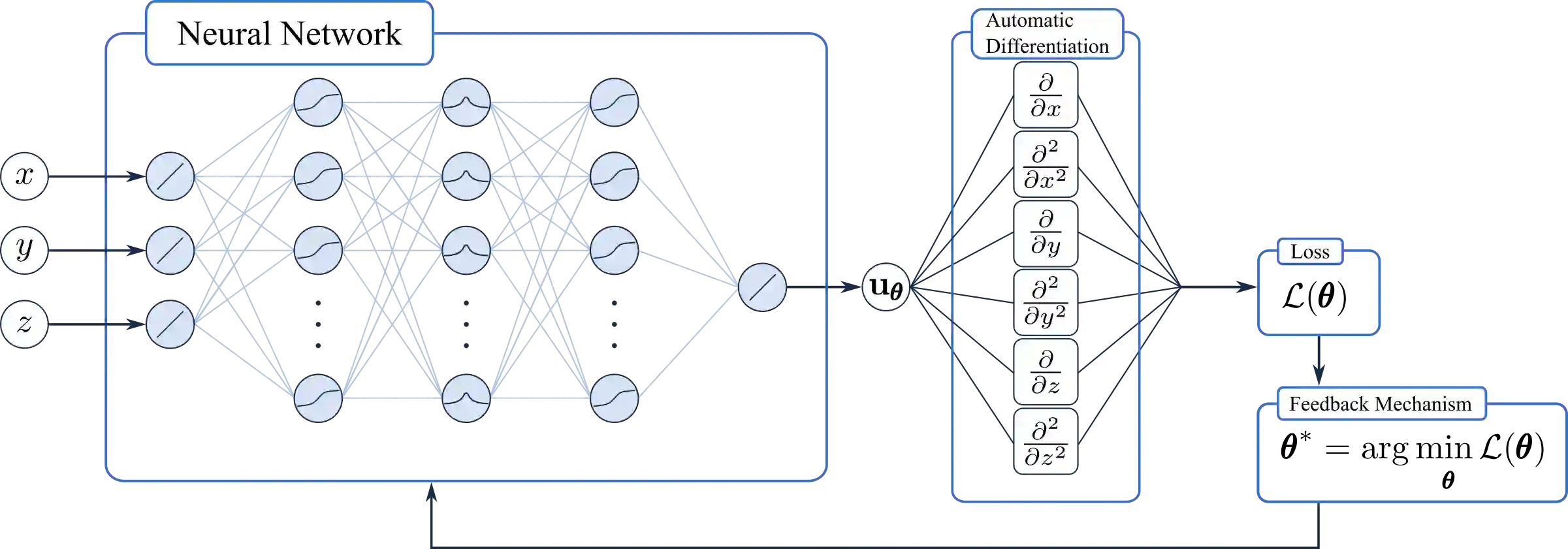
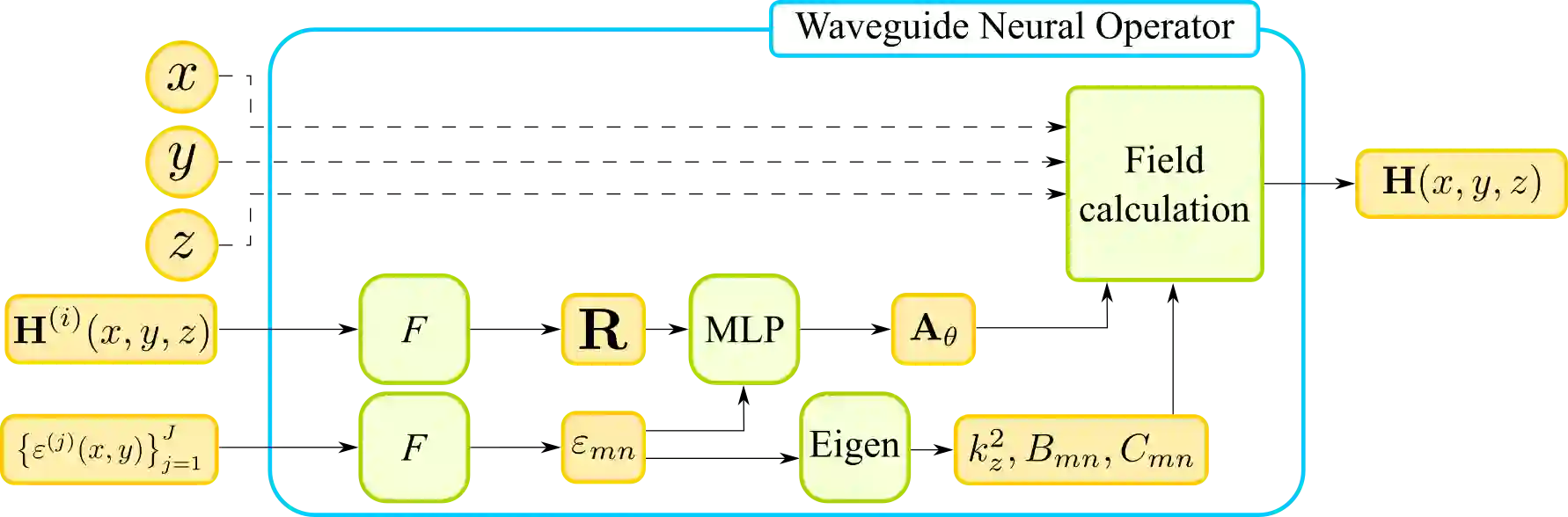
Physics-informed neural networks (PINNs) and neural operators (NOs) for solving the problem of diffraction of Extreme Ultraviolet (EUV) electromagnetic waves from contemporary lithography masks are presented. A novel hybrid Waveguide Neural Operator (WGNO) is introduced, based on a waveguide method with its most computationally expensive components replaced by a neural network. To evaluate performance, the accuracy and inference time of PINNs and NOs are compared against modern numerical solvers for a series of problems with known exact solutions. The emphasis is placed on investigation of solution accuracy by considered artificial neural systems for 13.5 nm and 11.2 nm wavelengths. Numerical experiments on realistic 2D and 3D masks demonstrate that PINNs and neural operators achieve competitive accuracy and significantly reduced prediction times, with the proposed WGNO architecture reaching state-of-the-art performance. The presented neural operator has pronounced generalizing properties, meaning that for unseen problem parameters it delivers a solution accuracy close to that for parameters seen in the training dataset. These results provide a highly efficient solution for accelerating the design and optimization workflows of next-generation lithography masks.
翻译:本文提出了物理信息神经网络(PINNs)和神经算子(NOs)用于求解当代光刻掩模的极紫外(EUV)电磁波衍射问题。基于波导方法,我们引入了一种新型混合波导神经算子(WGNO),其计算成本最高的组件被神经网络所取代。为评估性能,我们在一系列已知精确解的问题上,将PINNs和NOs的精度与推理时间与现代数值求解器进行了比较。重点考察了所研究的人工神经网络系统在13.5纳米和11.2纳米波长下的求解精度。在真实二维和三维掩模上的数值实验表明,PINNs和神经算子实现了具有竞争力的精度并显著减少了预测时间,其中所提出的WGNO架构达到了最先进的性能。所提出的神经算子具有显著的泛化特性,这意味着对于未见过的参数问题,其求解精度与训练数据集中见过的参数接近。这些结果为加速下一代光刻掩模的设计与优化流程提供了高效的解决方案。




相关内容

 微信扫码咨询专知VIP会员