

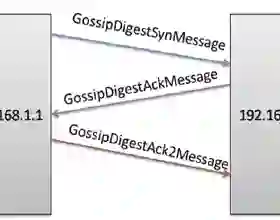
The increasing volume and complexity of IoT systems demand a transition from the cloud-centric model to a decentralized IoT architecture in the so-called Computing Continuum, with no or minimal reliance on central servers. This paradigm shift, however, raises novel research concerns for decentralized coordination, calling for accurate policies. However, building such strategies is not trivial. Our work aims to relieve the DevOps engineers from this concern and propose a solution for autonomous, decentralized task allocation at runtime for IoT systems. To this end, we present a semantic communication approach and an ad-hoc lightweight coordination strategy based on Ant Colony Optimization (ACO). We compare the ACO strategy with Random Search and Gossip protocol-based algorithms. We conduct accurate experiments with up to a hundred nodes in both a static and a dynamic environment, i.e., with device outages. We show that ACO finds a matching node with the smallest hops and messages sent. While the Gossip strategy can allocate the most tasks successfully, ACO scales better, thus being a promising candidate for decentralized task coordination in IoT clusters.
翻译:物联网系统规模与复杂度的持续增长,亟需从以云为中心的模式向所谓计算连续体中的去中心化物联网架构转型,以消除或最小化对中心服务器的依赖。然而,这种范式转变给去中心化协调带来了新的研究挑战,需要精确的策略支撑。但构建此类策略并非易事。本研究旨在减轻DevOps工程师在此方面的负担,并提出一种面向物联网系统的运行时自主去中心化任务分配方案。为此,我们提出了一种语义通信方法,以及一种基于蚁群优化(ACO)的轻量级自适应协调策略。我们将ACO策略与随机搜索及基于Gossip协议的算法进行了对比。通过在静态与动态(即存在设备故障)环境中对多达百个节点开展精确实验,我们发现ACO能以最小的跳数和消息量找到匹配节点。虽然Gossip策略能成功分配最多任务,但ACO具备更优的可扩展性,因此成为物联网集群去中心化任务协调的有力候选方案。




相关内容



 微信扫码咨询专知VIP会员