

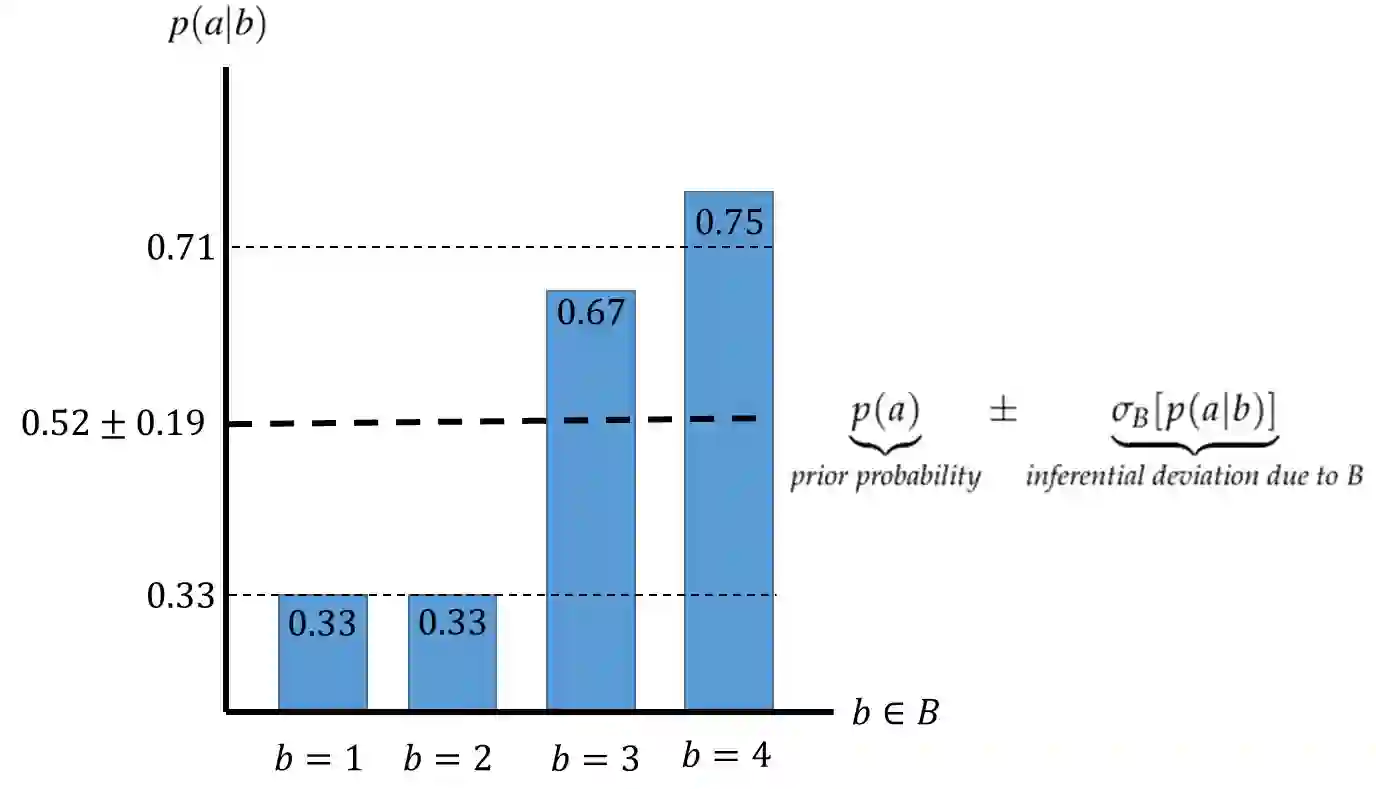
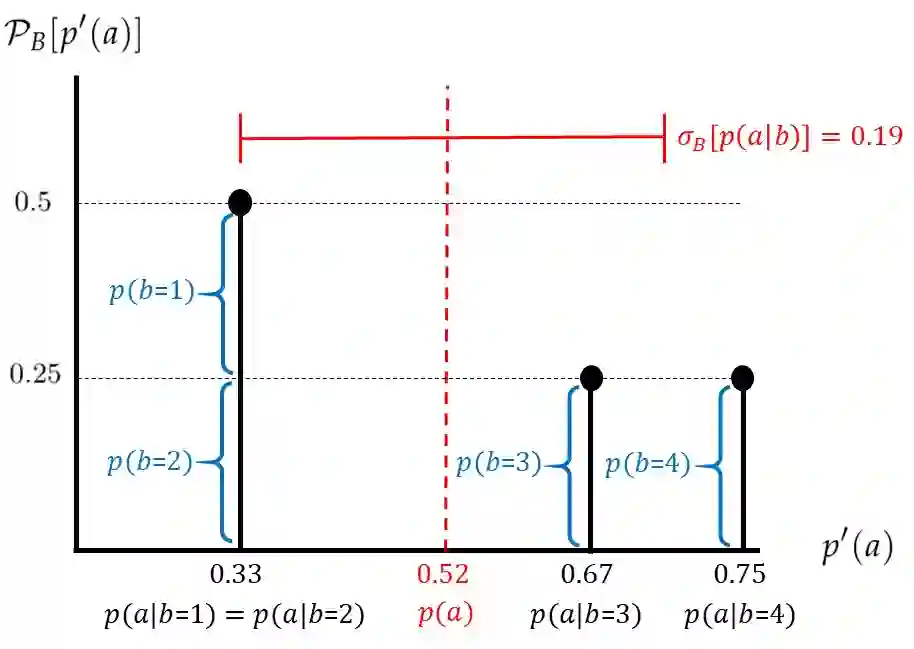
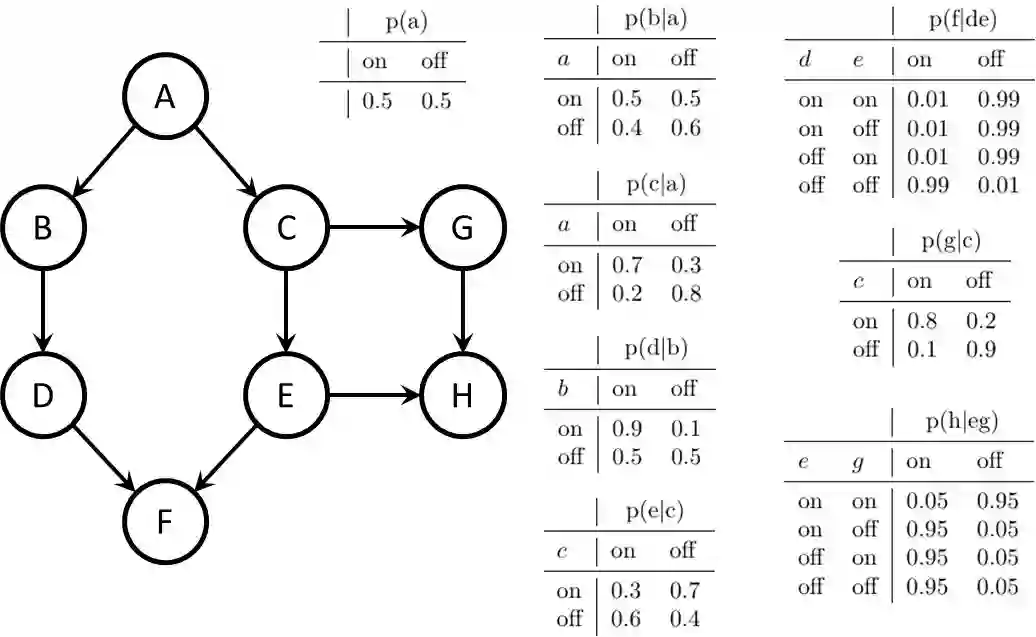
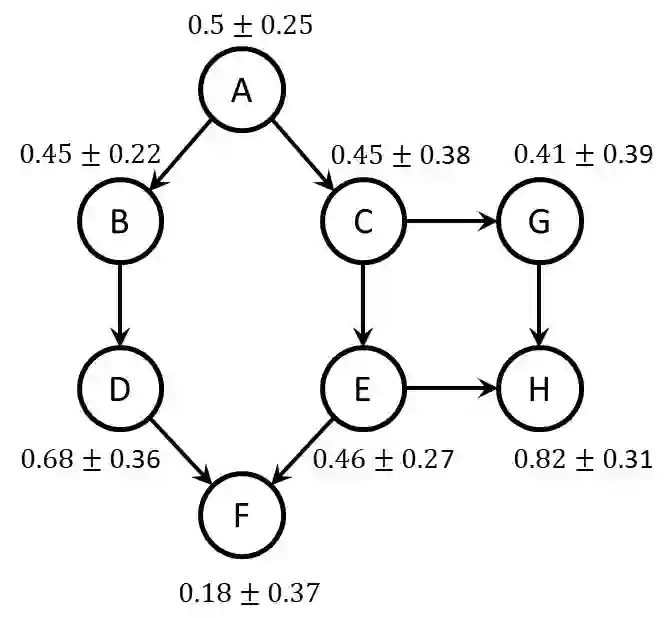
This article expands the framework of Bayesian inference and provides direct probabilistic methods for approaching inference tasks that are typically handled with information theory. We treat Bayesian probability updating as a random process and uncover intrinsic quantitative features of joint probability distributions called inferential moments. Inferential moments quantify shape information about how a prior distribution is expected to update in response to yet to be obtained information. Further, we quantify the unique probability distribution whose statistical moments are the inferential moments in question. We find a power series expansion of the mutual information in terms of inferential moments, which implies a connection between inferential theoretic logic and elements of information theory. Of particular interest is the inferential deviation, which is the expected variation of the probability of one variable in response to an inferential update of another. We explore two applications that analyze the inferential deviations of a Bayesian network to improve decision-making. We implement simple greedy algorithms for exploring sensor tasking using inferential deviations that generally outperform similar greedy mutual information algorithms in terms of root mean squared error between epistemic probability estimates and the ground truth probabilities they are estimating.
翻译:本文扩展了贝叶斯推理框架,并提供了直接的概率方法来处理通常借助信息论完成的推理任务。我们将贝叶斯概率更新视为一个随机过程,并揭示了联合概率分布中内在的量值特征,称之为推断矩。推断矩量化了先验分布在应对未知信息更新时预期变化的结构信息。此外,我们量化了统计矩即为所述推断矩的唯一概率分布。我们发现互信息可表示为推断矩的幂级数展开,这暗示了推断理论逻辑与信息论要素之间的关联。特别值得关注的是推断偏差,即一个变量的概率响应于另一个变量推断更新的预期变化。我们探索了两个应用案例,通过分析贝叶斯网络的推断偏差来改进决策。我们采用基于推断偏差的简单贪心算法进行传感器任务规划,在认知概率估计与待估计的真实概率之间的均方根误差方面,该算法通常优于类似的互信息贪心算法。




相关内容




 微信扫码咨询专知VIP会员