

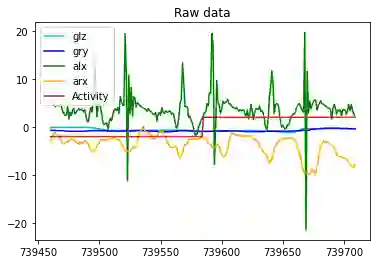
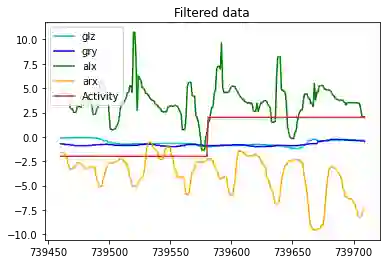
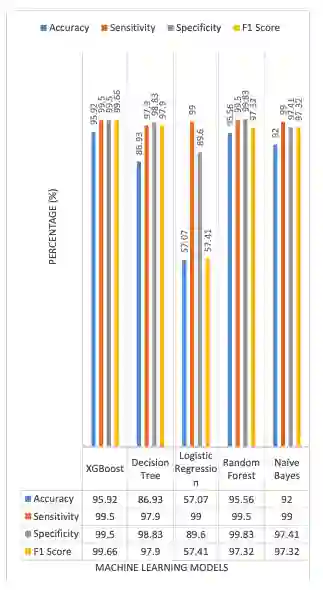
Mobile phones and other electronic gadgets or devices have aided in collecting data without the need for data entry. This paper will specifically focus on Mobile health data. Mobile health data use mobile devices to gather clinical health data and track patient vitals in real-time. Our study is aimed to give decisions for small or big sports teams on whether one athlete good fit or not for a particular game with the compare several machine learning algorithms to predict human behavior and health using the data collected from mobile devices and sensors placed on patients. In this study, we have obtained the dataset from a similar study done on mhealth. The dataset contains vital signs recordings of ten volunteers from different backgrounds. They had to perform several physical activities with a sensor placed on their bodies. Our study used 5 machine learning algorithms (XGBoost, Naive Bayes, Decision Tree, Random Forest, and Logistic Regression) to analyze and predict human health behavior. XGBoost performed better compared to the other machine learning algorithms and achieved 95.2% accuracy, 99.5% in sensitivity, 99.5% in specificity, and 99.66% in F1 score. Our research indicated a promising future in mhealth being used to predict human behavior and further research and exploration need to be done for it to be available for commercial use specifically in the sports industry.
翻译:移动电话及其他电子设备已助力实现无需人工输入的数据收集。本文将重点聚焦移动健康数据。移动健康数据通过移动设备实时采集临床健康数据并追踪患者生命体征。本研究旨在通过对比多种机器学习算法,利用移动设备及患者佩戴传感器采集的数据,为大小体育团队提供运动员是否适合特定比赛的决策依据,并预测人类行为与健康。研究采用来自mhealth相似研究的数据集,包含十名不同背景志愿者在佩戴传感器进行多项体能活动时的生命体征记录。我们运用五种机器学习算法(XGBoost、朴素贝叶斯、决策树、随机森林与逻辑回归)分析并预测人类健康行为。结果表明,XGBoost性能优于其他算法,实现了95.2%的准确率、99.5%的敏感度、99.5%的特异性及99.66%的F1分数。本研究揭示了移动健康数据在人类行为预测领域的广阔前景,但需进一步研究与探索方能实现其在体育产业等商业场景中的实际应用。






相关内容




 微信扫码咨询专知VIP会员