

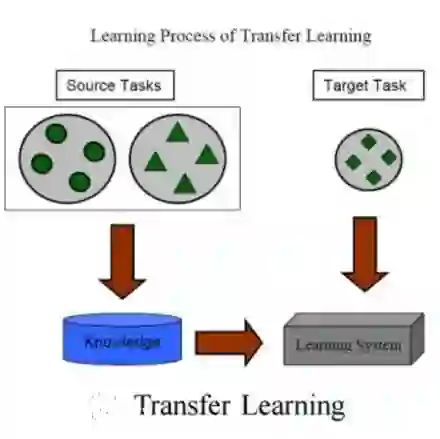
Early detection of power outages is crucial for maintaining a reliable power distribution system. This research investigates the use of transfer learning and language models in detecting outages with limited labeled data. By leveraging pretraining and transfer learning, models can generalize to unseen classes. Using a curated balanced dataset of social media tweets related to power outages, we conducted experiments using zero-shot and few-shot learning. Our hypothesis is that Language Models pretrained with limited data could achieve high performance in outage detection tasks over baseline models. Results show that while classical models outperform zero-shot Language Models, few-shot fine-tuning significantly improves their performance. For example, with 10% fine-tuning, BERT achieves 81.3% accuracy (+15.3%), and GPT achieves 74.5% accuracy (+8.5%). This has practical implications for analyzing and localizing outages in scenarios with limited data availability. Our evaluation provides insights into the potential of few-shot fine-tuning with Language Models for power outage detection, highlighting their strengths and limitations. This research contributes to the knowledge base of leveraging advanced natural language processing techniques for managing critical infrastructure.
翻译:电力中断的早期检测对维持可靠配电系统至关重要。本研究探讨了在标注数据有限的情况下,利用迁移学习和语言模型检测电力中断的有效性。通过预训练和迁移学习,模型能够泛化至未见类别。本研究利用经精心平衡的电力中断相关社交媒体推文数据集,采用零样本和少样本学习进行了实验。假设认为,基于有限数据预训练的语言模型在电力中断检测任务中可取得优于基线模型的性能。结果表明,尽管传统模型在零样本场景下优于语言模型,但少样本微调显著提升了后者性能。例如,经过10%数据微调后,BERT模型准确率达81.3%(提升15.3%),GPT模型准确率达74.5%(提升8.5%)。该研究对数据稀缺场景下的电力中断分析与定位具有实践意义。研究评估揭示了语言模型通过少样本微调进行电力中断检测的潜力、优势及局限性,为利用先进自然语言处理技术管理关键基础设施提供了知识储备。




相关内容




 微信扫码咨询专知VIP会员