

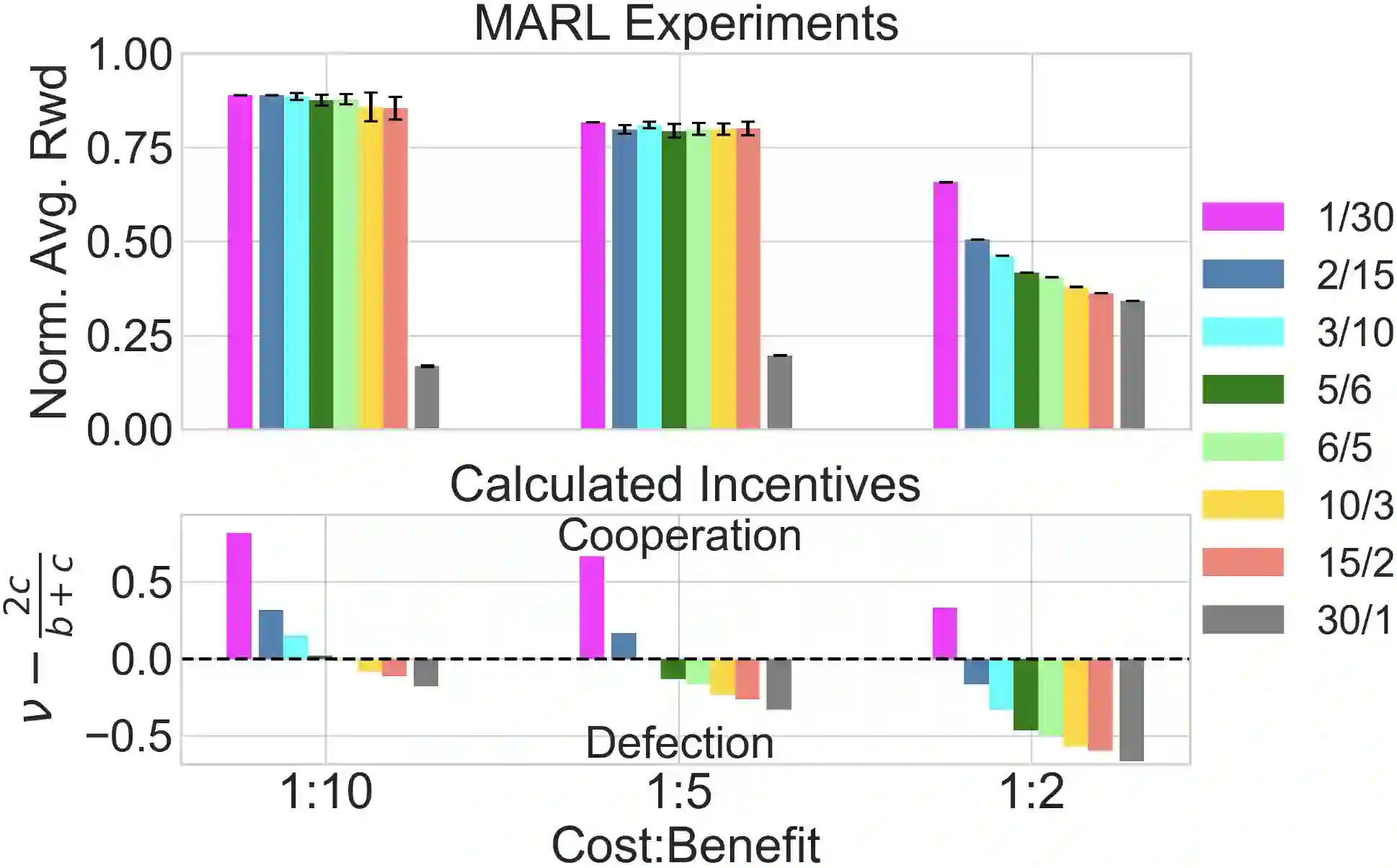
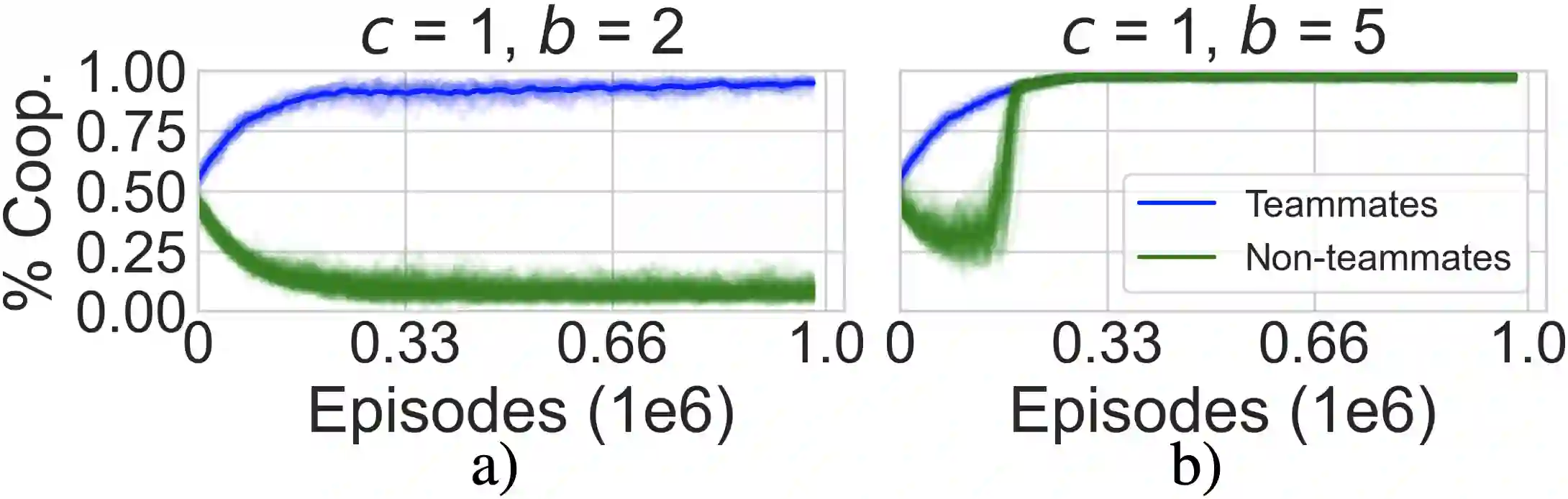
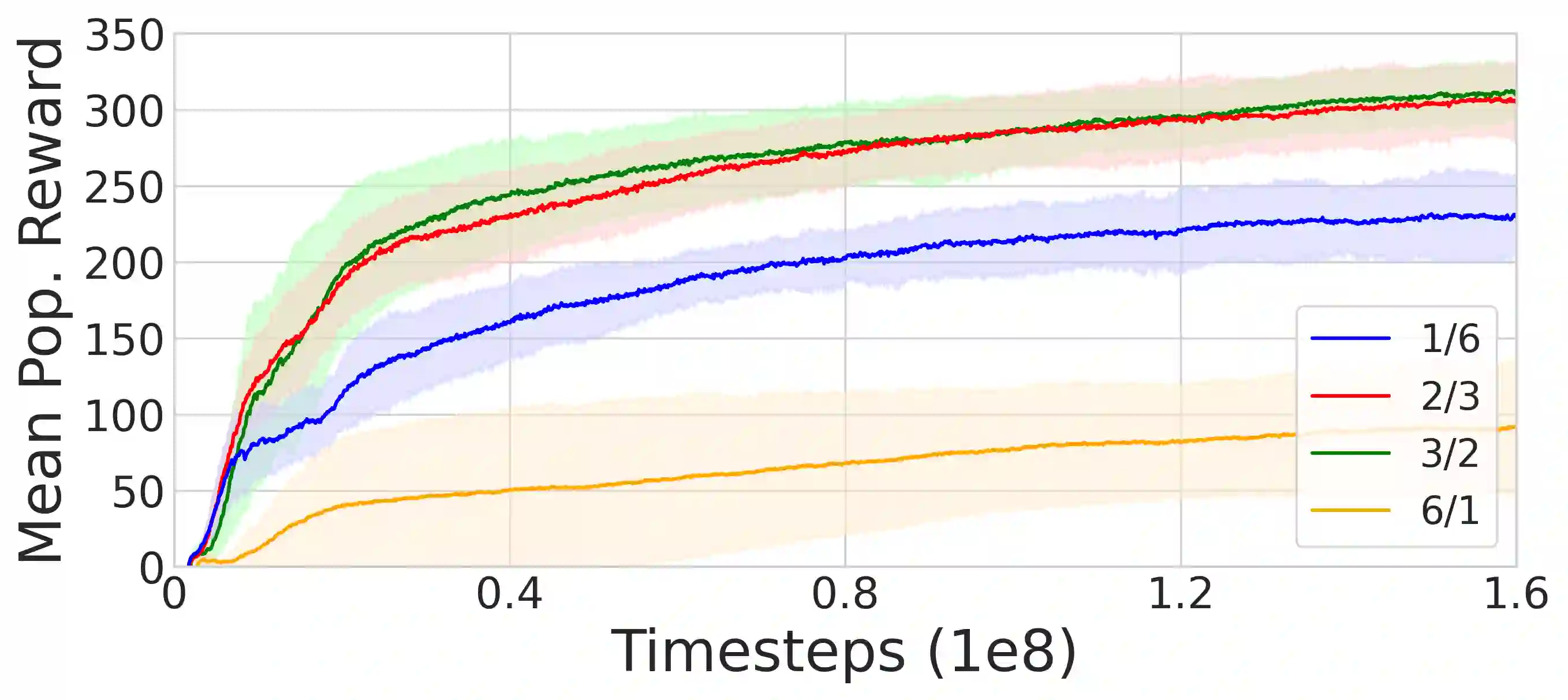
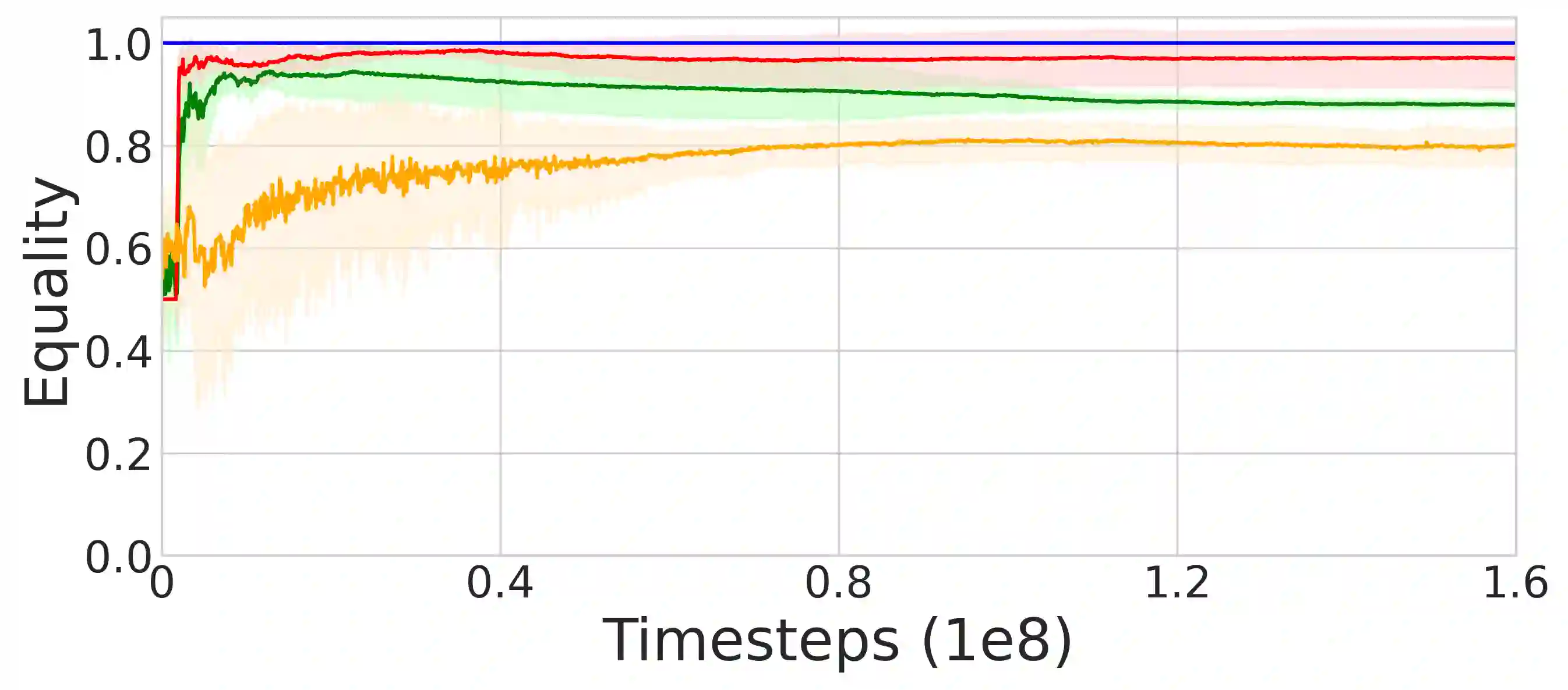
For problems requiring cooperation, many multiagent systems implement solutions among either individual agents or across an entire population towards a common goal. Multiagent teams are primarily studied when in conflict; however, organizational psychology (OP) highlights the benefits of teams among human populations for learning how to coordinate and cooperate. In this paper, we propose a new model of multiagent teams for reinforcement learning (RL) agents inspired by OP and early work on teams in artificial intelligence. We validate our model using complex social dilemmas that are popular in recent multiagent RL and find that agents divided into teams develop cooperative pro-social policies despite incentives to not cooperate. Furthermore, agents are better able to coordinate and learn emergent roles within their teams and achieve higher rewards compared to when the interests of all agents are aligned.
翻译:对于需要协作的问题,许多多智能体系统通过单个智能体或整个群体共同实现目标。多智能体团队主要在研究冲突情境时被广泛探讨;然而,组织心理学(OP)强调,人类群体中的团队在协调与合作学习方面具有独特优势。本文受组织心理学及人工智能领域早期团队研究的启发,提出一种面向强化学习(RL)智能体的多智能体团队新模型。我们通过近年来流行的复杂社会困境对模型进行验证,发现尽管存在不合作的激励因素,划分为团队的智能体仍能发展出亲社会的协作策略。此外,与所有智能体利益完全对齐的情形相比,智能体在团队内部能更好地协调并学习涌现角色,从而获得更高收益。




相关内容



 微信扫码咨询专知VIP会员