

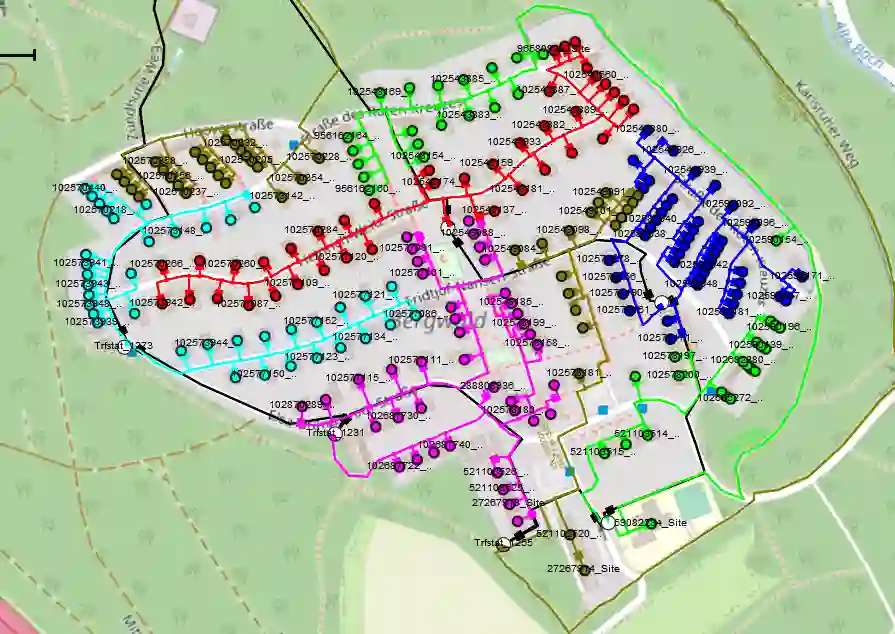
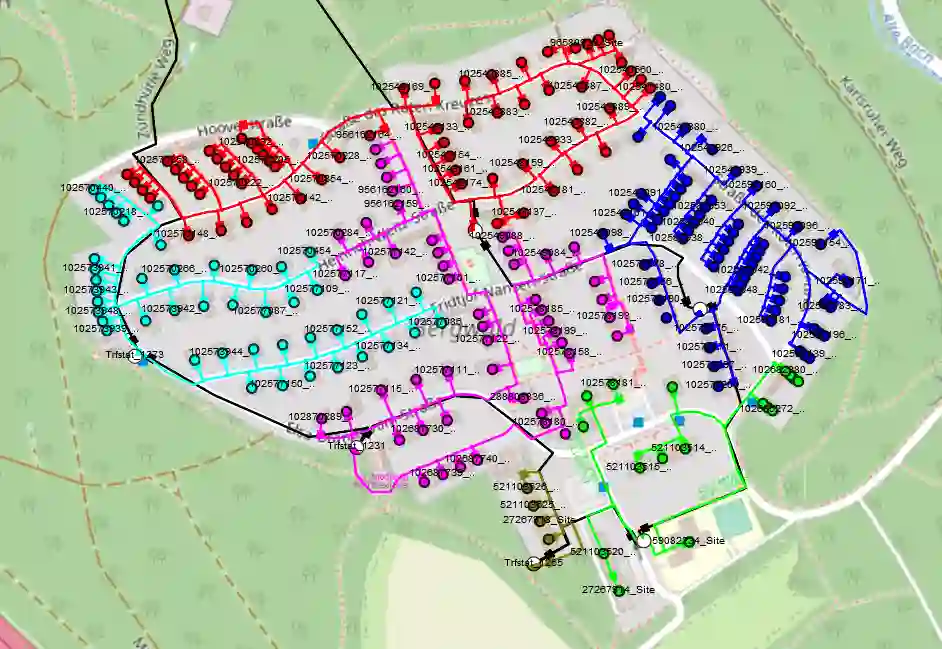
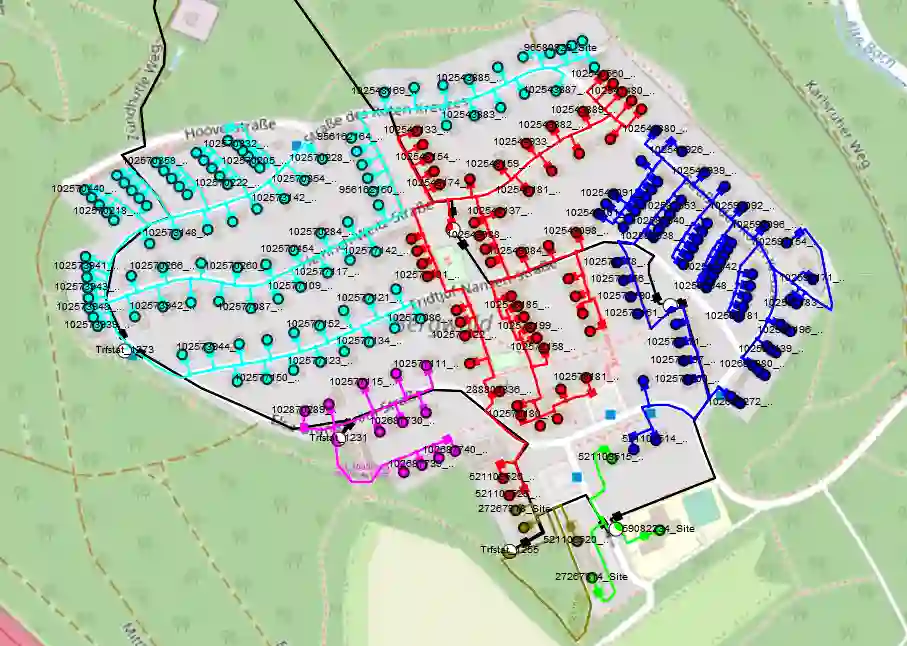
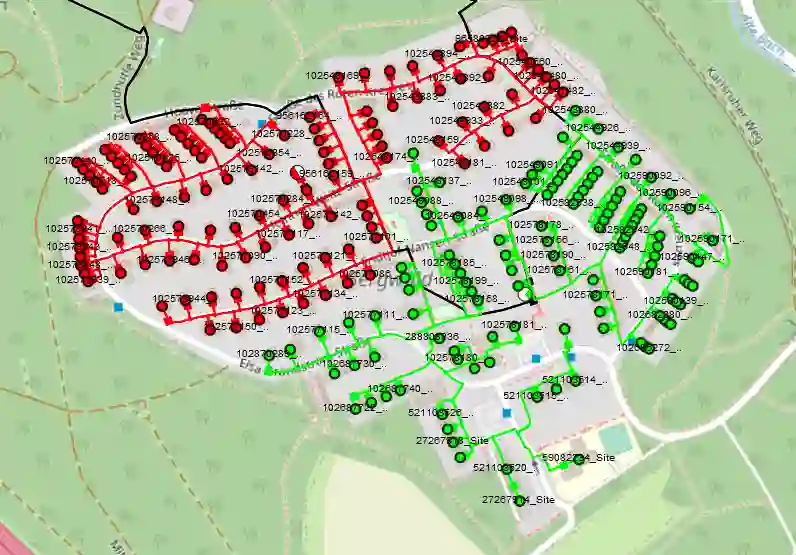
In the present paper, we introduce a new method for the automated generation of residential distribution grid models based on novel building load estimation methods and a two-stage optimization for the generation of the 20 kV and 400 V grid topologies. Using the introduced load estimation methods, various open or proprietary data sources can be utilized to estimate the load of residential buildings. These data sources include available building footprints from OpenStreetMap, 3D building data from OSM Buildings, and the number of electricity meters per address provided by the respective distribution system operator (DSO). For the evaluation of the introduced methods, we compare the resulting grid models by utilizing different available data sources for a specific suburban residential area and the real grid topology provided by the DSO. This evaluation yields two key findings: First, the automated 20 kV network generation methodology works well when compared to the real network. Second, the utilization of public 3D building data for load estimation significantly increases the resulting model accuracy compared to 2D data and enables results similar to models based on DSO-supplied meter data. This substantially reduces the dependence on such normally proprietary data.
翻译:本文提出了一种基于新型建筑负荷估计方法与两阶段优化技术(用于生成20 kV和400 V电网拓扑)的居民配电网模型自动化生成新方法。通过所提出的负荷估计方法,可利用多种开源或专有数据源评估居民建筑负荷,这些数据源包括OpenStreetMap中的建筑轮廓、OSM Buildings提供的三维建筑数据,以及配电网运营商(DSO)提供的每地址电表数量。为评估所提方法,我们针对特定郊区住宅区域,基于不同可用数据源生成的电网模型与DSO提供的真实电网拓扑进行了对比分析。评估得出两项关键结论:首先,自动化20 kV网络生成方法在与真实网络对比中表现良好;其次,相较于二维数据,采用公开三维建筑数据进行负荷估计可显著提升模型精度,其效果接近基于DSO提供的电表数据的模型。这极大地降低了对通常为专有数据的依赖。




相关内容





 微信扫码咨询专知VIP会员