

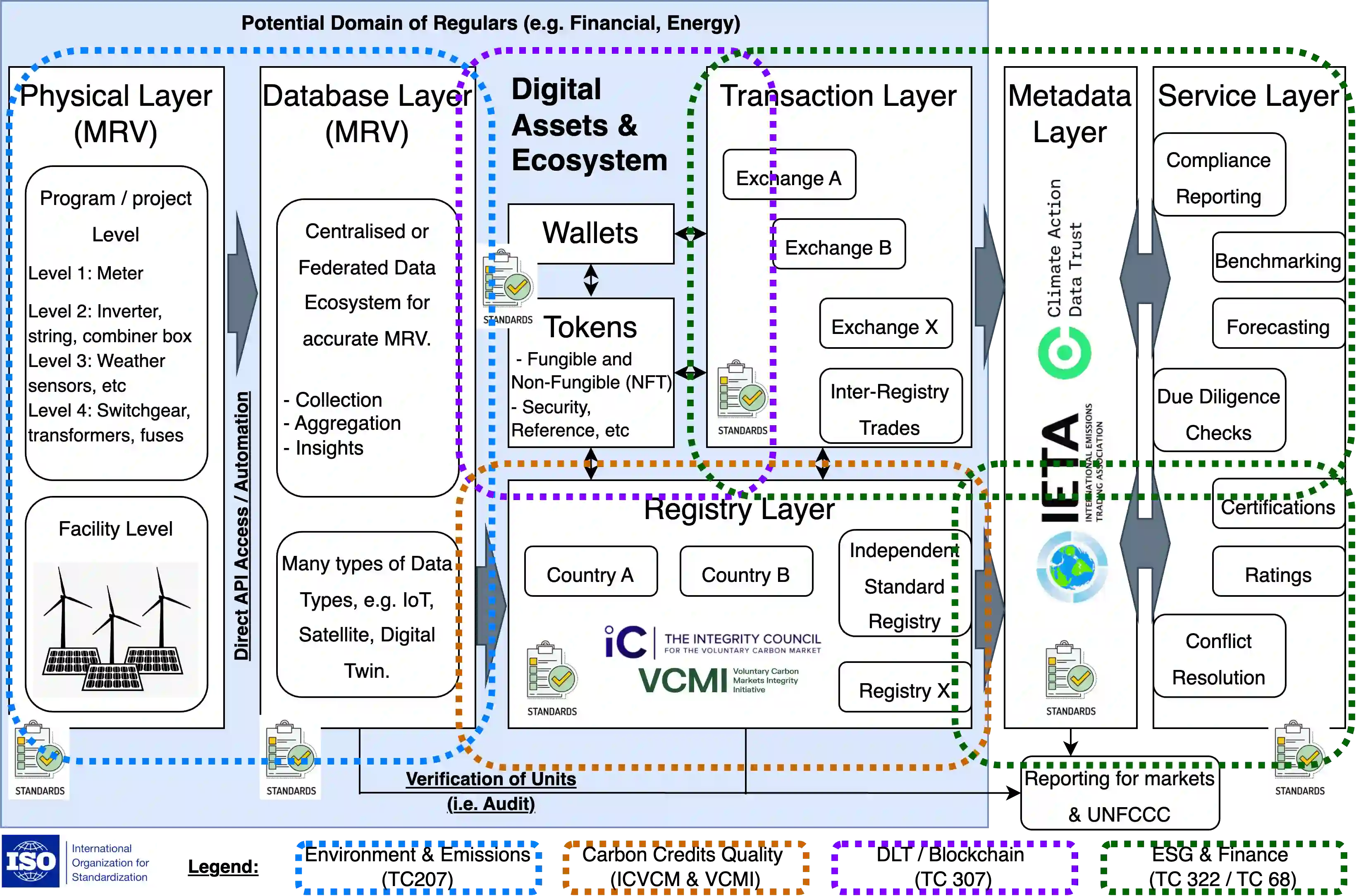
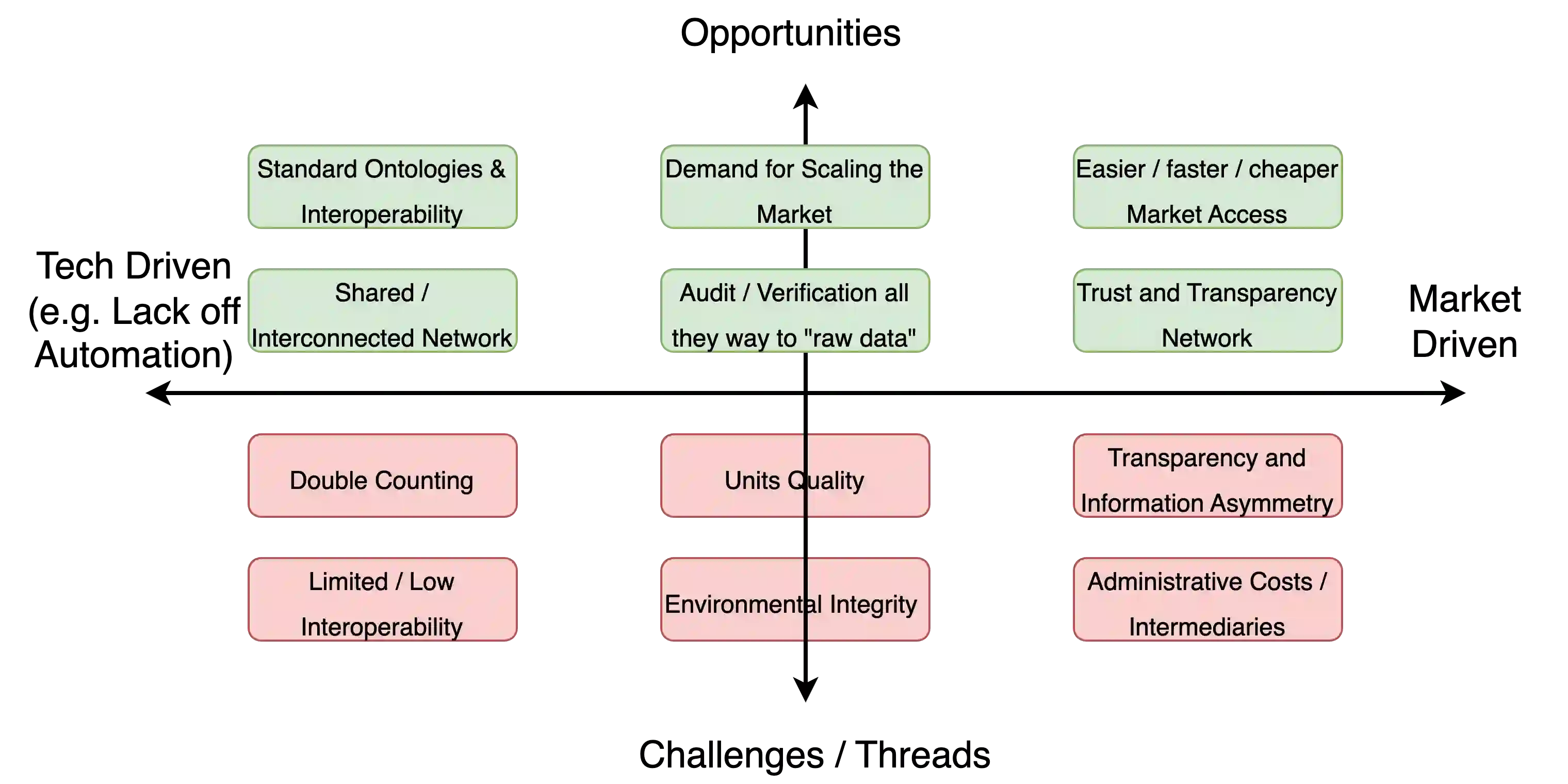
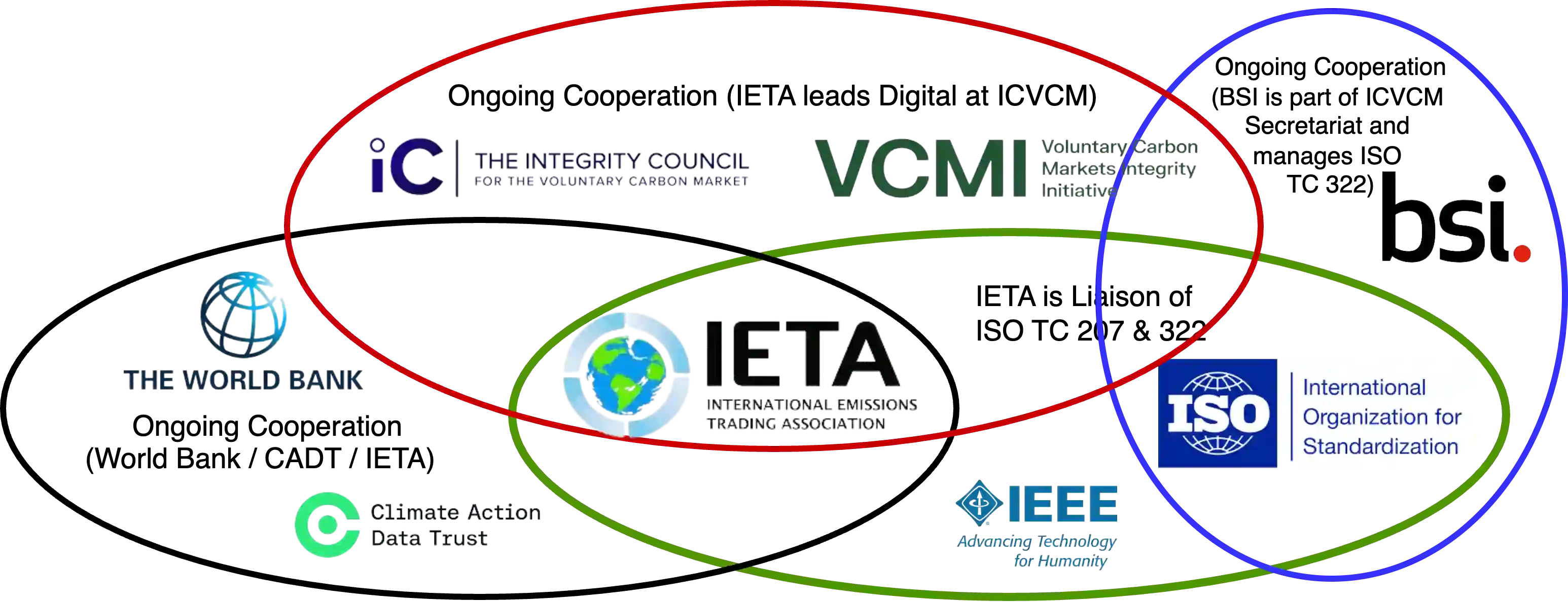
The increasing significance of sustainability considerations within both public spheres (such as policies and regulations) and private sectors (including voluntary commitments by major multinational corporations) underscores the imperative to harness cutting-edge technological advancements. This is essential to ensure that the momentum of this trend translates into tangible outcomes, thwarting phenomena like greenwashing and upholding high standards of integrity, all while expediting progress through automation. This paper focuses specifically on carbon markets, which, after enduring years of confusion and controversy, may finally be on the brink of converging toward internationally recognized minimum standards. Beginning with an introduction to fundamental concepts pertaining to carbon markets and Distributed Ledger Technologies (DLTs), the paper proceeds to dissect the challenges and opportunities within this burgeoning field. Its primary contribution lies in offering a comprehensive overview of recent developments across various initiatives (such as ICVCM, IETA/WorldBank/CAD Trust, IEEE/ISO) and providing a layered analysis of the entire ecosystem. This framework aids in understanding and prioritising future endeavours. Ultimately, the paper furnishes a set of recommendations aimed at bolstering scalability and fostering widespread adoption of best practices within international markets.
翻译:可持续性考量在公共领域(如政策与法规)及私营部门(包括大型跨国公司的自愿承诺)中的日益重要性,凸显了利用前沿技术进步的紧迫性。这对于确保这一趋势的动力转化为切实成果、遏制“漂绿”等现象、维护高标准诚信,同时通过自动化加速进展至关重要。本文聚焦于碳市场,经过多年的混乱与争议,该市场可能终于接近与国际公认的最低标准趋同。论文首先介绍碳市场和分布式账本技术(DLTs)的基本概念,随后剖析这一新兴领域中的挑战与机遇。其主要贡献在于全面概述各倡议(如ICVCM、IETA/世界银行/CAD信托、IEEE/ISO)的最新进展,并对整个生态系统进行分层分析。此框架有助于理解并优先安排未来的努力方向。最终,论文提出一系列旨在增强可扩展性并促进国际市场中最佳实践广泛采纳的建议。





相关内容



 微信扫码咨询专知VIP会员