

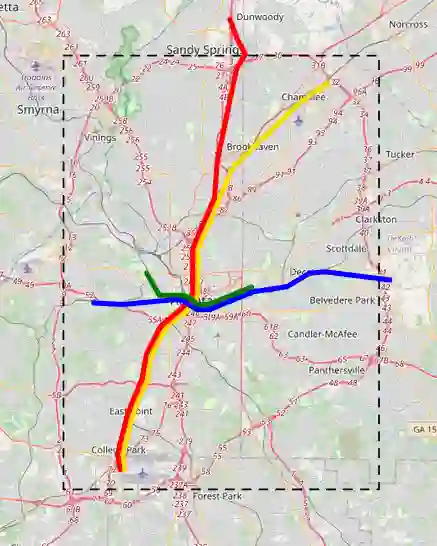
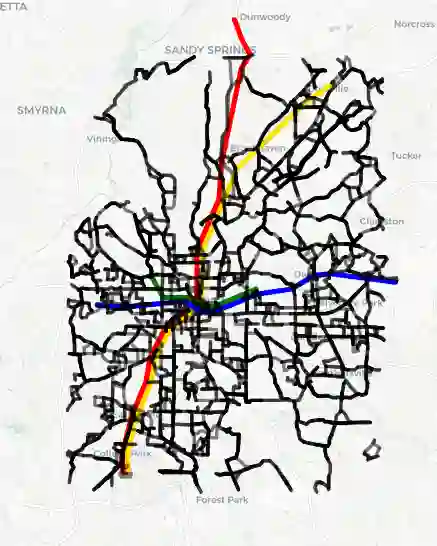
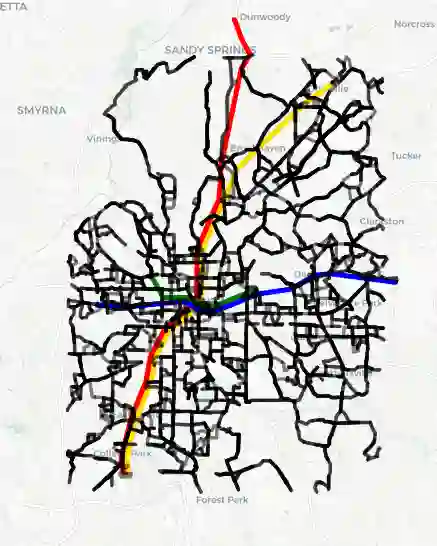
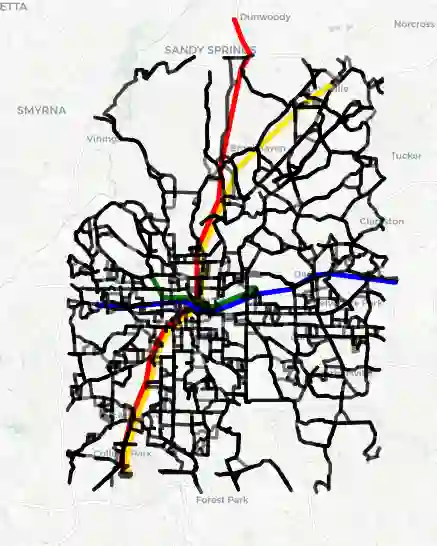
Transit Network Design is a well-studied problem in the field of transportation, typically addressed by solving optimization models under fixed demand assumptions. Considering the limitations of these assumptions, this paper proposes a new framework, namely the Two-Level Rider Choice Transit Network Design (2LRC-TND), that leverages machine learning and contextual stochastic optimization (CSO) through constraint programming (CP) to incorporate two layers of demand uncertainties into the network design process. The first level identifies travelers who rely on public transit (core demand), while the second level captures the conditional adoption behavior of those who do not (latent demand), based on the availability and quality of transit services. To capture these two types of uncertainties, 2LRC-TND relies on two travel mode choice models, that use multiple machine learning models. To design a network, 2LRC-TND integrates the resulting choice models into a CSO that is solved using a CP-SAT solver. 2LRC-TND is evaluated through a case study involving over 6,600 travel arcs and more than 38,000 trips in the Atlanta metropolitan area. The computational results demonstrate the effectiveness of the 2LRC-TND in designing transit networks that account for demand uncertainties and contextual information, offering a more realistic alternative to fixed-demand models.
翻译:公交网络设计是交通领域一个被广泛研究的问题,通常通过求解固定需求假设下的优化模型来解决。考虑到这些假设的局限性,本文提出了一种新框架,即双层乘客选择公交网络设计,该框架通过约束规划,利用机器学习和情境随机优化,将两层需求不确定性纳入网络设计过程。第一层识别依赖公共交通的出行者,第二层则基于公交服务的可用性和质量,捕捉不依赖公共交通的出行者的条件性选择行为。为捕捉这两类不确定性,双层乘客选择公交网络设计依赖于两个出行方式选择模型,这些模型使用了多种机器学习模型。为设计网络,该框架将所得选择模型集成到一个情境随机优化问题中,并使用约束规划可满足性理论求解器进行求解。通过一个涉及亚特兰大都市区超过6,600条出行弧和38,000多次出行的案例研究对双层乘客选择公交网络设计进行了评估。计算结果表明,该框架能有效设计出考虑需求不确定性和情境信息的公交网络,为固定需求模型提供了一个更贴近现实的替代方案。




相关内容


 微信扫码咨询专知VIP会员