

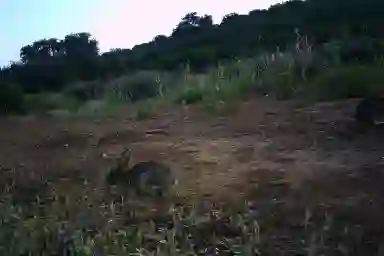
Photo-trapping cameras are widely employed for wildlife monitoring. Those cameras take photographs when motion is detected to capture images where animals appear. A significant portion of these images are empty - no wildlife appears in the image. Filtering out those images is not a trivial task since it requires hours of manual work from biologists. Therefore, there is a notable interest in automating this task. Automatic discarding of empty photo-trapping images is still an open field in the area of Machine Learning. Existing solutions often rely on state-of-the-art supervised convolutional neural networks that require the annotation of the images in the training phase. PARDINUS (Weakly suPervised discARDINg of photo-trapping empty images based on aUtoencoderS) is constructed on the foundation of weakly supervised learning and proves that this approach equals or even surpasses other fully supervised methods that require further labeling work.
翻译:照片陷阱相机被广泛用于野生动物监测。当检测到运动时,这些相机会拍摄照片以捕捉动物出现的图像。然而,其中相当一部分图像是空图像——图像中未出现任何野生动物。过滤掉这些图像并非易事,因为生物学家需要耗费数小时进行人工筛选。因此,自动化这一任务备受关注。自动剔除空照片陷阱图像仍是机器学习领域的开放课题。现有解决方案通常依赖需要训练阶段标注图像的最先进监督卷积神经网络。PARDINUS(基于自编码器的弱监督照片陷阱空图像剔除)建立在弱监督学习基础上,并证明该方法在性能上等同于甚至超越需要更多标注工作的全监督方法。




相关内容




 微信扫码咨询专知VIP会员