

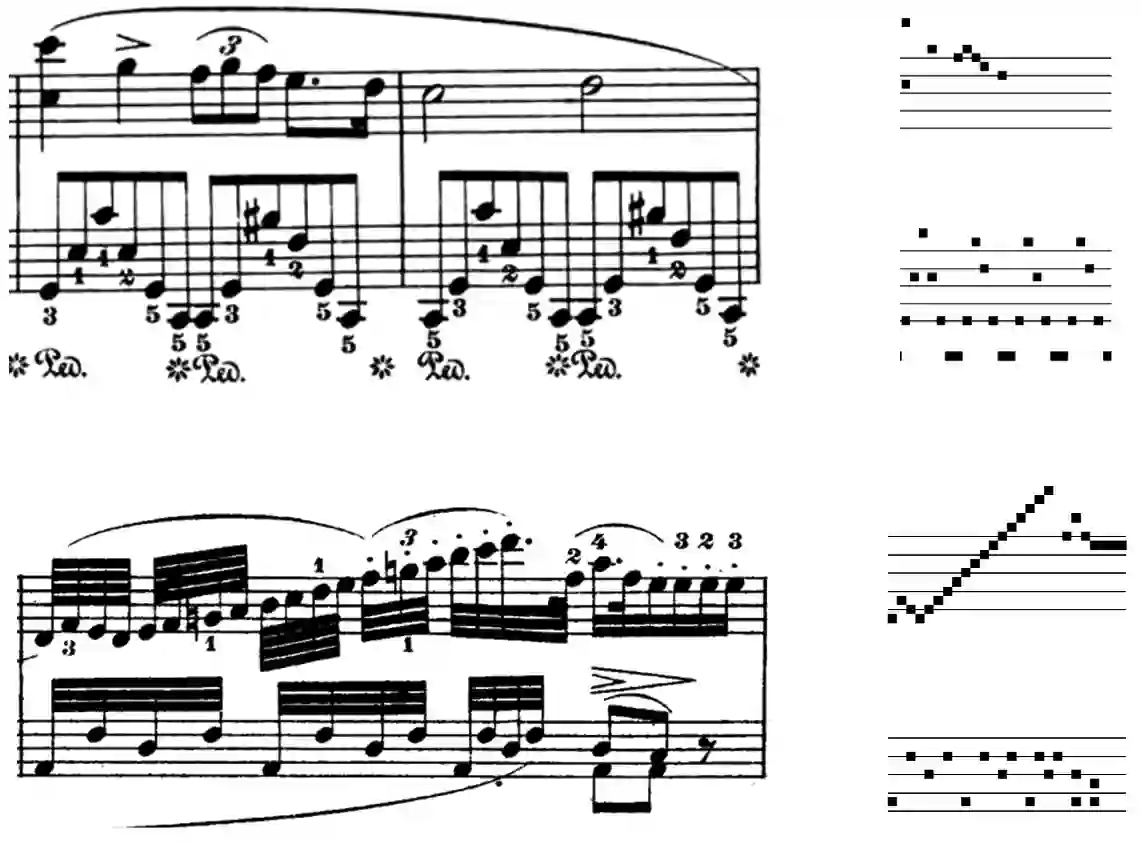
This article motivates, describes, and presents the PBSCSR dataset for studying composer style recognition of piano sheet music. Our overarching goal was to create a dataset for studying composer style recognition that is "as accessible as MNIST and as challenging as ImageNet". To achieve this goal, we use a previously proposed feature representation of sheet music called a bootleg score, which encodes the position of noteheads relative to the staff lines. Using this representation, we sample fixed-length bootleg score fragments from piano sheet music images on IMSLP. The dataset itself contains 40,000 62x64 bootleg score images for a 9-way classification task, 100,000 62x64 bootleg score images for a 100-way classification task, and 29,310 unlabeled variable-length bootleg score images for pretraining. The labeled data is presented in a form that mirrors MNIST images, in order to make it extremely easy to visualize, manipulate, and train models in an efficient manner. Additionally, we include relevant metadata to allow access to the underlying raw sheet music images and other related data on IMSLP. We describe several research tasks that could be studied with the dataset, including variations of composer style recognition in a few-shot or zero-shot setting. For tasks that have previously proposed models, we release code and baseline results for future works to compare against. We also discuss open research questions that the PBSCSR data is especially well suited to facilitate research on and areas of fruitful exploration in future work.
翻译:本文旨在推动、描述并介绍用于研究钢琴乐谱作曲家风格识别的PBSCSR数据集。我们的总体目标是创建一个"像MNIST一样易用、像ImageNet一样具挑战性"的作曲家风格识别研究数据集。为实现这一目标,我们采用先前提出的乐谱特征表示方法——盗版乐谱,该方法编码音符符头相对于五线谱的位置信息。利用这种表示方式,我们从IMSLP平台上的钢琴乐谱图像中提取固定长度的盗版乐谱片段。该数据集包含用于9类分类任务的40,000张62×64像素盗版乐谱图像、用于100类分类任务的100,000张62×64像素盗版乐谱图像,以及用于预训练的29,310张未标注可变长度盗版乐谱图像。标注数据以镜像MNIST图像的形式呈现,便于高效可视化、操作和模型训练。此外,我们提供相关元数据,以便用户访问IMSLP上的原始乐谱图像及其他关联数据。本文描述了基于该数据集可开展的若干研究任务,包括少样本或零样本场景下的作曲家风格识别变体。对于已有模型的研究任务,我们公开代码和基线结果供后续研究对比。同时,我们讨论了PBSCSR数据特别适合促进研究的开放性问题,以及未来工作中具有探索潜力的关键领域。




相关内容





 微信扫码咨询专知VIP会员