

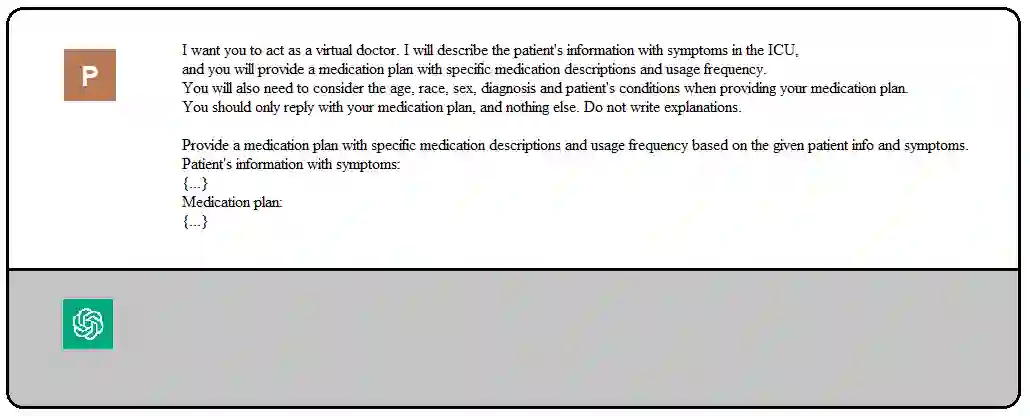
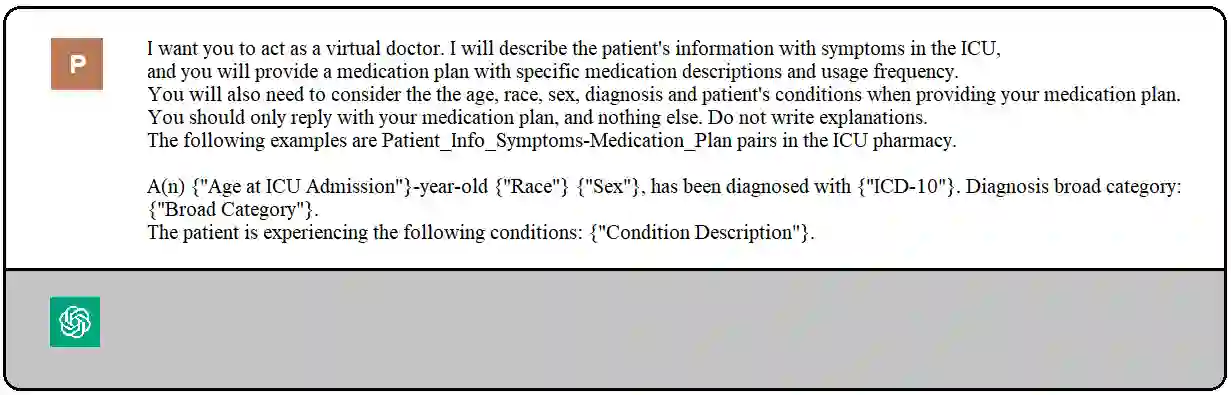
In this study, we introduce PharmacyGPT, a novel framework to assess the capabilities of large language models (LLMs) such as ChatGPT and GPT-4 in emulating the role of clinical pharmacists. Our methodology encompasses the utilization of LLMs to generate comprehensible patient clusters, formulate medication plans, and forecast patient outcomes. We conduct our investigation using real data acquired from the intensive care unit (ICU) at the University of North Carolina Chapel Hill (UNC) Hospital. Our analysis offers valuable insights into the potential applications and limitations of LLMs in the field of clinical pharmacy, with implications for both patient care and the development of future AI-driven healthcare solutions. By evaluating the performance of PharmacyGPT, we aim to contribute to the ongoing discourse surrounding the integration of artificial intelligence in healthcare settings, ultimately promoting the responsible and efficacious use of such technologies.
翻译:本研究提出了PharmacyGPT,这是一个用于评估大型语言模型(如ChatGPT和GPT-4)在模拟临床药剂师角色方面能力的新框架。我们的方法包括利用大型语言模型生成可理解的患者聚类、制定用药计划以及预测患者预后。我们使用从北卡罗来纳大学教堂山分校(UNC)医院重症监护室(ICU)获取的真实数据进行了研究。我们的分析为大型语言模型在临床药学领域的潜在应用和局限性提供了有价值的见解,对患者护理和未来人工智能驱动的医疗解决方案的开发具有重要意义。通过评估PharmacyGPT的性能,我们旨在为围绕人工智能在医疗环境中整合的持续讨论做出贡献,最终促进此类技术的负责任和有效使用。







相关内容





 微信扫码咨询专知VIP会员