

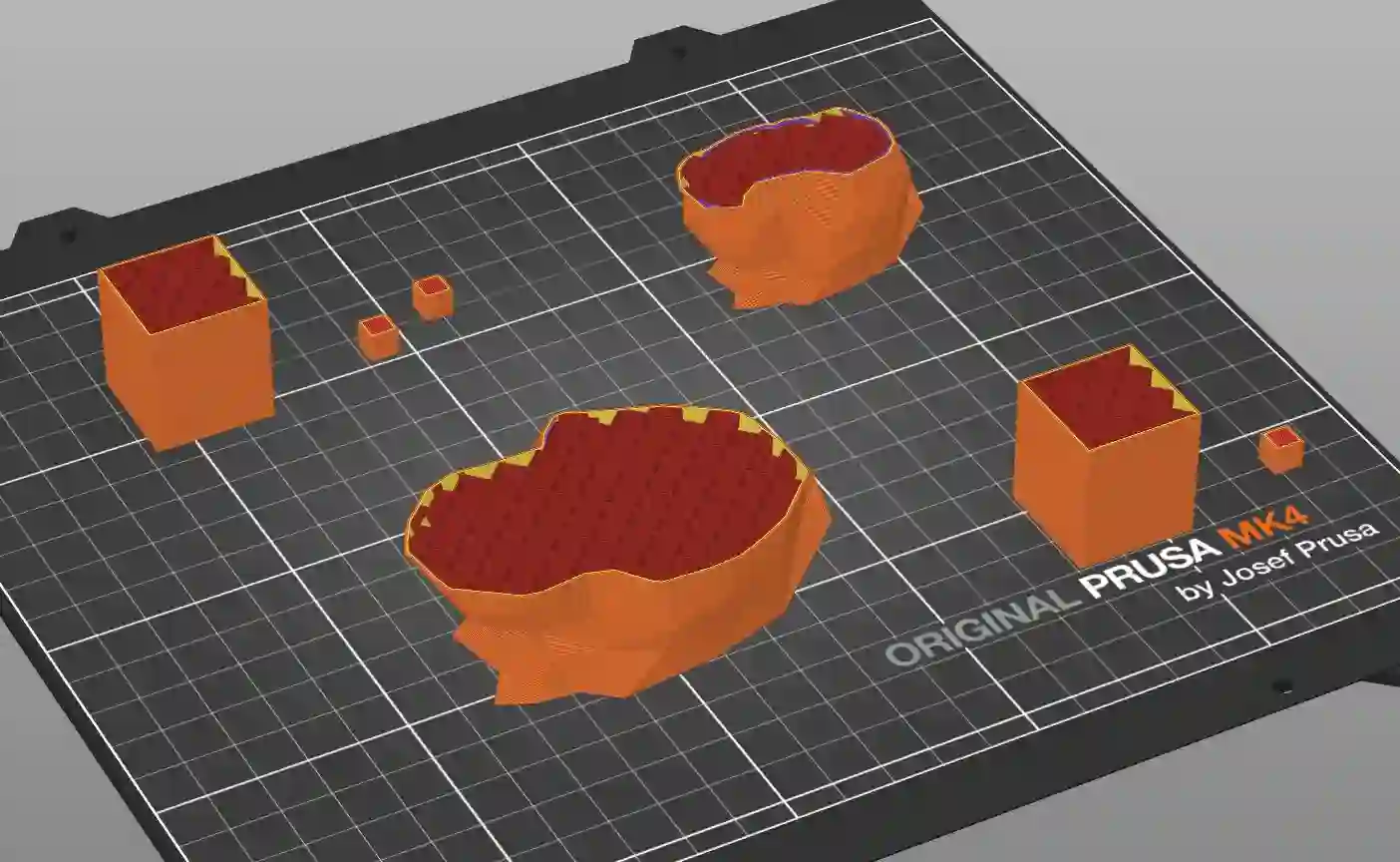
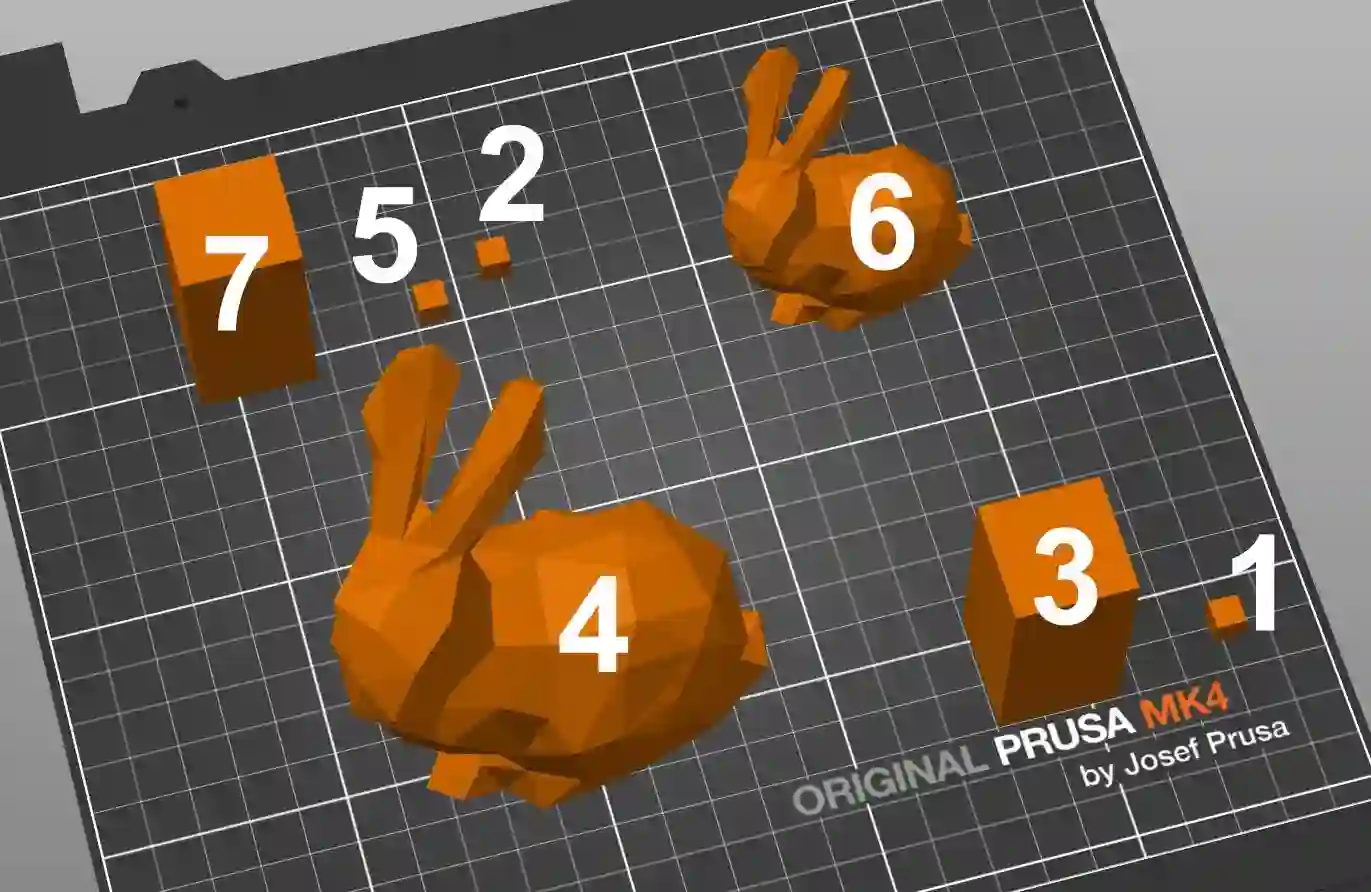
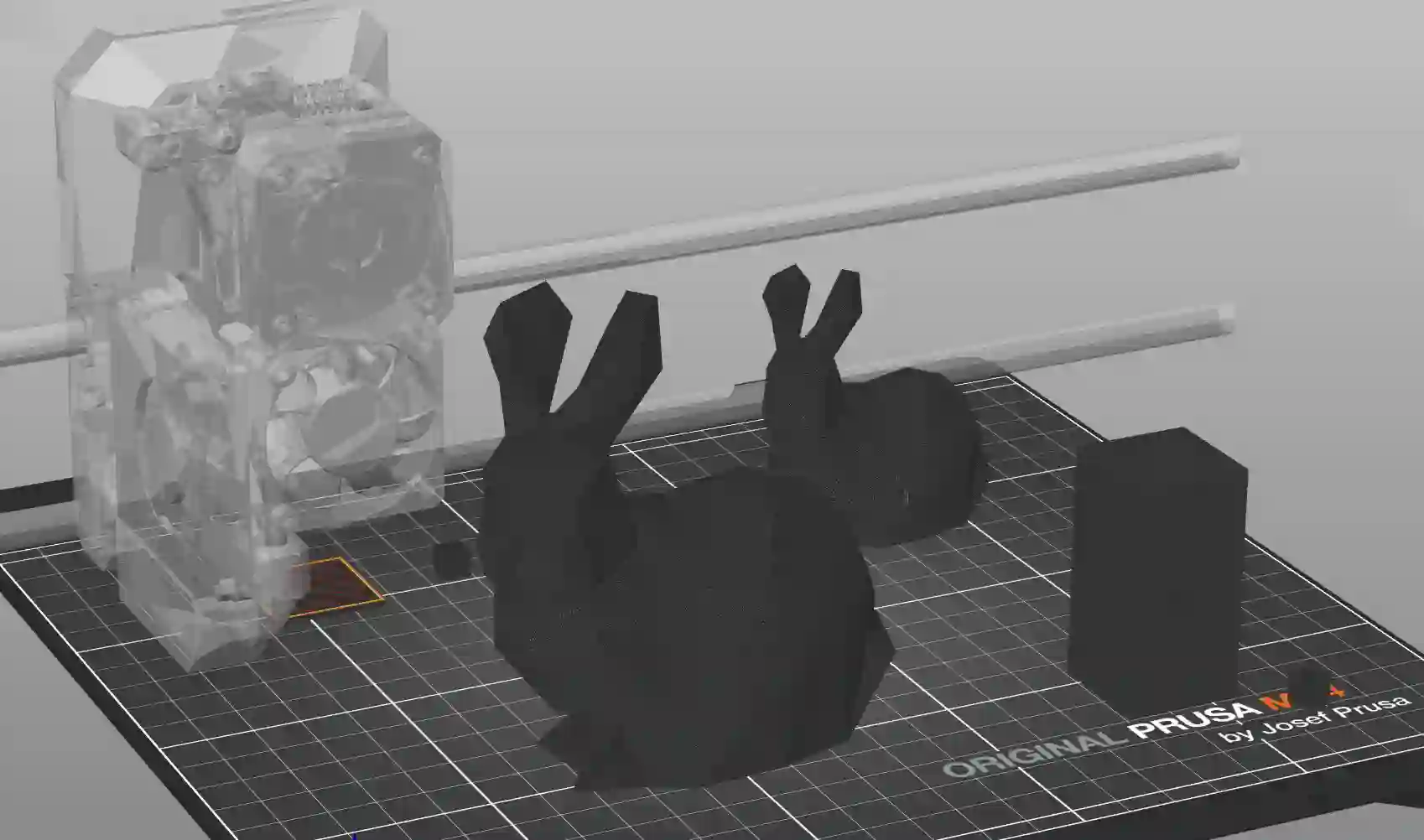
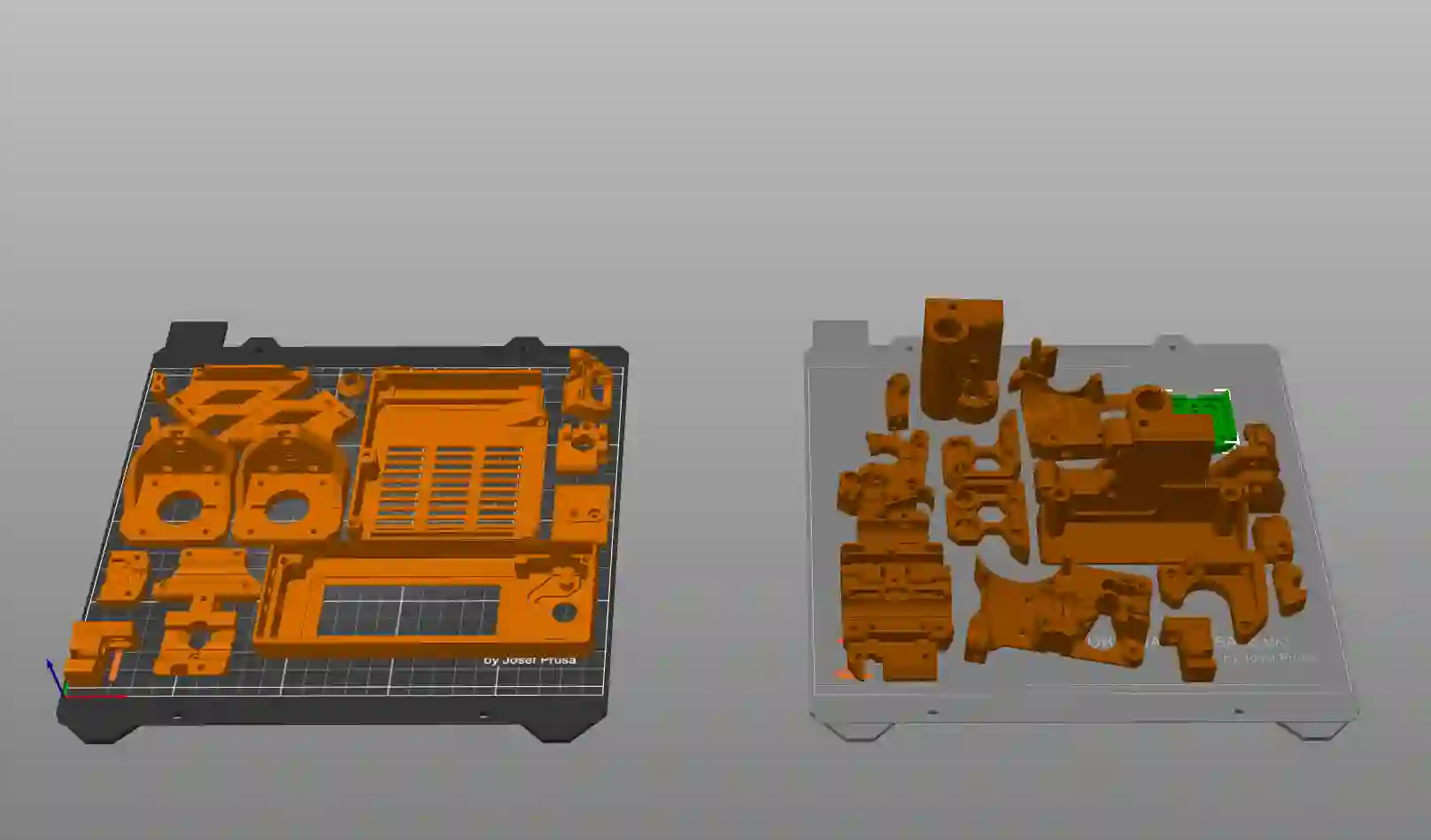
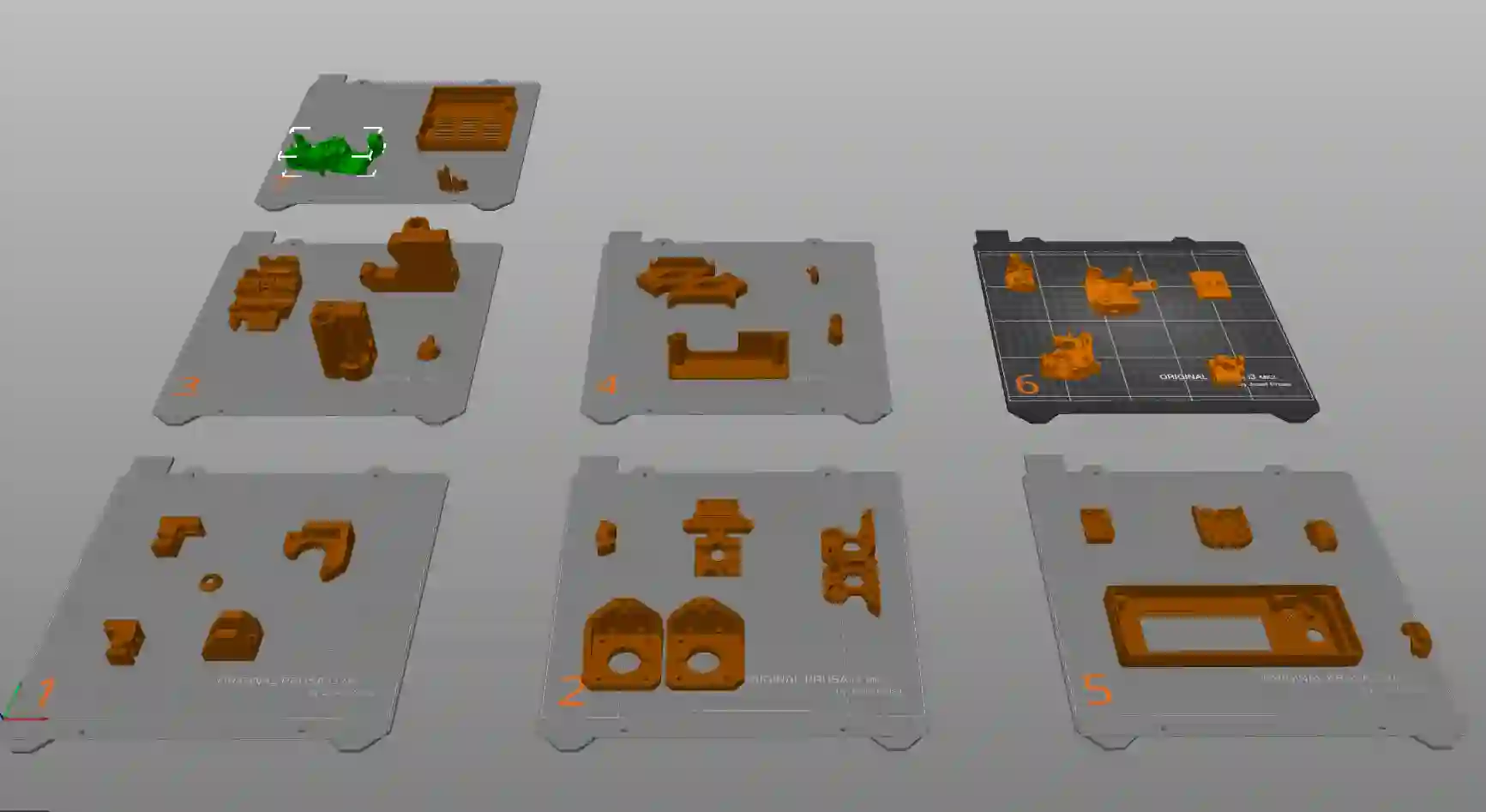
Computing power that used to be available only in supercomputers decades ago especially their parallelism is currently available in standard personal computer CPUs even in CPUs for mobile telephones. We show how to effectively utilize the computing power of modern multi-core personal computer CPU to solve the complex combinatorial problem of object arrangement and scheduling for sequential 3D printing. We achieved this by parallelizing the existing CEGAR-SEQ algorithm that solves the sequential object arrangement and scheduling by expressing it as a linear arithmetic formula which is then solved by a technique inspired by counterexample guided abstraction refinement (CEGAR). The original CEGAR-SEQ algorithm uses an object arrangement strategy that places objects towards the center of the printing plate. We propose alternative object arrangement strategies such as placing objects towards a corner of the printing plate and scheduling objects according to their height. Our parallelization is done at the high-level where we execute the CEGAR-SEQ algorithm in parallel with a portfolio of object arrangement strategies, an algorithm is called Porfolio-CEGAR-SEQ. Our experimental evaluation indicates that Porfolio-CEGAR-SEQ outperforms the original CEGAR-SEQ. When a batch of objects for multiple printing plates is scheduled, Portfolio-CEGAR-SEQ often uses fewer printing plates than CEGAR-SEQ.
翻译:数十年前仅超级计算机才具备的计算能力,尤其是其并行处理能力,如今已在标准个人计算机CPU甚至移动电话CPU中普及。本文展示了如何有效利用现代多核个人计算机CPU的计算能力,以解决序列3D打印中物体排布与调度这一复杂组合优化问题。我们通过并行化现有CEGAR-SEQ算法实现这一目标,该算法将序列物体排布与调度问题表达为线性算术公式,并采用受反例引导抽象精化(CEGAR)技术启发的求解方法。原始CEGAR-SEQ算法采用将物体朝向打印平台中心排布的策略。我们提出了替代性的物体排布策略,例如将物体朝向打印平台角落排布,以及依据物体高度进行调度。我们的并行化在高层实现,即使用多种物体排布策略组合并行执行CEGAR-SEQ算法,该算法称为Portfolio-CEGAR-SEQ。实验评估表明,Portfolio-CEGAR-SEQ的性能优于原始CEGAR-SEQ算法。在对多块打印板的物体批次进行调度时,Portfolio-CEGAR-SEQ通常能比CEGAR-SEQ使用更少的打印板。




相关内容




 微信扫码咨询专知VIP会员