

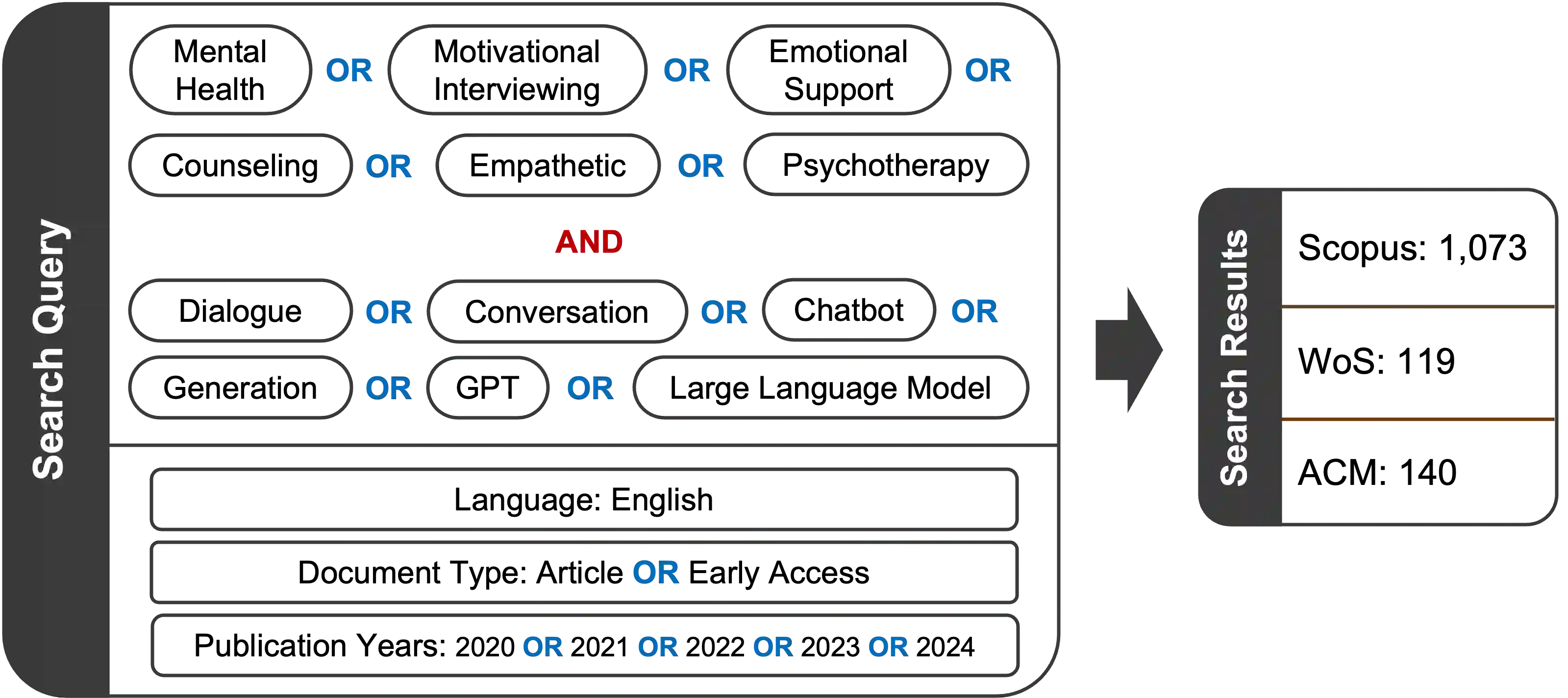
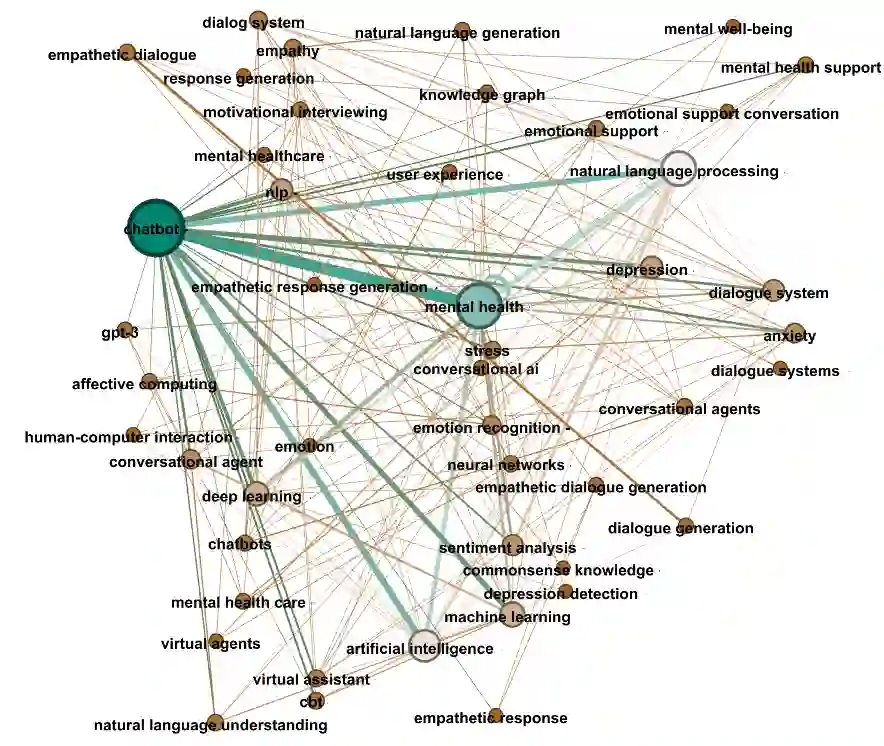
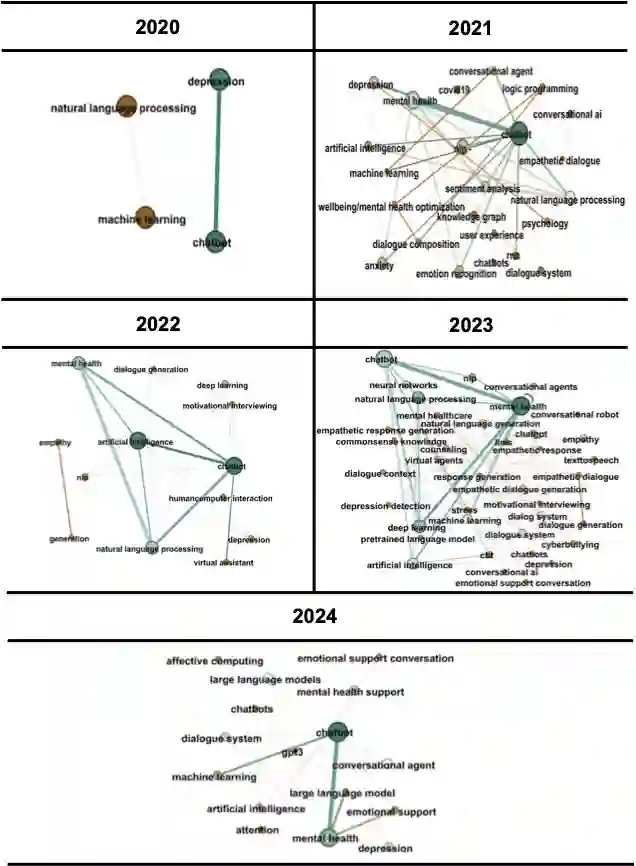
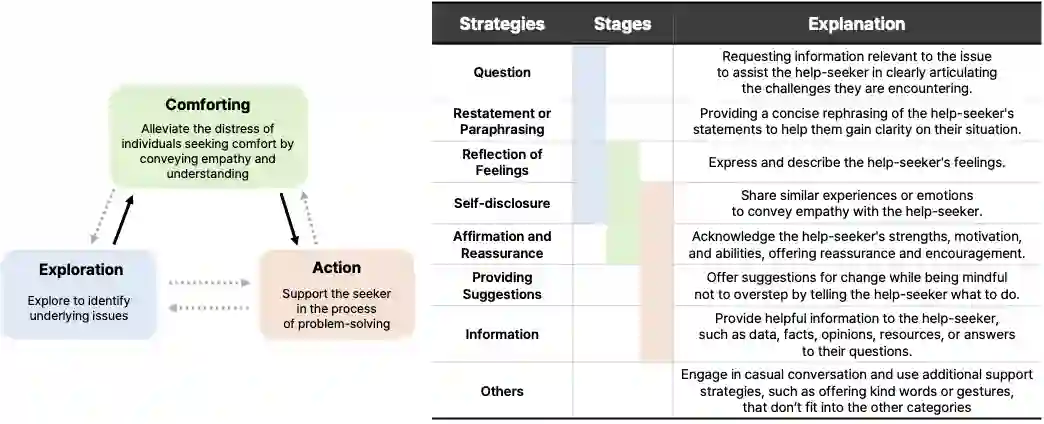
Mental health remains a major public health concern, while access to timely psychological support is often limited. AI-based dialogue systems have emerged as promising tools to address these barriers, and recent advances in large language models (LLMs) have significantly transformed this research area. However, a systematic understanding of this technological transition is still limited. This study reviews the technological evolution of AI-driven dialogue systems for mental health, focusing on the shift from task-specific deep learning models to LLM-based approaches. We conducted a bibliometric analysis and qualitative trend review of studies published between 2020 and May 2024 using Web of Science, Scopus, and the ACM Digital Library. The qualitative analysis compared research conducted before and after the widespread adoption of LLMs. Pre-LLM research was represented by highly cited studies and work based on the ESConv dataset, while post-LLM research included highly cited dialogue systems built on LLMs. A total of 146 studies met the inclusion criteria, showing a steady growth in publications over time. Before the widespread use of LLMs, empathetic response generation mainly relied on task-specific deep learning models. Highly cited and ESConv-based studies commonly focused on multi-task learning and the integration of external knowledge. In contrast, recent LLM-based dialogue systems demonstrate improved linguistic flexibility and generalization for emotional support. However, these systems also raise concerns related to reliability and safety in mental health applications. This review highlights the technological transition of AI-based dialogue systems for mental health in the LLM era. By identifying current research trends and limitations, the findings provide guidance for developing more effective and reliable AI-driven counseling systems.
翻译:心理健康仍是重大公共卫生问题,而及时心理支持的获取途径往往有限。基于人工智能的对话系统已成为应对这些障碍的有效工具,大型语言模型(LLMs)的最新进展更深刻改变了该研究领域。然而,对这一技术转型的系统性认识仍然不足。本研究回顾了心理健康领域AI驱动对话系统的技术演进,重点关注从任务特定深度学习模型向LLM基方法的转变。通过Web of Science、Scopus和ACM数字图书馆,我们对2020年至2024年5月期间发表的研究进行了文献计量分析与定性趋势综述。定性分析比较了LLMs广泛应用前后的研究成果:前LLM时期以高被引研究及基于ESConv数据集的工作为代表,后LLM时期则涵盖基于LLMs构建的高被引对话系统。最终纳入的146项研究表明该领域文献数量持续增长。在LLMs普及前,共情回应生成主要依赖任务特定深度学习模型,高被引及ESConv基研究普遍关注多任务学习与外部知识融合。相比之下,近期LLM基对话系统展现出更优越的语言灵活性与情感支持泛化能力,但同时也引发了心理健康应用场景中可靠性与安全性的新关切。本综述揭示了LLM时代心理健康领域AI对话系统的技术转型,通过厘清当前研究趋势与局限,为开发更有效可靠的AI驱动咨询系统提供方向指引。





相关内容



 微信扫码咨询专知VIP会员