

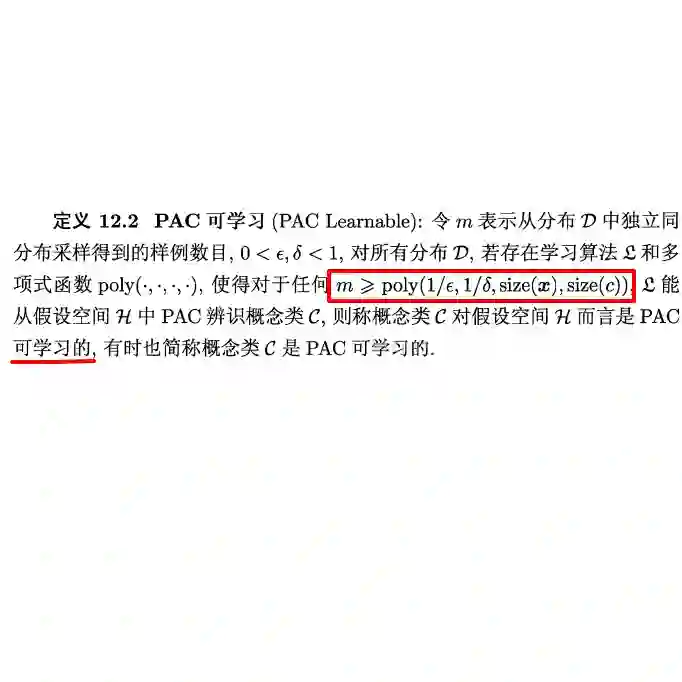
The concepts of linkage, building blocks, and problem decomposition have long existed in the genetic algorithm field and have guided the development of model-based genetic algorithms for decades. However, their definitions are usually vague, making it difficult to develop theoretical support. This paper provides an algorithm-independent definition to describe the concept of linkage. With this definition, the paper proves that any problem with a bounded degree of linkage is decomposable and that proper problem decomposition is possible via linkage learning. The way of decomposition given in this paper also offers a new perspective on nearly decomposable problems with bounded difficulty and building blocks from the theoretical aspect. Finally, this paper relates problem decomposition to probably approximately correct (PAC) learning and proves that the global optima of problems with bounded decomposition difficulty are PAC learnable and the decomposition is decidable in polynomial time under certain conditions.
翻译:遗传算法领域长期存在连锁、积木块和问题分解等概念,这些概念数十年来一直指导着基于模型的遗传算法发展。然而,这些概念的定义通常较为模糊,难以建立理论支撑。本文提出了一个独立于算法的定义来描述连锁概念。基于此定义,本文证明了任何具有有限连锁度的问题都是可分解的,并且通过连锁学习可以实现恰当的问题分解。本文提出的分解方式还为具有有限难度和积木块的近似可分解问题提供了理论层面的新视角。最后,本文将问题分解与概率近似正确(PAC)学习理论相关联,证明了具有有限分解难度问题的全局最优解是PAC可学习的,并且在特定条件下分解过程可在多项式时间内判定。




相关内容



 微信扫码咨询专知VIP会员