

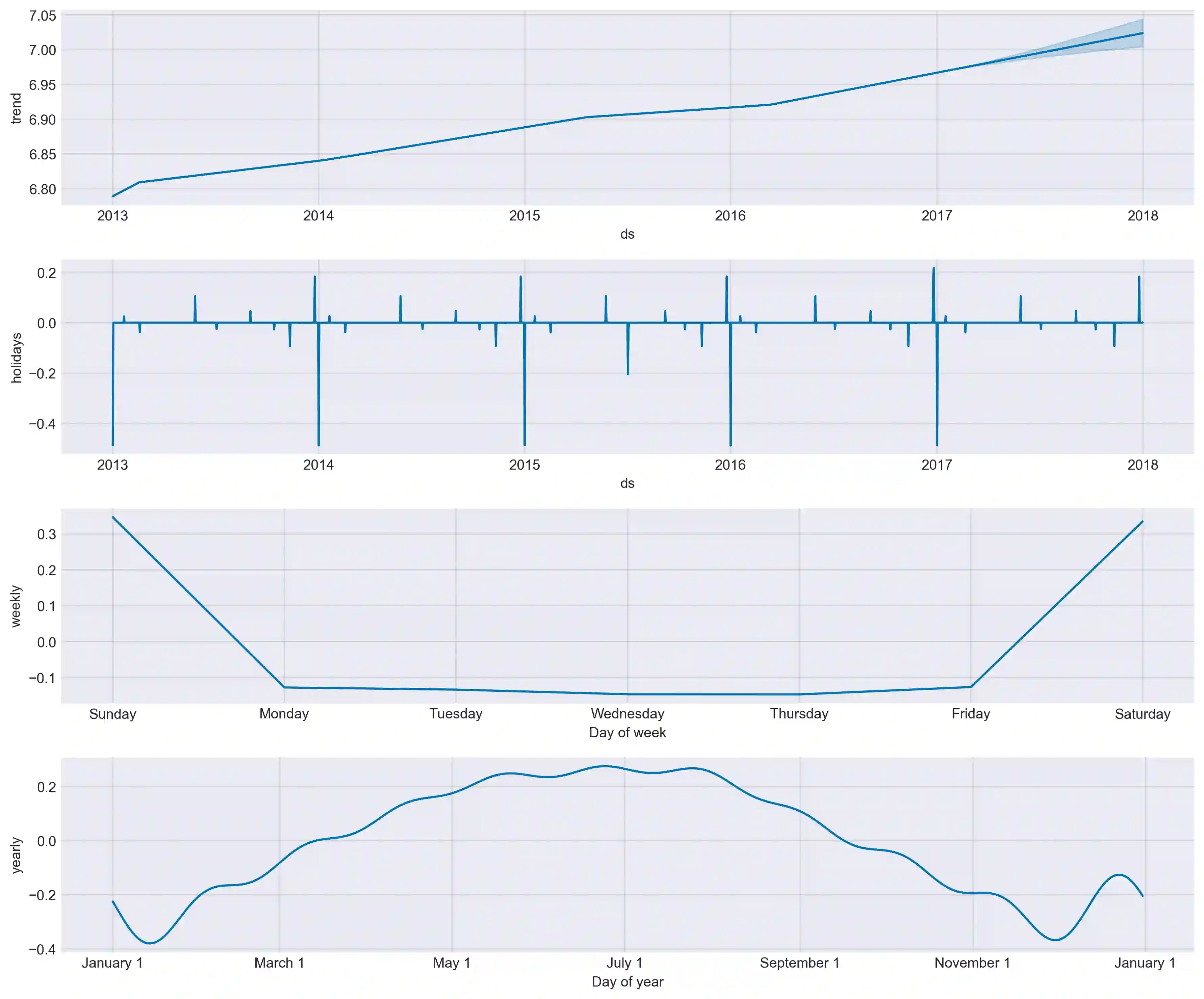
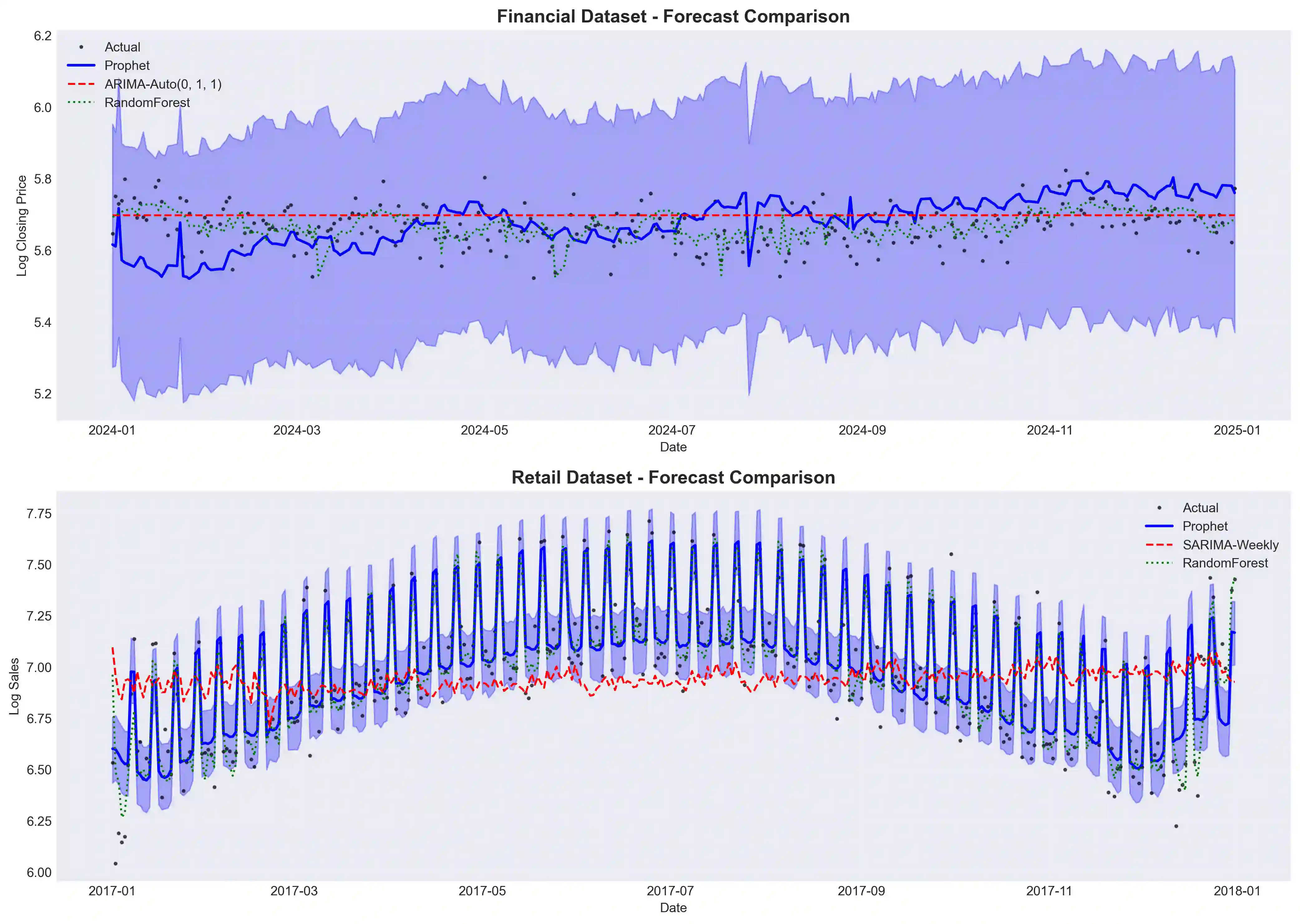
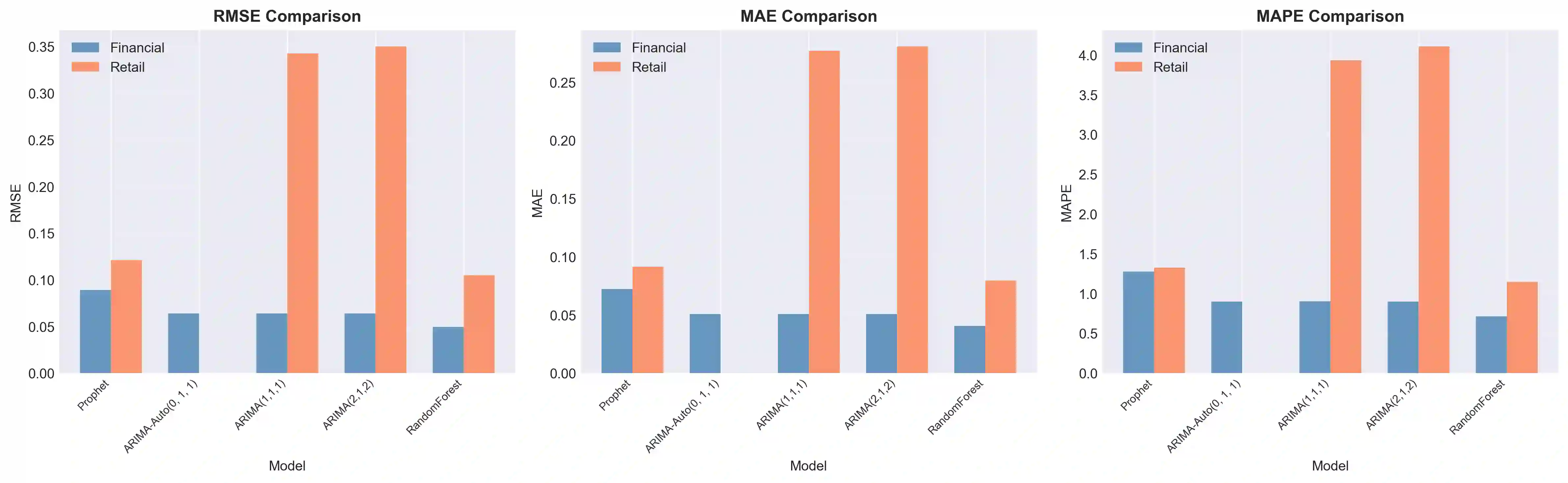
Reproducibility remains a persistent challenge in forecasting research and practice, particularly in business and financial analytics where forecasts inform high-stakes decisions. Traditional forecasting methods, while theoretically interpretable, often require extensive manual tuning and are difficult to replicate in proprietary environments. Machine learning approaches offer predictive flexibility but introduce challenges related to interpretability, stochastic training procedures, and cross-environment reproducibility. This paper examines Prophet, an open-source forecasting framework developed by Meta, as a reproducibility-enabling solution that balances interpretability, standardized workflows, and accessibility. Rather than proposing a new algorithm, this study evaluates how Prophet's additive structure, open-source implementation, and standardized workflow contribute to transparent and replicable forecasting practice. Using publicly available financial and retail datasets, we compare Prophet's performance and interpretability with multiple ARIMA specifications (auto-selected, manually specified, and seasonal variants) and Random Forest under a controlled and fully documented experimental design. This multi-model comparison provides a robust assessment of Prophet's relative performance and reproducibility advantages. Through concrete Python examples, we demonstrate how Prophet facilitates efficient forecasting workflows and integration with analytical pipelines. The study positions Prophet within the broader context of reproducible research. It highlights Prophet's role as a methodological building block that supports verification, auditability, and methodological rigor. This work provides researchers and practitioners with a practical reference framework for reproducible forecasting in Python-based research workflows.
翻译:可复现性始终是预测研究与实践中持续存在的挑战,在预测结果影响重大决策的商业与金融分析领域尤为突出。传统预测方法虽在理论上可解释,但通常需要大量人工调参,且在专有环境中难以复现。机器学习方法提供了预测灵活性,却引入了可解释性、随机训练过程及跨环境可复现性等方面的挑战。本文审视了Meta公司开发的开源预测框架Prophet,将其视为一种平衡可解释性、标准化工作流程与可访问性的可复现性解决方案。本研究并未提出新算法,而是评估了Prophet的加性结构、开源实现和标准化工作流程如何促进透明且可复现的预测实践。通过使用公开的金融与零售数据集,我们在受控且完全文档化的实验设计下,将Prophet的性能和可解释性与多种ARIMA模型(自动选择型、手动指定型及季节变体)以及随机森林进行对比。这种多模型比较为Prophet的相对性能与可复现性优势提供了稳健评估。通过具体的Python示例,我们展示了Prophet如何促进高效预测工作流及其与分析管道的集成。本研究将Prophet置于更广泛的可复现研究背景下,强调其作为支持验证、可审计性与方法论严谨性的方法论构建模块的作用。这项工作为研究者和实践者提供了在基于Python的研究工作流中进行可复现预测的实用参考框架。




相关内容


 微信扫码咨询专知VIP会员