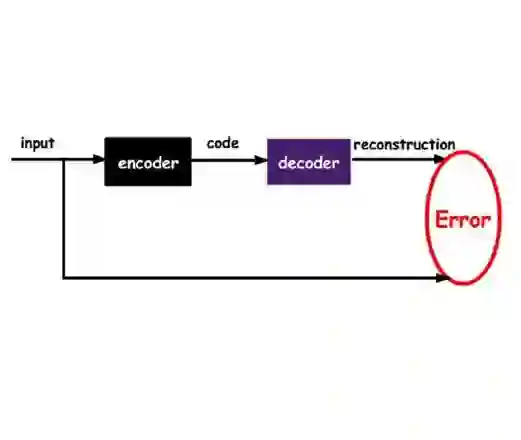
Machine-learning (ML) malware detectors are known to be vulnerable to adversarial samples. Generative adversarial networks (GANs) such as MalGAN, Mal-LSGAN, and our previous Mal-D2GAN can craft adversarial malware to probe and harden these detectors, yet they operate directly on a high-dimensional, discrete binary feature space, which leads to unstable training, vanishing gradients, and adversarial samples of limited diversity. To address these problems we propose Mal-AAEGAN. First, an adversarial autoencoder (AAE) learns a low-dimensional, regularized and continuous latent representation of the $M$-dimensional binary API feature vector, and the generator performs an additive perturbation in this latent space rather than in the raw binary space. Second, training follows the Wasserstein GAN with gradient penalty (WGAN-GP) scheme using two critics: a mimic-black-box critic that inherits the role of the substitute detector and a naive critic that inherits the role of the additional detector. A decode-binarize-OR pipeline guarantees that the original API calls of the malware are preserved. The model is evaluated on two malware datasets of different input dimensionality ($M\in\{139,215\}$) against eight common ML detectors and compared, under an identical protocol, with MalGAN, Mal-LSGAN and Mal-D2GAN. Mal-AAEGAN trains stably in the continuous latent space and attains an evasion rate on par with or higher than these binary-space baselines across both datasets, while its generator stays responsive to the noise input rather than reducing to a single fixed perturbation per malware.


翻译:暂无翻译

0
下载
关闭预览

相关内容

【脑机接口教程】Machine Learning for BCI,NeurotechEDU
专知会员服务
36+阅读 · 2022年2月14日
博士万字总结 || 多智能体强化学习(MARL)大总结与论文详细解读
深度强化学习实验室
10+阅读 · 2020年4月14日
多智能体强化学习(MARL)近年研究概览
PaperWeekly
39+阅读 · 2020年3月15日
概述自动机器学习(AutoML)
人工智能学家
19+阅读 · 2019年8月11日
Hierarchically Structured Meta-learning
CreateAMind
27+阅读 · 2019年5月22日
强化学习的Unsupervised Meta-Learning
CreateAMind
18+阅读 · 2019年1月7日
Unsupervised Learning via Meta-Learning
CreateAMind
44+阅读 · 2019年1月3日
A Technical Overview of AI & ML in 2018 & Trends for 2019
待字闺中
18+阅读 · 2018年12月24日
国家自然科学基金
1+阅读 · 2015年12月31日
国家自然科学基金
7+阅读 · 2015年12月31日
国家自然科学基金
1+阅读 · 2015年12月31日
国家自然科学基金
0+阅读 · 2015年12月31日
国家自然科学基金
0+阅读 · 2014年12月31日
国家自然科学基金
1+阅读 · 2014年12月31日
国家自然科学基金
0+阅读 · 2014年12月31日
Arxiv
27+阅读 · 2021年11月11日
Arxiv
11+阅读 · 2018年3月23日
VIP会员
最新内容
《美空军2026条令文件:对海压制作战》
专知会员服务
13+阅读 · 11月9日
人工智能与战争的未来
专知会员服务
5+阅读 · 11月8日
《Agent Mosaic:识别智能体LLM系统中的机密泄露》
人工智能在军事教育中的应用:若干视角与经验
“星链”减速与不断适应的乌克兰
专知会员服务
7+阅读 · 11月6日
美国中期选举之后:帕兰提尔面临不确定性?
专知会员服务
4+阅读 · 11月6日
相关VIP内容
【脑机接口教程】Machine Learning for BCI,NeurotechEDU
专知会员服务
36+阅读 · 2022年2月14日
相关资讯
博士万字总结 || 多智能体强化学习(MARL)大总结与论文详细解读
深度强化学习实验室
10+阅读 · 2020年4月14日
多智能体强化学习(MARL)近年研究概览
PaperWeekly
39+阅读 · 2020年3月15日
概述自动机器学习(AutoML)
人工智能学家
19+阅读 · 2019年8月11日
Hierarchically Structured Meta-learning
CreateAMind
27+阅读 · 2019年5月22日
强化学习的Unsupervised Meta-Learning
CreateAMind
18+阅读 · 2019年1月7日
Unsupervised Learning via Meta-Learning
CreateAMind
44+阅读 · 2019年1月3日
A Technical Overview of AI & ML in 2018 & Trends for 2019
待字闺中
18+阅读 · 2018年12月24日
相关基金
国家自然科学基金
1+阅读 · 2015年12月31日
国家自然科学基金
7+阅读 · 2015年12月31日
国家自然科学基金
1+阅读 · 2015年12月31日
国家自然科学基金
0+阅读 · 2015年12月31日
国家自然科学基金
0+阅读 · 2014年12月31日
国家自然科学基金
1+阅读 · 2014年12月31日
国家自然科学基金
0+阅读 · 2014年12月31日
Top
微信扫码咨询专知VIP会员