

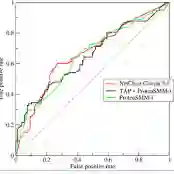
Automated item evaluation (AIE) refers to the use of computational methods to assess item quality without requiring manual expert review or field testing of the items under evaluation. We aimed to build a near-comprehensive AIE model by predicting item acceptance and rejection from item text using historical rejection data from a large-scale standardized testing program. The dataset contained 52,759 English language arts (ELA) and mathematics items with 34% permanently rejected from future operational use. Rejection reasons included poor psychometric properties, content issues, bias and sensitivity concerns, and non-content issues. We fine-tuned a DeBERTaV3-large classifier on raw item text, a second DeBERTa classifier on Qwen3-generated item critiques, and a fusion model combining representations from both. The fusion model achieved the strongest overall performance (Accuracy = .75, F1 = .64, AUC = .80, Sensitivity = .64, Specificity = .81). Prediction for math (F1 = .73, AUC = .86) was considerably more accurate than ELA (F1 = .51, AUC = .72). Lowering the decision threshold from .5 to .25 raised average sensitivity for ELA and math to .88 and .91, while reducing specificity to .31 and .56, respectively, which may be preferable in automated item generation contexts where generating items is cheaper than evaluating them. Incorporating item critiques alongside raw item text improved performance across most rejection reasons. The model assigned higher rejection probabilities to more difficult items. However, the fusion model struggled to identify items flagged for bias, sensitivity, fairness, or accessibility, especially for ELA. These findings suggest that text-based AIE is feasible in some areas and may offer a practical tool for reducing the burden of manual review and field testing, while also underscoring the importance of human review for items with fairness concerns.
翻译:暂无翻译




相关内容




 微信扫码咨询专知VIP会员