

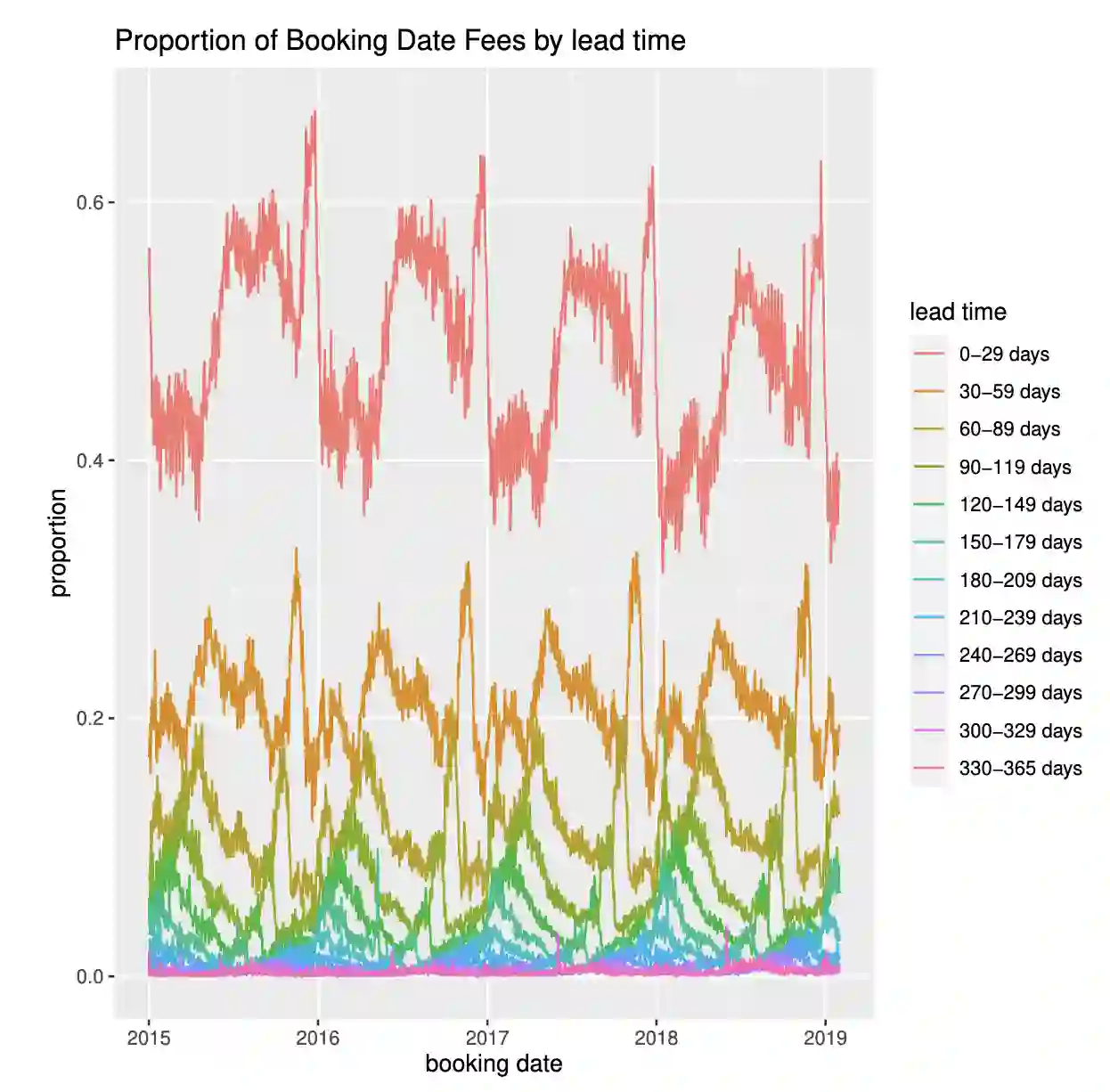
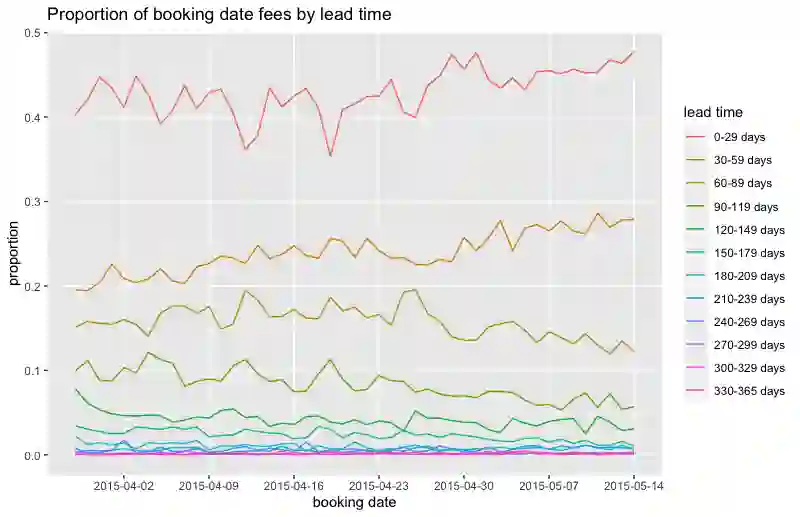
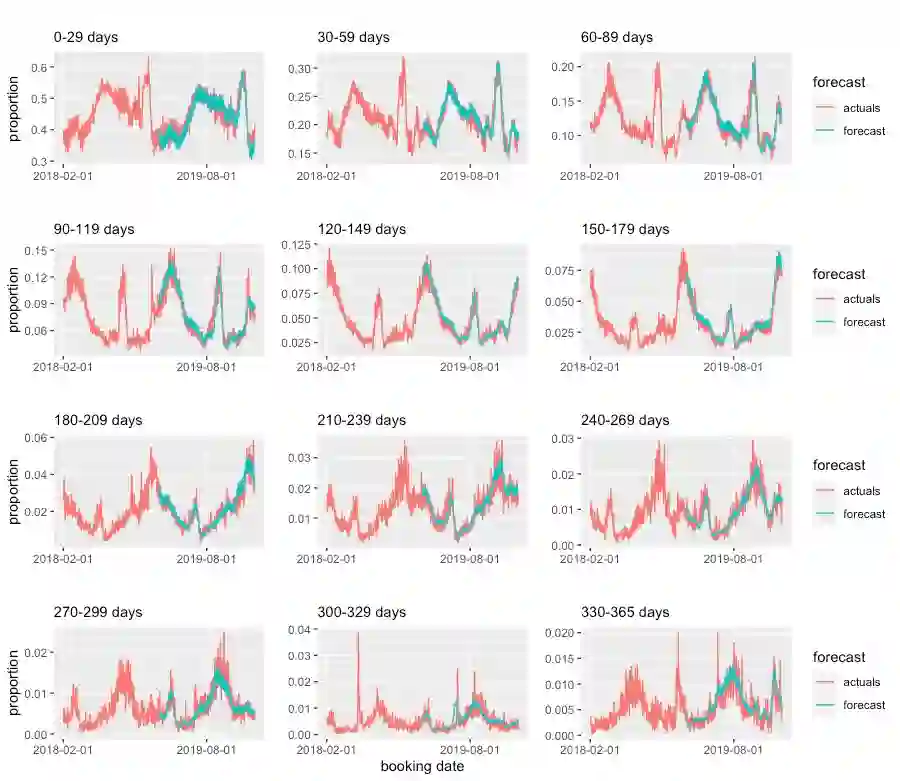
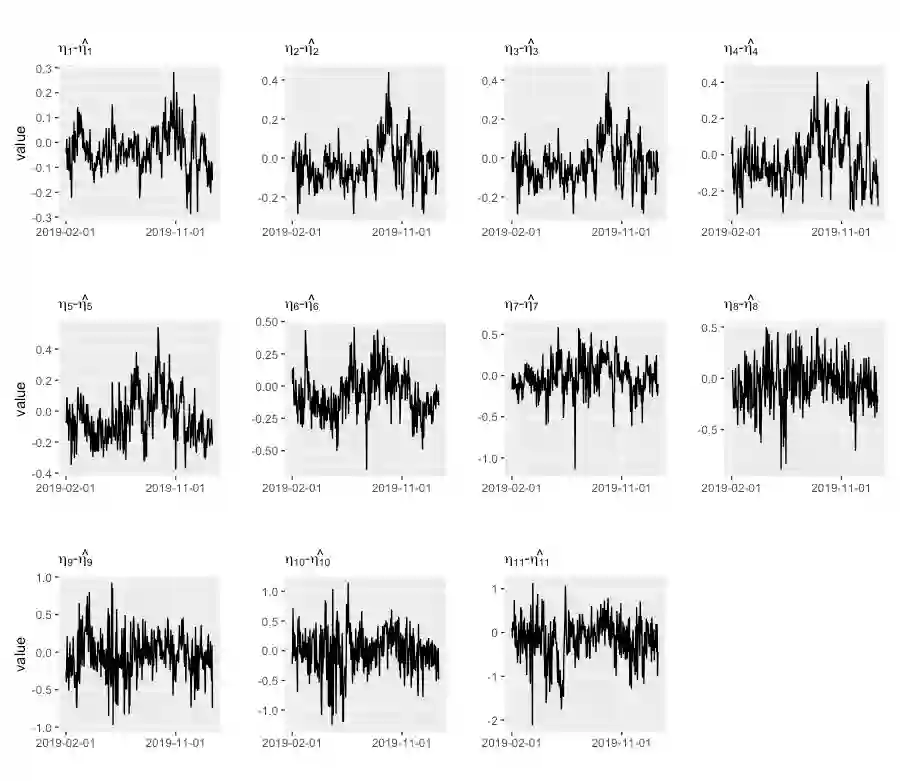
Lead time data is compositional data found frequently in the hospitality industry. Hospitality businesses earn fees each day, however these fees cannot be recognized until later. For business purposes, it is important to understand and forecast the distribution of future fees for the allocation of resources, for business planning, and for staffing. Motivated by 5 years of daily fees data, we propose a new class of Bayesian time series models, a Bayesian Dirichlet Auto-Regressive Moving Average (B-DARMA) model for compositional time series, modeling the proportion of future fees that will be recognized in 11 consecutive 30 day windows and 1 last consecutive 35 day window. Each day's compositional datum is modeled as Dirichlet distributed given the mean and a scale parameter. The mean is modeled with a Vector Autoregressive Moving Average process after transforming with an additive log ratio link function and depends on previous compositional data, previous compositional parameters and daily covariates. The B-DARMA model offers solutions to data analyses of large compositional vectors and short or long time series, offers efficiency gains through choice of priors, provides interpretable parameters for inference, and makes reasonable forecasts.
翻译:交付时间数据是酒店行业中常见的成分数据。酒店企业每日获取收益,但这些收益需在后续期间方可确认。出于商业目的,理解并预测未来收益的分布对资源配置、业务规划及人员配置至关重要。基于五年日度收益数据,我们提出了一类新型贝叶斯时间序列模型——贝叶斯狄利克雷自回归移动平均(B-DARMA)模型,用于成分时间序列分析。该模型对将在11个连续30天窗口及1个连续35天窗口中确认的未来收益比例进行建模。每日成分数据被建模为给定均值与尺度参数下的狄利克雷分布。均值通过加性对数比连接函数变换后,采用向量自回归移动平均过程进行建模,其依赖于历史成分数据、历史成分参数及日度协变量。B-DARMA模型为大成分向量及短/长时间序列的数据分析提供了解决方案,通过先验选择提升效率,提供可解释参数用于推断,并生成合理预测。




相关内容



 微信扫码咨询专知VIP会员