

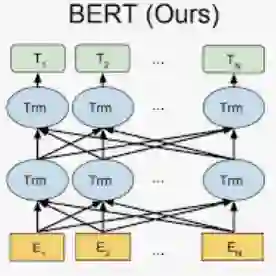
With the rapid proliferation of textual data, predicting long texts has emerged as a significant challenge in the domain of natural language processing. Traditional text prediction methods encounter substantial difficulties when grappling with long texts, primarily due to the presence of redundant and irrelevant information, which impedes the model's capacity to capture pivotal insights from the text. To address this issue, we introduce a novel approach to long-text classification and prediction. Initially, we employ embedding techniques to condense the long texts, aiming to diminish the redundancy therein. Subsequently,the Bidirectional Encoder Representations from Transformers (BERT) embedding method is utilized for text classification training. Experimental outcomes indicate that our method realizes considerable performance enhancements in classifying long texts of Preferential Trade Agreements. Furthermore, the condensation of text through embedding methods not only augments prediction accuracy but also substantially reduces computational complexity. Overall, this paper presents a strategy for long-text prediction, offering a valuable reference for researchers and engineers in the natural language processing sphere.
翻译:随着文本数据的快速激增,长文本预测已成为自然语言处理领域的重大挑战。传统文本预测方法在处理长文本时面临显著困难,主要源于冗余和不相关信息的干扰,这阻碍了模型从文本中捕捉关键洞察的能力。为解决此问题,我们提出了一种新颖的长文本分类与预测方法。首先,采用嵌入技术对长文本进行压缩,旨在降低文本冗余;其次,利用基于Transformer的双向编码器表示(BERT)嵌入方法进行文本分类训练。实验结果表明,该方法在特惠贸易协定的长文本分类中实现了显著的性能提升。此外,通过嵌入方法对文本进行压缩不仅提高了预测准确率,还大幅降低了计算复杂度。总体而言,本文提出了一种长文本预测策略,为自然语言处理领域的研究人员和工程师提供了有价值的参考。




相关内容




 微信扫码咨询专知VIP会员