

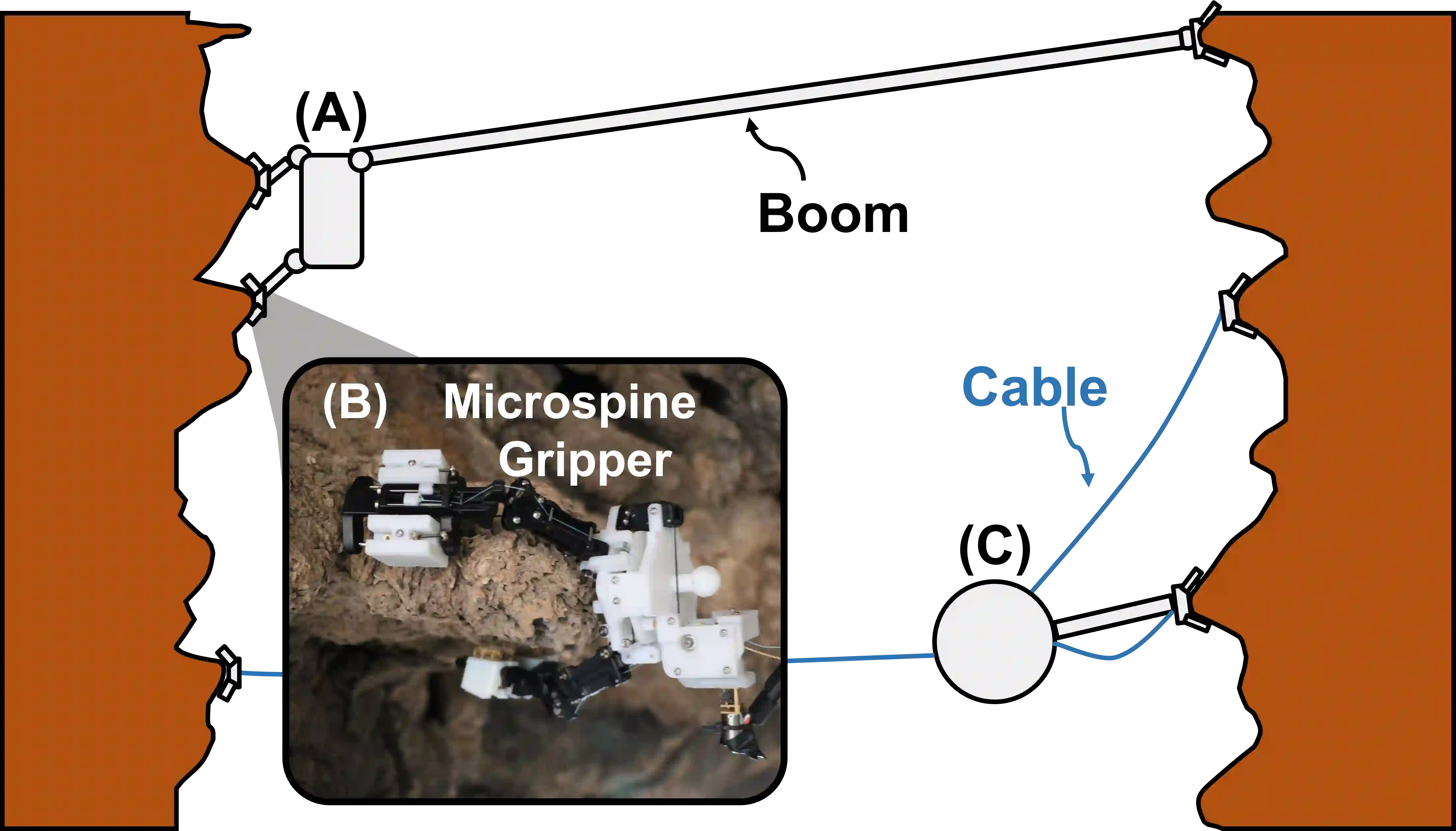
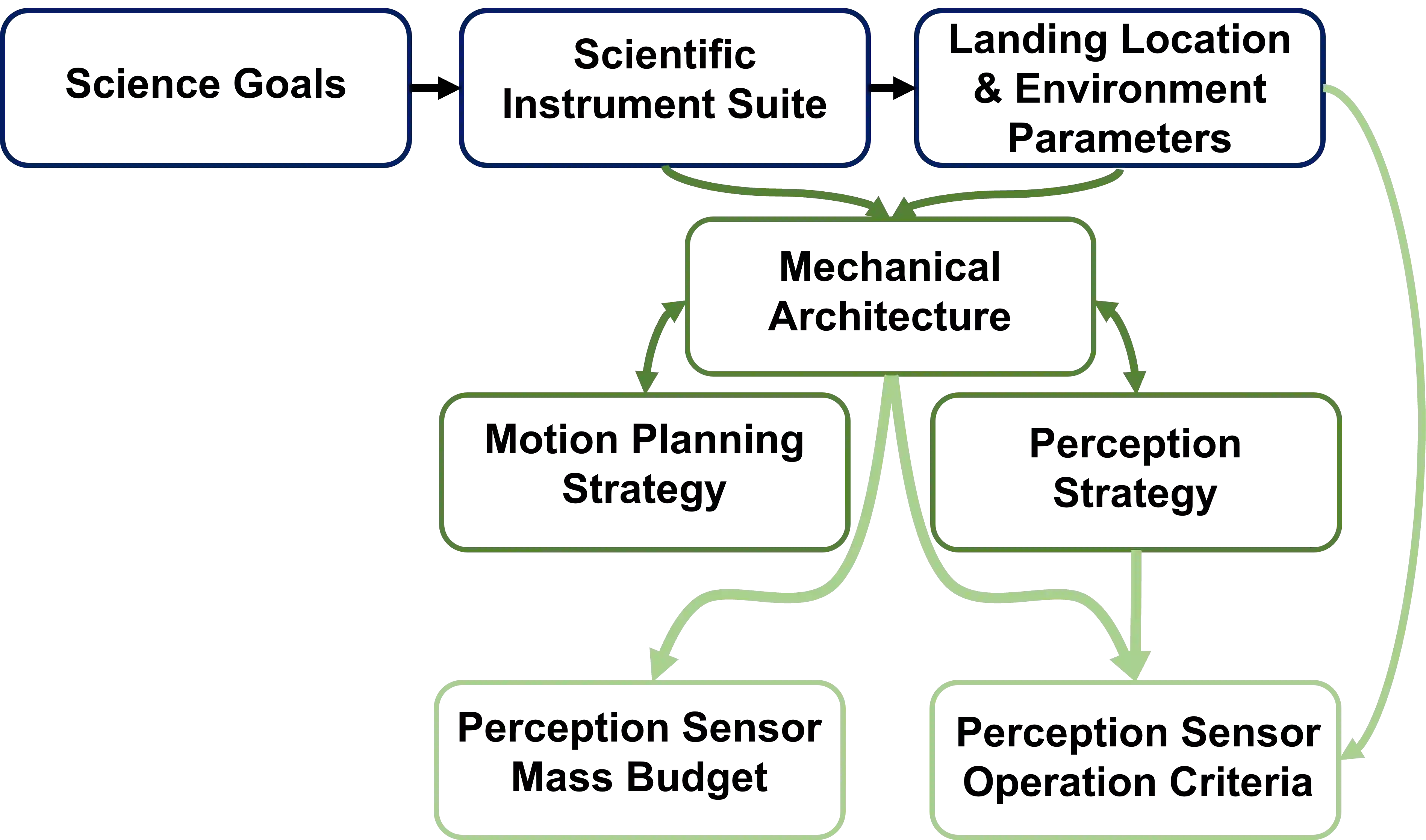
This paper presents a trade study analysis to design and evaluate the perception system architecture for ReachBot. ReachBot is a novel robotic concept that uses grippers at the end of deployable booms for navigation of rough terrain such as walls of caves and lava tubes. Previous studies on ReachBot have discussed the overall robot design, placement and number of deployable booms, and gripper mechanism design; however, analysis of the perception and sensing system remains underdeveloped. Because ReachBot can extend and interact with terrain over long distances on the order of several meters, a robust perception and sensing strategy is crucial to identify grasping locations and enable fully autonomous operation. This trade study focuses on developing the perception trade space and realizing such perception capabilities for a physical prototype. This work includes analysis of: (1) multiple-range sensing strategies for ReachBot, (2) sensor technologies for subsurface climbing robotics, (3) criteria for sensor evaluation, (4) positions and modalities of sensors on ReachBot, and (5) map representations of grasping locations. From our analysis, we identify the overall perception strategy and hardware configuration for a fully-instrumented case study mission to a Martian lava tube, and identify specific sensors for a hardware prototype. The final result of our trade study is a system design conducive to benchtop testing and prototype hardware development.
翻译:本文提出了一项权衡研究分析,旨在设计与评估ReachBot的感知系统架构。ReachBot是一种新型机器人概念,通过在可展开臂杆末端安装抓取器,实现洞穴及熔岩管等崎岖地形的导航。此前关于ReachBot的研究已探讨了整体机器人设计、可展开臂杆的布置与数量及抓取机构设计,但其感知与传感系统的分析仍不完善。由于ReachBot能够伸展并与数米级远程地形交互,鲁棒的感知与传感策略对于识别抓取位置并实现全自主运行至关重要。本项权衡研究聚焦于开发感知权衡空间,并在物理样机上实现此类感知能力。工作内容包括分析:(1) ReachBot的多距离传感策略,(2) 地下攀爬机器人的传感器技术,(3) 传感器评估准则,(4) ReachBot上传感器的位置与模态,(5) 抓取位置的地图表示。基于分析,我们确定了面向火星熔岩管全仪器化案例任务的总体感知策略与硬件配置,并为一款硬件样机选定具体传感器。权衡研究的最终结果是形成一套适用于台架测试与样机硬件开发的系统设计方案。






相关内容





 微信扫码咨询专知VIP会员