

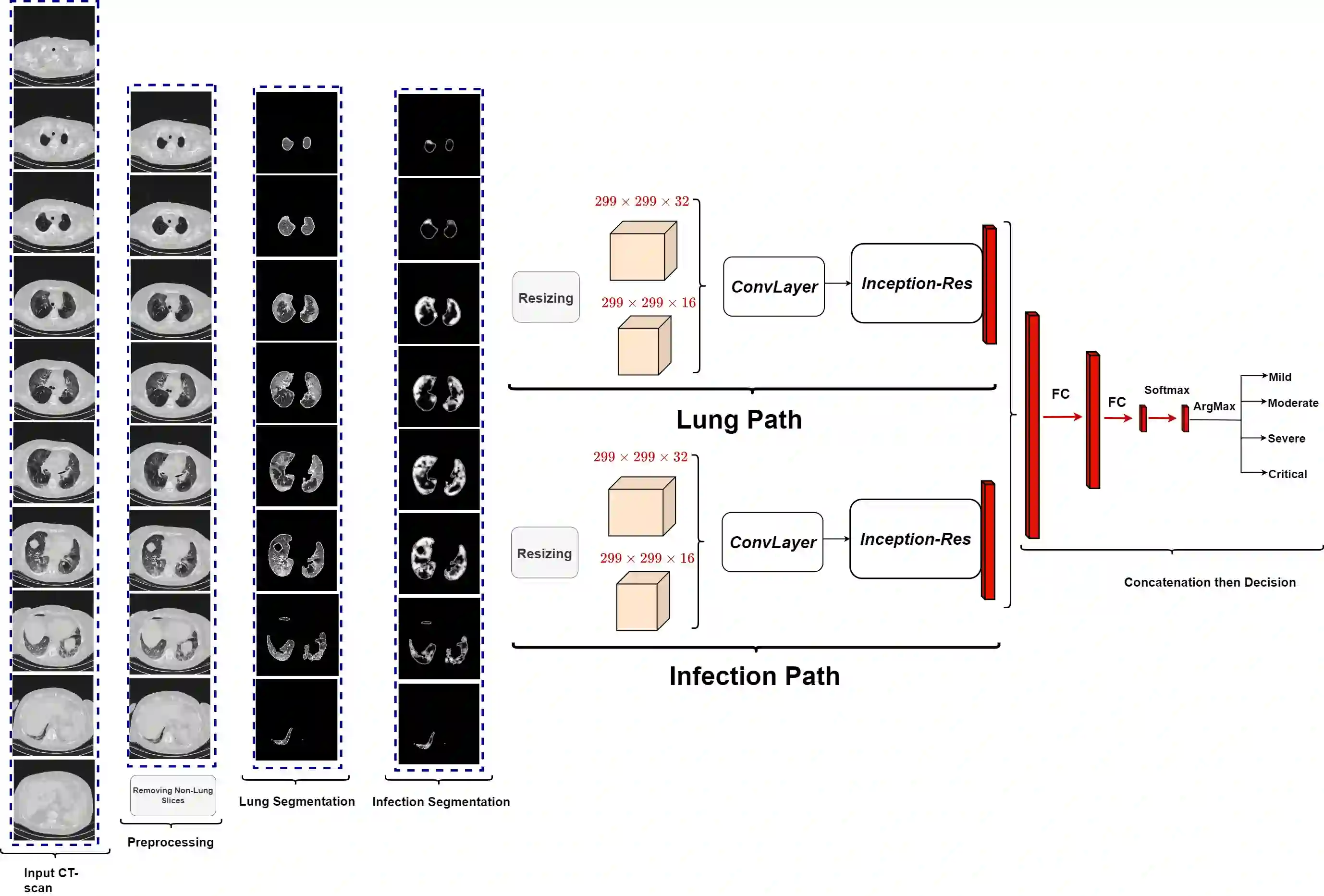
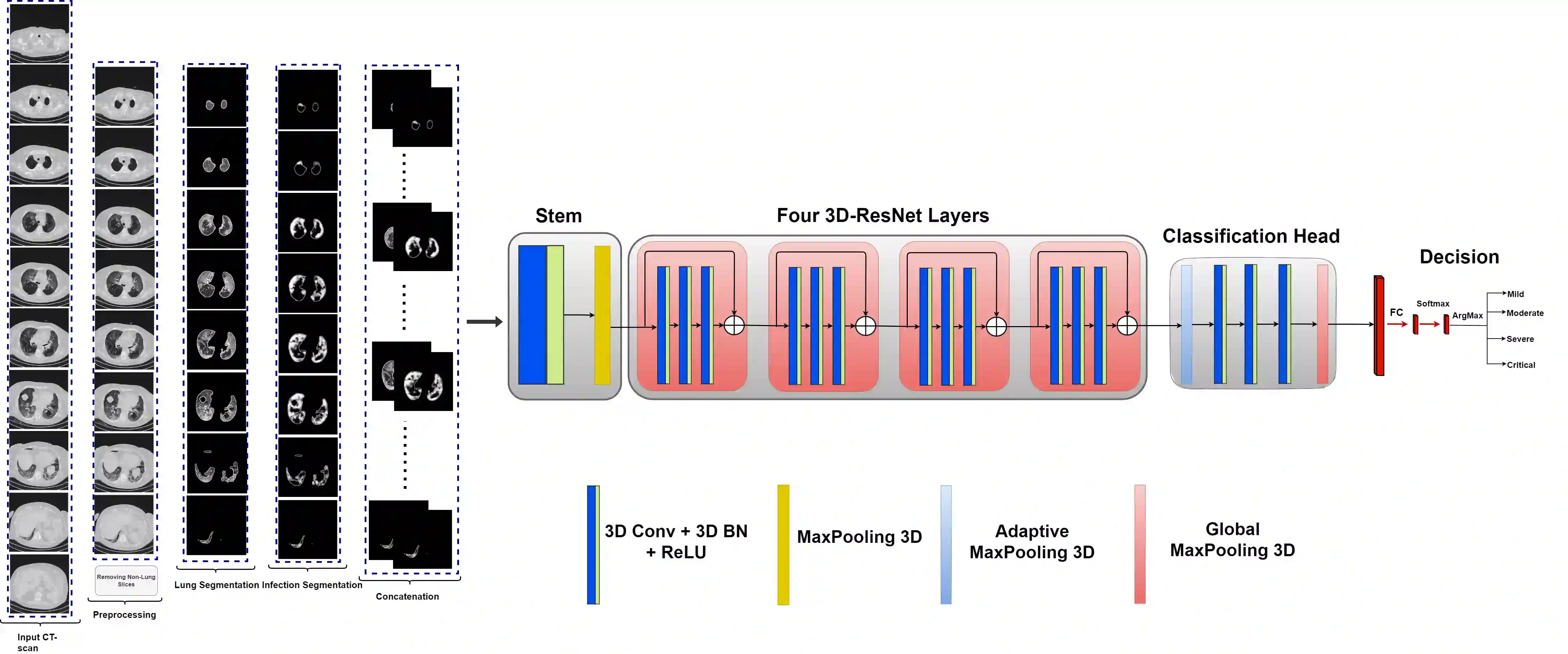
Since the appearance of Covid-19 in late 2019, Covid-19 has become an active research topic for the artificial intelligence (AI) community. One of the most interesting AI topics is Covid-19 analysis of medical imaging. CT-scan imaging is the most informative tool about this disease. This work is part of the 3nd COV19D competition for Covid-19 Severity Prediction. In order to deal with the big gap between the validation and test results that were shown in the previous version of this competition, we proposed to combine the prediction of 2D and 3D CNN predictions. For the 2D CNN approach, we propose 2B-InceptResnet architecture which consists of two paths for segmented lungs and infection of all slices of the input CT-scan, respectively. Each path consists of ConvLayer and Inception-ResNet pretrained model on ImageNet. For the 3D CNN approach, we propose hybrid-DeCoVNet architecture which consists of four blocks: Stem, four 3D-ResNet layers, Classification Head and Decision layer. Our proposed approaches outperformed the baseline approach in the validation data of the 3nd COV19D competition for Covid-19 Severity Prediction by 36%.
翻译:自2019年底COVID-19出现以来,该疾病已成为人工智能研究领域的活跃课题。其中最具价值的AI课题之一是医学影像的COVID-19分析。CT扫描影像提供了关于该疾病最丰富的信息。本研究是第三届COV19D新冠肺炎严重程度预测竞赛的一部分。针对该竞赛先前版本中验证集与测试集结果存在显著差距的问题,我们提出融合2D和3D CNN的预测方法。在2D CNN方法中,我们提出2B-InceptResnet架构,该架构包含两条路径,分别处理输入CT扫描所有切片的肺部分割和感染区域。每条路径由卷积层和在ImageNet上预训练的Inception-ResNet模型构成。在3D CNN方法中,我们提出混合DeCoVNet架构,包含四个模块:主干网络、四层3D-ResNet、分类头层和决策层。所提方法在第三届COV19D COVID-19严重程度预测竞赛的验证数据上,相比基线方法性能提升36%。




相关内容




 微信扫码咨询专知VIP会员