

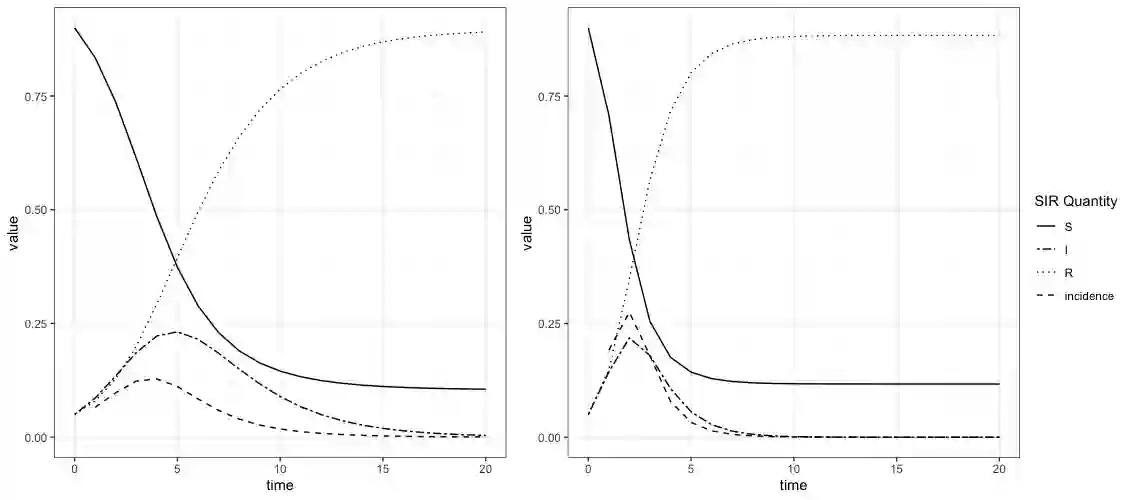
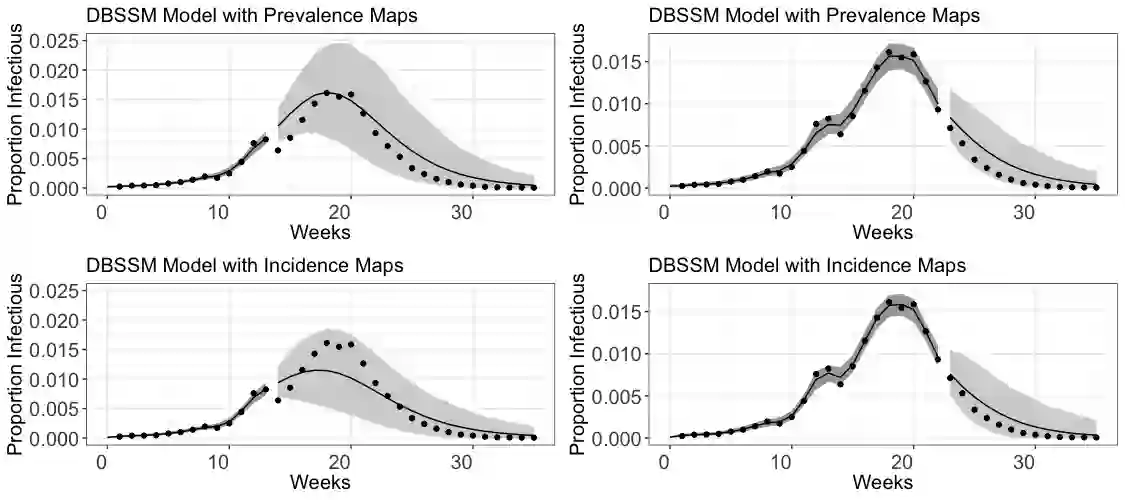
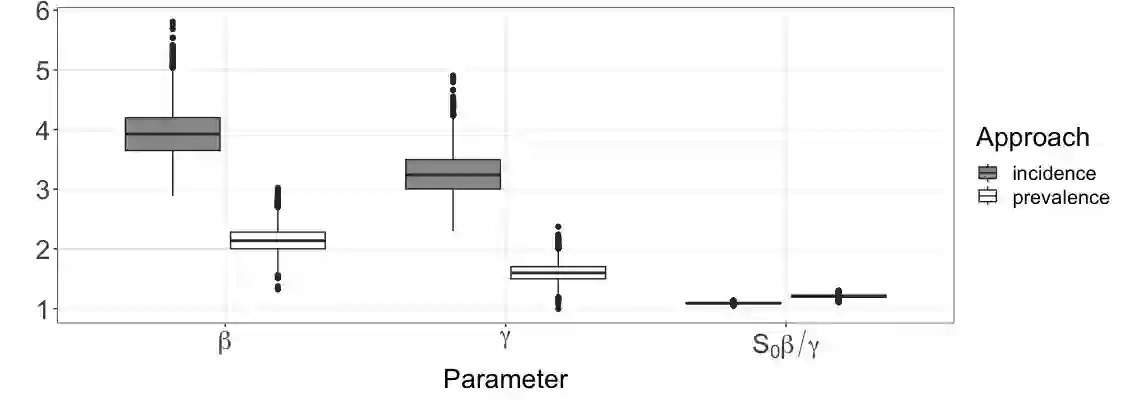
Infectious disease modeling and forecasting have played a key role in helping assess and respond to epidemics and pandemics. Recent work has leveraged data on disease peak infection and peak hospital incidence to fit compartmental models for the purpose of forecasting and describing the dynamics of a disease outbreak. Incorporating these data can greatly stabilize a compartmental model fit on early observations, where slight perturbations in the data may lead to model fits that project wildly unrealistic peak infection. We introduce a new method for incorporating historic data on the value and time of peak incidence of hospitalization into the fit for a Susceptible-Infectious-Recovered (SIR) model by formulating the relationship between an SIR model's starting parameters and peak incidence as a system of two equations that can be solved computationally. This approach is assessed for practicality in terms of accuracy and speed of computation via simulation. To exhibit the modeling potential, we update the Dirichlet-Beta State Space modeling framework to use hospital incidence data, as this framework was previously formulated to incorporate only data on total infections.
翻译:传染病建模与预测在评估和应对流行病及大流行中发挥关键作用。近期研究利用疾病感染峰值和医院发病率峰值数据拟合仓室模型,以预测和描述疾病暴发动态。整合此类数据可显著稳定基于早期观测的仓室模型拟合——因早期数据中微小扰动可能导致模型拟合结果产生极不现实的感染峰值预测。本文提出一种新方法,通过将易感-感染-康复(SIR)模型初始参数与发病率峰值的关系构建为可计算求解的方程组系统,将医院发病率峰值及其出现时间的历史数据纳入模型拟合。通过仿真实验从计算精度和速度两方面评估该方法的实用性。为展示建模潜力,我们对Dirichlet-Beta状态空间建模框架进行改进以兼容医院发病率数据——该框架此前仅支持总感染数据建模。




相关内容




 微信扫码咨询专知VIP会员