

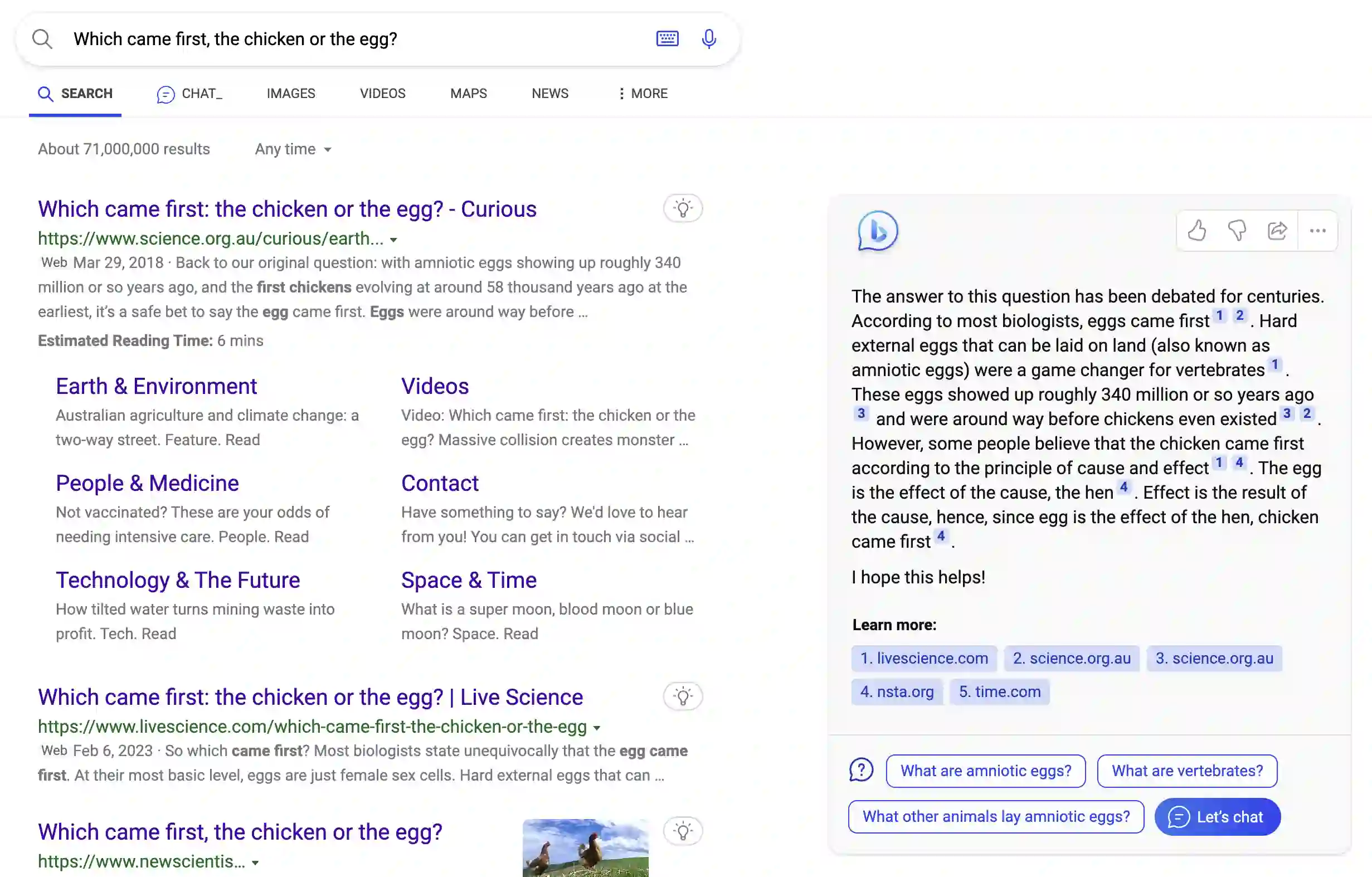
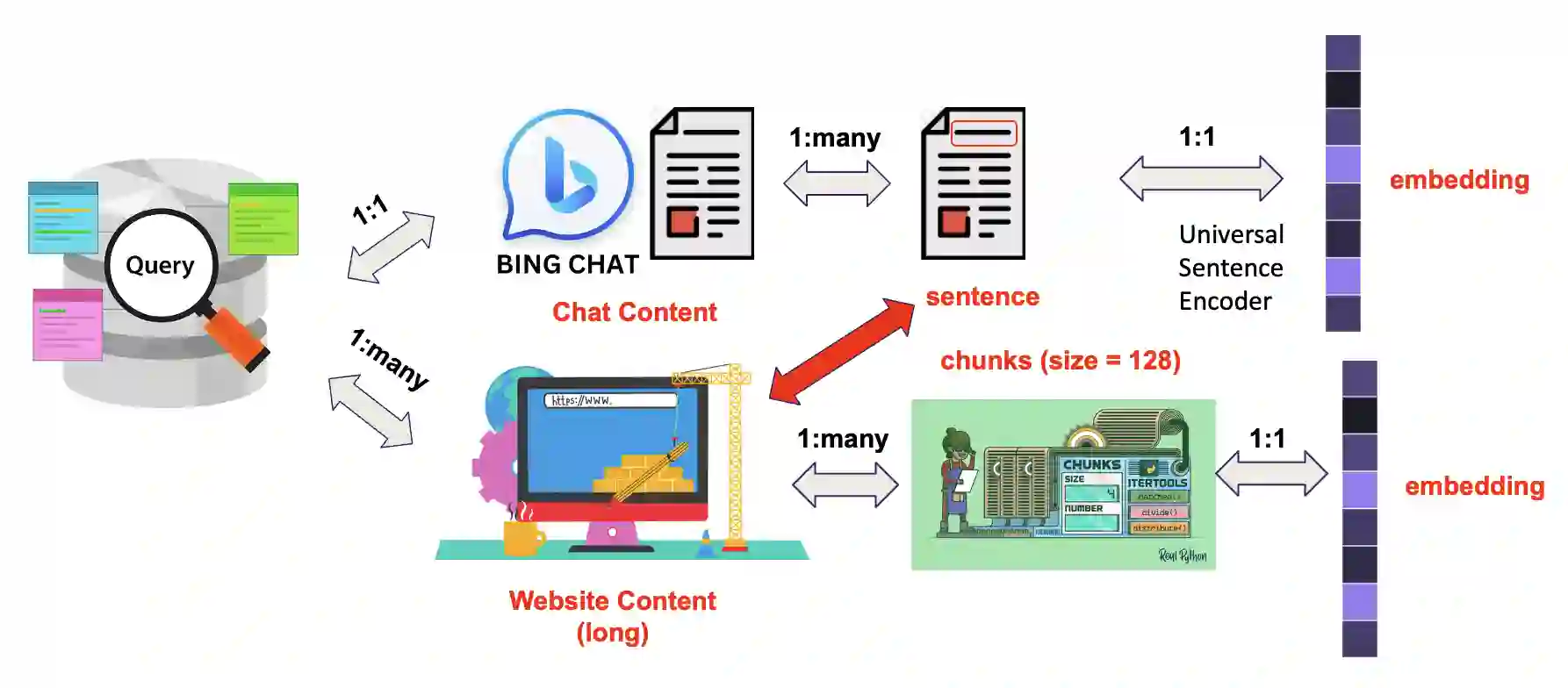
In the domain of digital information dissemination, search engines act as pivotal conduits linking information seekers with providers. The advent of chat-based search engines utilizing Large Language Models (LLMs) and Retrieval Augmented Generation (RAG), exemplified by Bing Chat, marks an evolutionary leap in the search ecosystem. They demonstrate metacognitive abilities in interpreting web information and crafting responses with human-like understanding and creativity. Nonetheless, the intricate nature of LLMs renders their "cognitive" processes opaque, challenging even their designers' understanding. This research aims to dissect the mechanisms through which an LLM-powered chat-based search engine, specifically Bing Chat, selects information sources for its responses. To this end, an extensive dataset has been compiled through engagements with New Bing, documenting the websites it cites alongside those listed by the conventional search engine. Employing natural language processing (NLP) techniques, the research reveals that Bing Chat exhibits a preference for content that is not only readable and formally structured, but also demonstrates lower perplexity levels, indicating a unique inclination towards text that is predictable by the underlying LLM. Further enriching our analysis, we procure an additional dataset through interactions with the GPT-4 based knowledge retrieval API, unveiling a congruent text preference between the RAG API and Bing Chat. This consensus suggests that these text preferences intrinsically emerge from the underlying language models, rather than being explicitly crafted by Bing Chat's developers. Moreover, our investigation documents a greater similarity among websites cited by RAG technologies compared to those ranked highest by conventional search engines.


翻译:在数字信息传播领域,搜索引擎作为连接信息寻求者与提供者的关键枢纽。基于大语言模型(LLM)和检索增强生成(RAG)的聊天式搜索引擎(以Bing Chat为例)的出现,标志着搜索生态系统的演进飞跃。它们在解读网络信息、构建具有类人理解和创造力的响应时展现出元认知能力。然而,LLM的复杂性使其“认知”过程不透明,甚至挑战了设计者的理解。本研究旨在剖析由LLM驱动的聊天式搜索引擎(具体为Bing Chat)为其响应选择信息源的机制。为此,我们通过与新必应互动编制了大规模数据集,记录了其引用的网站以及传统搜索引擎列出的网站。运用自然语言处理(NLP)技术,研究发现Bing Chat偏好内容不仅可读性高、结构规范,而且具有较低困惑度,这表明其对底层LLM可预测文本具有独特倾向。为进一步丰富分析,我们通过与基于GPT-4的知识检索API互动获取额外数据集,揭示RAG API与Bing Chat之间存在一致的文本偏好。这一共识表明,这些文本偏好本质上源于底层语言模型,而非Bing Chat开发者的刻意设计。此外,我们的研究记录显示,与常规搜索引擎排名最高的网站相比,RAG技术引用的网站之间具有更高的相似性。
0
下载
关闭预览

相关内容

FlowQA: Grasping Flow in History for Conversational Machine Comprehension
专知会员服务
34+阅读 · 2019年10月18日
Stabilizing Transformers for Reinforcement Learning
专知会员服务
60+阅读 · 2019年10月17日
《DeepGCNs: Making GCNs Go as Deep as CNNs》
专知会员服务
32+阅读 · 2019年10月17日
Keras François Chollet 《Deep Learning with Python 》, 386页pdf
专知会员服务
164+阅读 · 2019年10月12日
【SIGGRAPH2019】TensorFlow 2.0深度学习计算机图形学应用
专知会员服务
41+阅读 · 2019年10月9日
Hierarchically Structured Meta-learning
CreateAMind
27+阅读 · 2019年5月22日
Transferring Knowledge across Learning Processes
CreateAMind
29+阅读 · 2019年5月18日
Unsupervised Learning via Meta-Learning
CreateAMind
44+阅读 · 2019年1月3日
meta learning 17年:MAML SNAIL
CreateAMind
11+阅读 · 2019年1月2日
A Technical Overview of AI & ML in 2018 & Trends for 2019
待字闺中
18+阅读 · 2018年12月24日
disentangled-representation-papers
CreateAMind
26+阅读 · 2018年9月12日
STRCF for Visual Object Tracking
统计学习与视觉计算组
15+阅读 · 2018年5月29日
Focal Loss for Dense Object Detection
统计学习与视觉计算组
12+阅读 · 2018年3月15日
IJCAI | Cascade Dynamics Modeling with Attention-based RNN
KingsGarden
13+阅读 · 2017年7月16日
From Softmax to Sparsemax-ICML16(1)
KingsGarden
74+阅读 · 2016年11月26日
国家自然科学基金
13+阅读 · 2017年12月31日
国家自然科学基金
2+阅读 · 2015年12月31日
国家自然科学基金
1+阅读 · 2015年12月31日
国家自然科学基金
47+阅读 · 2015年12月31日
国家自然科学基金
2+阅读 · 2015年12月31日
国家自然科学基金
2+阅读 · 2015年12月31日
国家自然科学基金
0+阅读 · 2014年12月31日
国家自然科学基金
0+阅读 · 2014年12月31日
国家自然科学基金
2+阅读 · 2014年12月31日
VIP会员
最新内容
2025年大语言模型进展报告
专知会员服务
1+阅读 · 4月25日
多智能体协作机制
专知会员服务
1+阅读 · 4月25日
非对称优势:美海军开发低成本反无人机技术
专知会员服务
4+阅读 · 4月25日
《美战争部小企业创新研究(SBIR)计划》
专知会员服务
6+阅读 · 4月25日
《军事模拟:将军事条令与目标融入AI智能体》
【NTU博士论文】3D人体动作生成
专知会员服务
7+阅读 · 4月24日
以色列军事技术对美国军力发展的持续性赋能
专知会员服务
8+阅读 · 4月24日
《深度强化学习在兵棋推演中的应用》40页报告
专知会员服务
14+阅读 · 4月24日
《多域作战面临复杂现实》
专知会员服务
10+阅读 · 4月24日
《印度的多域作战:条令与能力发展》报告
专知会员服务
5+阅读 · 4月24日
相关VIP内容
FlowQA: Grasping Flow in History for Conversational Machine Comprehension
专知会员服务
34+阅读 · 2019年10月18日
Stabilizing Transformers for Reinforcement Learning
专知会员服务
60+阅读 · 2019年10月17日
《DeepGCNs: Making GCNs Go as Deep as CNNs》
专知会员服务
32+阅读 · 2019年10月17日
Keras François Chollet 《Deep Learning with Python 》, 386页pdf
专知会员服务
164+阅读 · 2019年10月12日
【SIGGRAPH2019】TensorFlow 2.0深度学习计算机图形学应用
专知会员服务
41+阅读 · 2019年10月9日
相关资讯
Hierarchically Structured Meta-learning
CreateAMind
27+阅读 · 2019年5月22日
Transferring Knowledge across Learning Processes
CreateAMind
29+阅读 · 2019年5月18日
Unsupervised Learning via Meta-Learning
CreateAMind
44+阅读 · 2019年1月3日
meta learning 17年:MAML SNAIL
CreateAMind
11+阅读 · 2019年1月2日
A Technical Overview of AI & ML in 2018 & Trends for 2019
待字闺中
18+阅读 · 2018年12月24日
disentangled-representation-papers
CreateAMind
26+阅读 · 2018年9月12日
STRCF for Visual Object Tracking
统计学习与视觉计算组
15+阅读 · 2018年5月29日
Focal Loss for Dense Object Detection
统计学习与视觉计算组
12+阅读 · 2018年3月15日
IJCAI | Cascade Dynamics Modeling with Attention-based RNN
KingsGarden
13+阅读 · 2017年7月16日
From Softmax to Sparsemax-ICML16(1)
KingsGarden
74+阅读 · 2016年11月26日
相关基金
国家自然科学基金
13+阅读 · 2017年12月31日
国家自然科学基金
2+阅读 · 2015年12月31日
国家自然科学基金
1+阅读 · 2015年12月31日
国家自然科学基金
47+阅读 · 2015年12月31日
国家自然科学基金
2+阅读 · 2015年12月31日
国家自然科学基金
2+阅读 · 2015年12月31日
国家自然科学基金
0+阅读 · 2014年12月31日
国家自然科学基金
0+阅读 · 2014年12月31日
国家自然科学基金
2+阅读 · 2014年12月31日
Top
微信扫码咨询专知VIP会员




