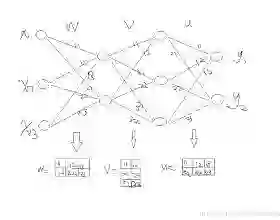
Backpropagation is a cornerstone algorithm in training neural networks for supervised learning, which uses a gradient descent method to update network weights by minimizing the discrepancy between actual and desired outputs. Despite its pivotal role in propelling deep learning advancements, the biological plausibility of backpropagation is questioned due to its requirements for weight symmetry, global error computation, and dual-phase training. To address this long-standing challenge, many studies have endeavored to devise biologically plausible training algorithms. However, a fully biologically plausible algorithm for training multilayer neural networks remains elusive, and interpretations of biological plausibility vary among researchers. In this study, we establish criteria for biological plausibility that a desirable learning algorithm should meet. Using these criteria, we evaluate a range of existing algorithms considered to be biologically plausible, including Hebbian learning, spike-timing-dependent plasticity, feedback alignment, target propagation, predictive coding, forward-forward algorithm, perturbation learning, local losses, and energy-based learning. Additionally, we empirically evaluate these algorithms across diverse network architectures and datasets. We compare the feature representations learned by these algorithms with brain activity recorded by non-invasive devices under identical stimuli, aiming to identify which algorithm can most accurately replicate brain activity patterns. We are hopeful that this study could inspire the development of new biologically plausible algorithms for training multilayer networks, thereby fostering progress in both the fields of neuroscience and machine learning.


翻译:反向传播是训练神经网络进行监督学习的核心算法,它采用梯度下降方法,通过最小化实际输出与期望输出之间的差异来更新网络权重。尽管反向传播在推动深度学习进步中发挥着关键作用,但其对权重对称性、全局误差计算和双阶段训练的要求使其生物合理性受到质疑。为应对这一长期存在的挑战,许多研究致力于设计生物合理的学习算法。然而,完全适用于多层神经网络训练的生物合理算法仍未实现,且研究者对生物合理性的解释各不相同。在本研究中,我们建立了一套理想学习算法应满足的生物合理性标准。基于这些标准,我们评估了一系列现有被认为具有生物合理性的算法,包括Hebbian学习、脉冲时序依赖可塑性、反馈对齐、目标传播、预测编码、前向-前向算法、扰动学习、局部损失和基于能量的学习。此外,我们在不同网络架构和数据集上对这些算法进行了实证评估。我们将这些算法学习到的特征表示与在相同刺激下通过非侵入式设备记录的大脑活动进行比较,旨在确定哪种算法能最准确地复现大脑活动模式。我们希望这项研究能够启发开发新的生物合理算法用于训练多层网络,从而促进神经科学和机器学习领域的共同进步。


0
下载
关闭预览

相关内容

FlowQA: Grasping Flow in History for Conversational Machine Comprehension
专知会员服务
34+阅读 · 2019年10月18日
Stabilizing Transformers for Reinforcement Learning
专知会员服务
60+阅读 · 2019年10月17日
《DeepGCNs: Making GCNs Go as Deep as CNNs》
专知会员服务
32+阅读 · 2019年10月17日
Keras François Chollet 《Deep Learning with Python 》, 386页pdf
专知会员服务
164+阅读 · 2019年10月12日
开源书:PyTorch深度学习起步
专知会员服务
51+阅读 · 2019年10月11日
【SIGGRAPH2019】TensorFlow 2.0深度学习计算机图形学应用
专知会员服务
41+阅读 · 2019年10月9日
Hierarchically Structured Meta-learning
CreateAMind
27+阅读 · 2019年5月22日
Transferring Knowledge across Learning Processes
CreateAMind
29+阅读 · 2019年5月18日
强化学习的Unsupervised Meta-Learning
CreateAMind
18+阅读 · 2019年1月7日
Unsupervised Learning via Meta-Learning
CreateAMind
44+阅读 · 2019年1月3日
meta learning 17年:MAML SNAIL
CreateAMind
11+阅读 · 2019年1月2日
Single-Shot Object Detection with Enriched Semantics
统计学习与视觉计算组
14+阅读 · 2018年8月29日
STRCF for Visual Object Tracking
统计学习与视觉计算组
15+阅读 · 2018年5月29日
Hierarchical Imitation - Reinforcement Learning
CreateAMind
19+阅读 · 2018年5月25日
Focal Loss for Dense Object Detection
统计学习与视觉计算组
12+阅读 · 2018年3月15日
IJCAI | Cascade Dynamics Modeling with Attention-based RNN
KingsGarden
13+阅读 · 2017年7月16日
国家自然科学基金
2+阅读 · 2017年12月31日
国家自然科学基金
13+阅读 · 2017年12月31日
国家自然科学基金
2+阅读 · 2015年12月31日
国家自然科学基金
0+阅读 · 2015年12月31日
国家自然科学基金
3+阅读 · 2015年12月31日
国家自然科学基金
47+阅读 · 2015年12月31日
国家自然科学基金
0+阅读 · 2015年12月31日
国家自然科学基金
2+阅读 · 2015年12月31日
国家自然科学基金
0+阅读 · 2014年12月31日
国家自然科学基金
0+阅读 · 2014年12月31日
Arxiv
14+阅读 · 2023年9月27日
Arxiv
16+阅读 · 2022年11月1日
Arxiv
26+阅读 · 2022年1月3日
Arxiv
37+阅读 · 2021年2月10日
Arxiv
24+阅读 · 2021年1月25日
Arxiv
15+阅读 · 2018年6月23日
Arxiv
25+阅读 · 2018年1月24日
VIP会员
最新内容
【NTU博士论文】3D人体动作生成
专知会员服务
1+阅读 · 今天14:48
以色列军事技术对美国军力发展的持续性赋能
专知会员服务
7+阅读 · 今天8:46
《深度强化学习在兵棋推演中的应用》40页报告
专知会员服务
9+阅读 · 今天5:37
《多域作战面临复杂现实》
专知会员服务
7+阅读 · 今天5:35
《印度的多域作战:条令与能力发展》报告
专知会员服务
3+阅读 · 今天5:24
相关VIP内容
FlowQA: Grasping Flow in History for Conversational Machine Comprehension
专知会员服务
34+阅读 · 2019年10月18日
Stabilizing Transformers for Reinforcement Learning
专知会员服务
60+阅读 · 2019年10月17日
《DeepGCNs: Making GCNs Go as Deep as CNNs》
专知会员服务
32+阅读 · 2019年10月17日
Keras François Chollet 《Deep Learning with Python 》, 386页pdf
专知会员服务
164+阅读 · 2019年10月12日
开源书:PyTorch深度学习起步
专知会员服务
51+阅读 · 2019年10月11日
【SIGGRAPH2019】TensorFlow 2.0深度学习计算机图形学应用
专知会员服务
41+阅读 · 2019年10月9日
相关资讯
Hierarchically Structured Meta-learning
CreateAMind
27+阅读 · 2019年5月22日
Transferring Knowledge across Learning Processes
CreateAMind
29+阅读 · 2019年5月18日
强化学习的Unsupervised Meta-Learning
CreateAMind
18+阅读 · 2019年1月7日
Unsupervised Learning via Meta-Learning
CreateAMind
44+阅读 · 2019年1月3日
meta learning 17年:MAML SNAIL
CreateAMind
11+阅读 · 2019年1月2日
Single-Shot Object Detection with Enriched Semantics
统计学习与视觉计算组
14+阅读 · 2018年8月29日
STRCF for Visual Object Tracking
统计学习与视觉计算组
15+阅读 · 2018年5月29日
Hierarchical Imitation - Reinforcement Learning
CreateAMind
19+阅读 · 2018年5月25日
Focal Loss for Dense Object Detection
统计学习与视觉计算组
12+阅读 · 2018年3月15日
IJCAI | Cascade Dynamics Modeling with Attention-based RNN
KingsGarden
13+阅读 · 2017年7月16日
相关论文
Arxiv
14+阅读 · 2023年9月27日
Arxiv
16+阅读 · 2022年11月1日
Arxiv
26+阅读 · 2022年1月3日
Arxiv
37+阅读 · 2021年2月10日
Arxiv
24+阅读 · 2021年1月25日
Arxiv
15+阅读 · 2018年6月23日
Arxiv
25+阅读 · 2018年1月24日
相关基金
国家自然科学基金
2+阅读 · 2017年12月31日
国家自然科学基金
13+阅读 · 2017年12月31日
国家自然科学基金
2+阅读 · 2015年12月31日
国家自然科学基金
0+阅读 · 2015年12月31日
国家自然科学基金
3+阅读 · 2015年12月31日
国家自然科学基金
47+阅读 · 2015年12月31日
国家自然科学基金
0+阅读 · 2015年12月31日
国家自然科学基金
2+阅读 · 2015年12月31日
国家自然科学基金
0+阅读 · 2014年12月31日
国家自然科学基金
0+阅读 · 2014年12月31日
Top
微信扫码咨询专知VIP会员