

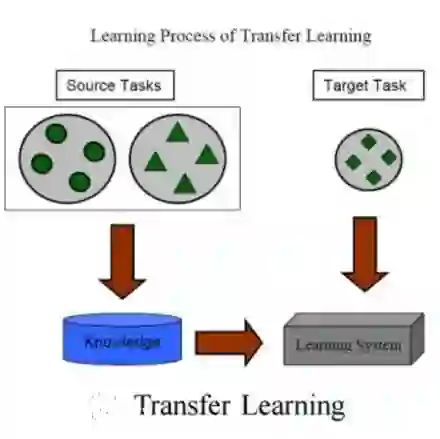
Accurate prediction of solubility remains a central challenge across materials science and sustainable chemistry. In particular due to emerging technologies like organic and hybrid photovoltaics, batteries, and catalysis, solvent usage is expected to increase significantly within the coming years. Therefore, substituting solvents with greener alternatives is vital. This is where machine learning can have substantial impact. However, the limited data on critical parameters of solubility significantly constraints machine learning efficacy. In this work, we transfer a pre-trained foundational model on QM9 targets to our application with minimal data requirements. Additionally, the pipeline integrates uncertainty quantification, allowing the user to gauge the confidence of the predictions. As baseline, we succeed in predicting the Hansen solubility parameters and Dielectric Constant for which extensive databases exist. Importantly, we achieve high model performance on additional targets, such as Gutmann Donor and Acceptor numbers, where the available data is extremely limited. Overall, we augment data on solubility descriptors by orders of magnitude with high quality predictions. For effective dissemination, we deploy easy-to-use, easily integrateable with high throughput labs, customizable tool for ranking and screening possible solvent substitutes. Finally, we rediscovered known green solvent alternatives and proposed new candidates proving its relevance for finding eco-friendly solvents.
翻译:溶解度的准确预测仍是材料科学和可持续化学领域的核心挑战。特别是随着有机及混合光伏、电池和催化等新兴技术的发展,溶剂使用量在未来数年内预计将大幅增加。因此,用更环保的替代溶剂取代现有溶剂至关重要,而机器学习可在此领域发挥重大作用。然而,溶解度关键参数数据的匮乏严重制约了机器学习的效能。在本工作中,我们将一个在QM9目标上预训练的基础模型迁移至我们的应用场景,且所需数据量极小。此外,该流程集成了不确定性量化功能,使用户能够评估预测的置信度。作为基准,我们成功预测了存在大量数据库的汉森溶解度参数和介电常数。更重要的是,在古特曼给体数和受体数等可用数据极为有限的目标上,我们实现了高模型性能。总体而言,我们通过高质量预测将溶解度描述符数据提升了数个数量级。为实现有效推广,我们部署了一个易于使用、易于与高通量实验室集成、且可定制的工具,用于排序和筛选潜在的溶剂替代品。最终,我们重新发现了已知的绿色溶剂替代品,并提出了新的候选方案,证明了该工具在寻找环保溶剂方面的实用价值。




相关内容


 微信扫码咨询专知VIP会员