

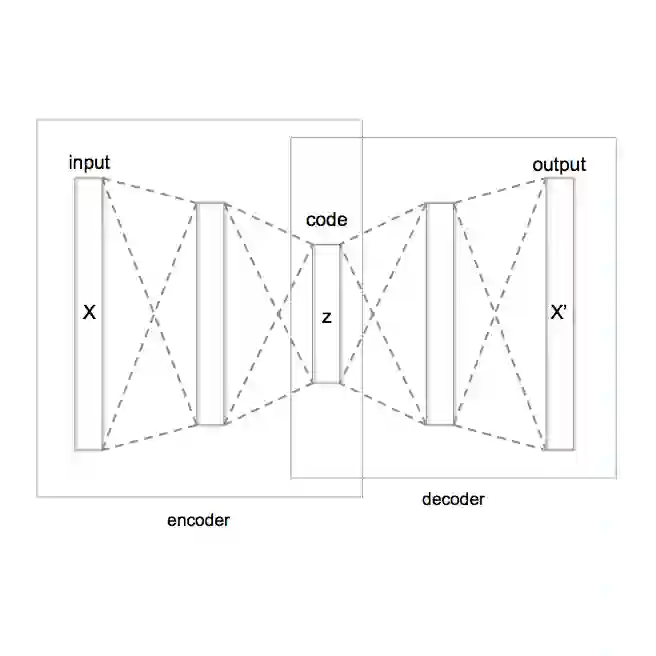
The use of trajectory data with abundant spatial-temporal information is pivotal in Intelligent Transport Systems (ITS) and various traffic system tasks. Location-Based Services (LBS) capitalize on this trajectory data to offer users personalized services tailored to their location information. However, this trajectory data contains sensitive information about users' movement patterns and habits, necessitating confidentiality and protection from unknown collectors. To address this challenge, privacy-preserving methods like K-anonymity and Differential Privacy have been proposed to safeguard private information in the dataset. Despite their effectiveness, these methods can impact the original features by introducing perturbations or generating unrealistic trajectory data, leading to suboptimal performance in downstream tasks. To overcome these limitations, we propose a Federated Variational AutoEncoder (FedVAE) approach, which effectively generates a new trajectory dataset while preserving the confidentiality of private information and retaining the structure of the original features. In addition, FedVAE leverages Variational AutoEncoder (VAE) to maintain the original feature space and generate new trajectory data, and incorporates Federated Learning (FL) during the training stage, ensuring that users' data remains locally stored to protect their personal information. The results demonstrate its superior performance compared to other existing methods, affirming FedVAE as a promising solution for enhancing data privacy and utility in location-based applications.
翻译:具有丰富时空信息的轨迹数据在智能交通系统(ITS)及各类交通系统任务中至关重要。基于位置的服务(LBS)利用这些轨迹数据,根据用户的位置信息提供个性化服务。然而,轨迹数据包含用户移动模式与习惯等敏感信息,需对未知收集者保密并加以保护。为解决此问题,已有研究提出如K-匿名和差分隐私等隐私保护方法以保障数据集中的隐私信息。尽管这些方法行之有效,但其通过引入扰动或生成不切实际的轨迹数据,可能影响原始特征,导致下游任务性能欠佳。为克服这些局限,我们提出一种联邦变分自编码器(FedVAE)方法,该方法能在保护隐私信息机密性的同时保留原始特征结构,从而有效生成新的轨迹数据集。此外,FedVAE利用变分自编码器(VAE)保持原始特征空间并生成新轨迹数据,并在训练阶段引入联邦学习(FL),确保用户数据本地存储以保护其个人信息。实验结果表明,相较于现有方法,FedVAE具有更优性能,证实了其作为提升基于位置应用的数据隐私性与实用性的有效解决方案的潜力。




相关内容




 微信扫码咨询专知VIP会员