

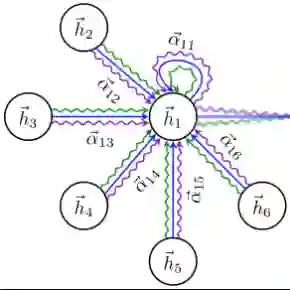
Cancer is the second leading cause of death, with chemotherapy as one of the primary forms of treatment. As a result, researchers are turning to drug combination therapy to decrease drug resistance and increase efficacy. Current methods of drug combination screening, such as in vivo and in vitro, are inefficient due to stark time and monetary costs. In silico methods have become increasingly important for screening drugs, but current methods are inaccurate and generalize poorly to unseen anticancer drugs. In this paper, I employ a geometric deep-learning model utilizing a graph attention network that is equivariant to 3D rotations, translations, and reflections with structural motifs. Additionally, the gene expression of cancer cell lines is utilized to classify synergistic drug combinations specific to each cell line. I compared the proposed geometric deep learning framework to current state-of-the-art (SOTA) methods, and the proposed model architecture achieved greater performance on all 12 benchmark tasks performed on the DrugComb dataset. Specifically, the proposed framework outperformed other SOTA methods by an accuracy difference greater than 28%. Based on these results, I believe that the equivariant graph attention network's capability of learning geometric data accounts for the large performance improvements. The model's ability to generalize to foreign drugs is thought to be due to the structural motifs providing a better representation of the molecule. Overall, I believe that the proposed equivariant geometric deep learning framework serves as an effective tool for virtually screening anticancer drug combinations for further validation in a wet lab environment. The code for this work is made available online at: https://github.com/WeToTheMoon/EGAT_DrugSynergy.
翻译:癌症是第二大死因,化疗是其主要治疗方式之一。因此,研究人员转向药物组合疗法以降低耐药性并提高疗效。目前的药物组合筛选方法(如体内和体外实验)由于高昂的时间和经济成本而效率低下。计算机模拟方法在药物筛选中日益重要,但现有方法准确性不足,且对未见过的抗癌药物泛化能力差。本文采用一种几何深度学习模型,该模型利用对三维旋转、平移和反射具有等变性的图注意力网络,并结合结构基序。此外,利用癌细胞系的基因表达数据,对特定于各细胞系的协同药物组合进行分类。我将所提出的几何深度学习框架与当前最先进方法进行了比较,在DrugComb数据集上执行的12项基准任务中,所提出的模型架构在所有任务上均取得了更优的性能。具体而言,该框架以超过28%的准确率优势优于其他最先进方法。基于这些结果,我认为等变图注意力网络学习几何数据的能力是性能大幅提升的原因。模型对未知药物的泛化能力被认为源于结构基序能提供更好的分子表征。总体而言,我相信所提出的等变几何深度学习框架可作为一种有效工具,用于虚拟筛选抗癌药物组合,以便在湿实验室环境中进一步验证。本工作的代码已在线发布:https://github.com/WeToTheMoon/EGAT_DrugSynergy。




相关内容


 微信扫码咨询专知VIP会员