

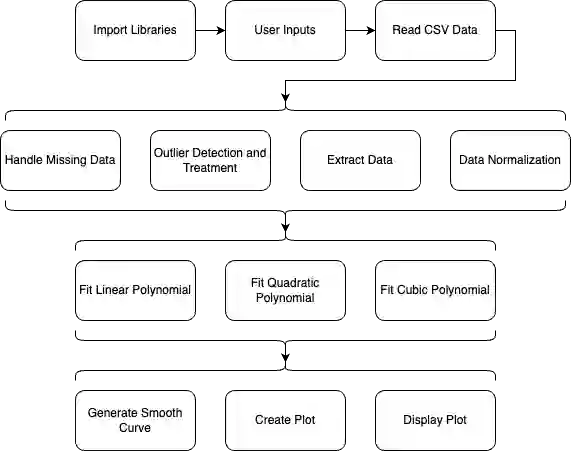
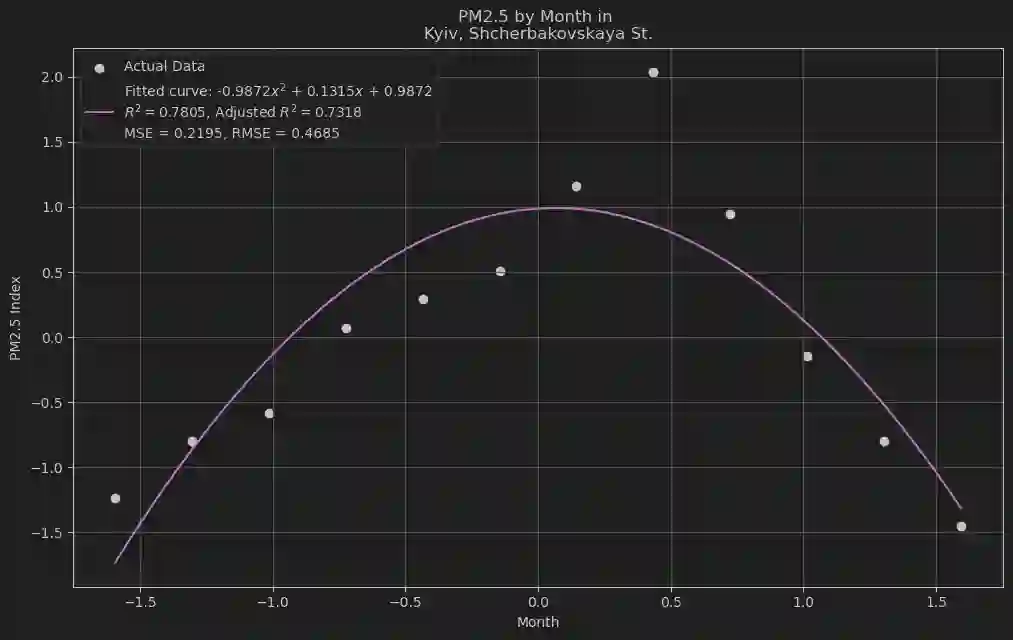
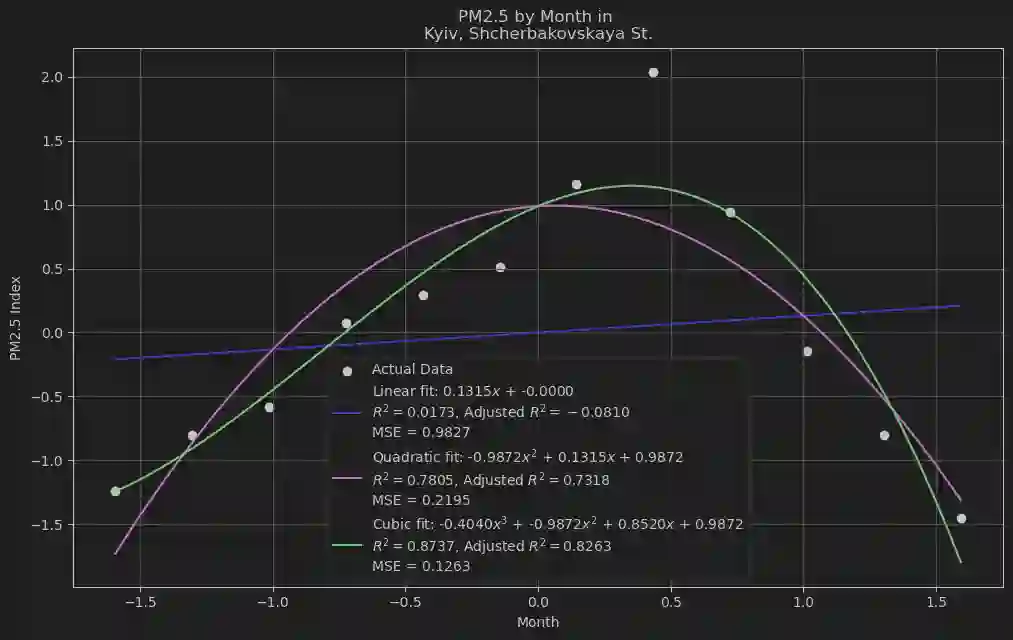
This research explores the application of quadratic polynomials in Python for advanced data analysis. The study demonstrates how quadratic models can effectively capture nonlinear relationships in complex datasets by leveraging Python libraries such as NumPy, Matplotlib, scikit-learn, and Pandas. The methodology involves fitting quadratic polynomials to the data using least-squares regression and evaluating the model fit using the coefficient of determination (R-squared). The results highlight the strong performance of the quadratic polynomial fit, as evidenced by high R-squared values, indicating the model's ability to explain a substantial proportion of the data variability. Comparisons with linear and cubic models further underscore the quadratic model's balance between simplicity and precision for many practical applications. The study also acknowledges the limitations of quadratic polynomials and proposes future research directions to enhance their accuracy and efficiency for diverse data analysis tasks. This research bridges the gap between theoretical concepts and practical implementation, providing an accessible Python-based tool for leveraging quadratic polynomials in data analysis.
翻译:本研究探讨了Python中二次多项式在高级数据分析中的应用。该研究展示了如何通过利用NumPy、Matplotlib、scikit-learn和Pandas等Python库,使二次模型能够有效捕捉复杂数据集中的非线性关系。方法包括使用最小二乘回归将二次多项式拟合到数据中,并通过决定系数(R平方)评估模型拟合度。结果突显了二次多项式拟合的优异性能,高R平方值证明了该模型能够解释数据变异性的显著部分。与线性和三次模型的比较进一步强调了二次模型在许多实际应用中简洁性与精确性之间的平衡。研究也承认了二次多项式的局限性,并提出了未来研究方向,以提升其在多样化数据分析任务中的准确性和效率。本研究弥合了理论概念与实际应用之间的差距,为在数据分析中利用二次多项式提供了一种易于使用的基于Python的工具。




相关内容





 微信扫码咨询专知VIP会员