

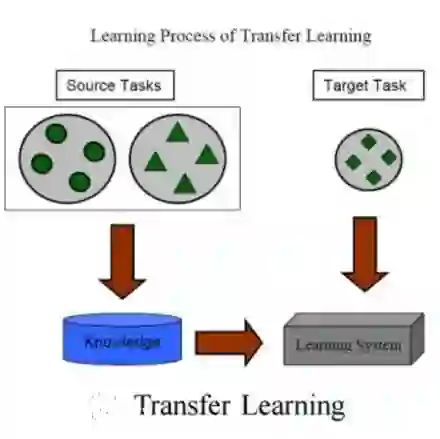
Deep learning architectures enhanced with human mobility data have been shown to improve the accuracy of short-term crime prediction models trained with historical crime data. However, human mobility data may be scarce in some regions, negatively impacting the correct training of these models. To address this issue, we propose a novel transfer learning framework for short-term crime prediction models, whereby weights from the deep learning crime prediction models trained in source regions with plenty of mobility data are transferred to target regions to fine-tune their local crime prediction models and improve crime prediction accuracy. Our results show that the proposed transfer learning framework improves the F1 scores for target cities with mobility data scarcity, especially when the number of months of available mobility data is small. We also show that the F1 score improvements are pervasive across different types of crimes and diverse cities in the US.
翻译:利用人类移动数据增强的深度学习架构已被证明能够提高基于历史犯罪数据训练的短期犯罪预测模型的准确性。然而,某些地区的人类移动数据可能较为匮乏,这会对这些模型的正确训练产生负面影响。为解决这一问题,我们提出了一种用于短期犯罪预测模型的新型迁移学习框架:将源区域(拥有充足移动数据)训练的深度学习犯罪预测模型的权重迁移至目标区域,以微调其本地犯罪预测模型,从而提升犯罪预测精度。我们的研究结果表明,所提出的迁移学习框架能够提高移动数据稀缺的目标城市的F1分数,特别是在可用移动数据月份数较少的情况下。我们还发现,F1分数的提升在美国不同类型的犯罪及多样化城市中具有普遍性。




相关内容




 微信扫码咨询专知VIP会员