

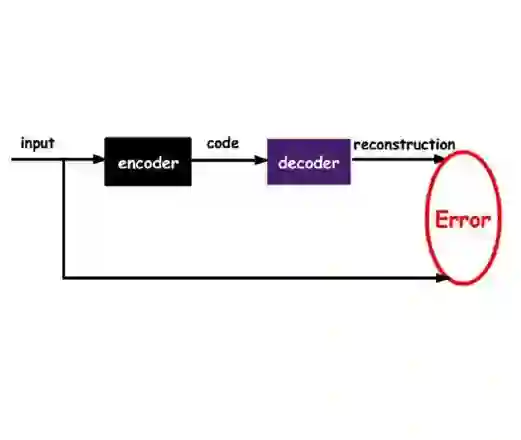
This study introduces a novel theoretical framework, the Stacked Autoencoder Evolution Hypothesis, which proposes that biological evolutionary systems operate through multi-layered self-encoding and decoding processes, analogous to stacked autoencoders in deep learning. Rather than viewing evolution solely as gradual changes driven by mutation and selection, this hypothesis suggests that self-replication inherently compresses and reconstructs genetic information across hierarchical layers of abstraction. This layered structure enables evolutionary systems to explore diverse possibilities not only at the sequence level but also across progressively more abstract layers of representation, making it possible for even simple mutations to navigate these higher-order spaces.Such a mechanism may explain punctuated evolutionary patterns and changes that can appear as if they are goal-directed in natural evolution, by allowing mutations at deeper latent layers to trigger sudden, large-scale phenotypic shifts. To illustrate the plausibility of this mechanism, artificial chemistry simulations were conducted, demonstrating the spontaneous emergence of hierarchical autoencoder structures. This framework offers a new perspective on the informational dynamics underlying both continuous and discontinuous evolutionary change.
翻译:本研究提出了一种新颖的理论框架——堆叠自编码器演化假说,该假说认为生物演化系统通过多层自编码与解码过程运作,类似于深度学习中的堆叠自编码器。该假说并非仅将演化视为突变和选择驱动的渐进变化,而是提出自我复制过程本质上在多个抽象层级上对遗传信息进行压缩与重建。这种分层结构使演化系统不仅能在序列层面探索多样性,还能在渐趋抽象的表示层级上进行探索,使得即使是简单突变也能在这些高阶空间中进行搜索。这种机制通过允许更深层潜在空间中的突变触发突然的、大规模表型跃迁,可能解释了自然演化中出现的间断平衡模式以及那些看似具有目标导向性的变化。为阐明该机制的合理性,本研究进行了人工化学模拟实验,证明了分层自编码器结构的自发涌现。该框架为理解连续与非连续演化变革背后的信息动力学提供了全新视角。




相关内容


 微信扫码咨询专知VIP会员