Visual Question Answering (VQA) has recently emerged as a potential research domain, captivating the interest of many in the field of artificial intelligence and computer vision. Despite the prevalence of approaches in English, there is a notable lack of systems specifically developed for certain languages, particularly Vietnamese. This study aims to bridge this gap by conducting comprehensive experiments on the Vietnamese Visual Question Answering (ViVQA) dataset, demonstrating the effectiveness of our proposed model. In response to community interest, we have developed a model that enhances image representation capabilities, thereby improving overall performance in the ViVQA system. Specifically, our model integrates the Bootstrapping Language-Image Pre-training with frozen unimodal models (BLIP-2) and the convolutional neural network EfficientNet to extract and process both local and global features from images. This integration leverages the strengths of transformer-based architectures for capturing comprehensive contextual information and convolutional networks for detailed local features. By freezing the parameters of these pre-trained models, we significantly reduce the computational cost and training time, while maintaining high performance. This approach significantly improves image representation and enhances the performance of existing VQA systems. We then leverage a multi-modal fusion module based on a general-purpose multi-modal foundation model (BEiT-3) to fuse the information between visual and textual features. Our experimental findings demonstrate that our model surpasses competing baselines, achieving promising performance. This is particularly evident in its accuracy of $71.04\%$ on the test set of the ViVQA dataset, marking a significant advancement in our research area. The code is available at https://github.com/nngocson2002/ViVQA.


翻译:视觉问答(VQA)近年来已成为一个极具潜力的研究领域,引起了人工智能与计算机视觉领域众多学者的关注。尽管针对英语的VQA方法已较为普遍,但专门为某些语言(尤其是越南语)开发的系统仍明显不足。本研究旨在通过基于越南语视觉问答(ViVQA)数据集开展全面实验,验证所提出模型的有效性,以填补这一空白。为响应学界需求,我们开发了一个增强图像表征能力的模型,从而提升ViVQA系统的整体性能。具体而言,该模型整合了基于冻结单模态模型的引导式语言-图像预训练框架(BLIP-2)与卷积神经网络EfficientNet,以提取并处理图像的局部与全局特征。这种融合充分发挥了基于Transformer的架构在捕获全面上下文信息方面的优势,以及卷积网络在提取精细局部特征方面的特长。通过冻结这些预训练模型的参数,我们在保持高性能的同时显著降低了计算成本与训练时间。该方法显著改善了图像表征质量,并提升了现有VQA系统的性能。随后,我们采用基于通用多模态基础模型(BEiT-3)的多模态融合模块,对视觉与文本特征进行信息融合。实验结果表明,我们的模型超越了现有基线方法,取得了令人瞩目的性能表现。在ViVQA数据集测试集上达到$71.04\%$的准确率,尤其凸显了本研究在领域内的重要进展。相关代码已发布于https://github.com/nngocson2002/ViVQA。


0
下载
关闭预览

相关内容

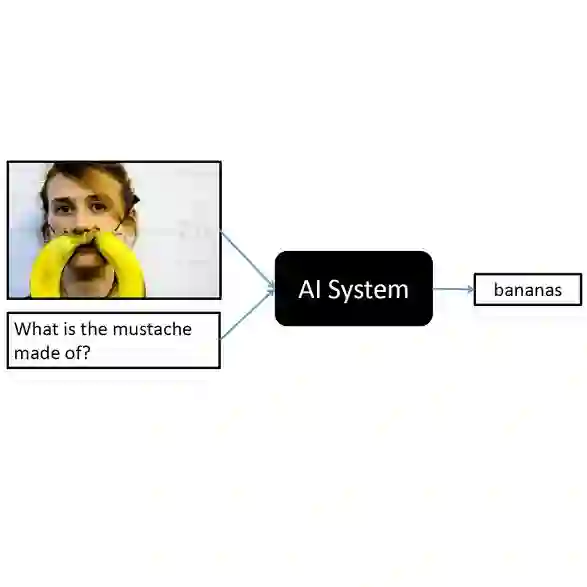
视觉问答(Visual Question Answering,VQA),是一种涉及计算机视觉和自然语言处理的学习任务。这一任务的定义如下: A VQA system takes as input an image and a free-form, open-ended, natural-language question about the image and produces a natural-language answer as the output[1]。 翻译为中文:一个VQA系统以一张图片和一个关于这张图片形式自由、开放式的自然语言问题作为输入,以生成一条自然语言答案作为输出。简单来说,VQA就是给定的图片进行问答。

知识荟萃

精品入门和进阶教程、论文和代码整理等

更多

查看相关VIP内容、论文、资讯等
FlowQA: Grasping Flow in History for Conversational Machine Comprehension
专知会员服务
34+阅读 · 2019年10月18日
Stabilizing Transformers for Reinforcement Learning
专知会员服务
60+阅读 · 2019年10月17日
《DeepGCNs: Making GCNs Go as Deep as CNNs》
专知会员服务
32+阅读 · 2019年10月17日
Keras François Chollet 《Deep Learning with Python 》, 386页pdf
专知会员服务
164+阅读 · 2019年10月12日
【SIGGRAPH2019】TensorFlow 2.0深度学习计算机图形学应用
专知会员服务
41+阅读 · 2019年10月9日
Hierarchically Structured Meta-learning
CreateAMind
27+阅读 · 2019年5月22日
Transferring Knowledge across Learning Processes
CreateAMind
29+阅读 · 2019年5月18日
强化学习的Unsupervised Meta-Learning
CreateAMind
18+阅读 · 2019年1月7日
Unsupervised Learning via Meta-Learning
CreateAMind
44+阅读 · 2019年1月3日
A Technical Overview of AI & ML in 2018 & Trends for 2019
待字闺中
18+阅读 · 2018年12月24日
STRCF for Visual Object Tracking
统计学习与视觉计算组
15+阅读 · 2018年5月29日
Hierarchical Imitation - Reinforcement Learning
CreateAMind
19+阅读 · 2018年5月25日
Focal Loss for Dense Object Detection
统计学习与视觉计算组
12+阅读 · 2018年3月15日
IJCAI | Cascade Dynamics Modeling with Attention-based RNN
KingsGarden
13+阅读 · 2017年7月16日
From Softmax to Sparsemax-ICML16(1)
KingsGarden
74+阅读 · 2016年11月26日
国家自然科学基金
2+阅读 · 2017年12月31日
国家自然科学基金
13+阅读 · 2017年12月31日
国家自然科学基金
2+阅读 · 2015年12月31日
国家自然科学基金
47+阅读 · 2015年12月31日
国家自然科学基金
2+阅读 · 2015年12月31日
国家自然科学基金
2+阅读 · 2015年12月31日
国家自然科学基金
0+阅读 · 2014年12月31日
国家自然科学基金
0+阅读 · 2014年12月31日
国家自然科学基金
2+阅读 · 2014年12月31日
Arxiv
29+阅读 · 2023年2月10日
Attentive Graph Neural Networks for Few-Shot Learning
Arxiv
40+阅读 · 2020年7月14日
VIP会员
最新内容
2025年大语言模型进展报告
专知会员服务
10+阅读 · 4月25日
多智能体协作机制
专知会员服务
10+阅读 · 4月25日
非对称优势:美海军开发低成本反无人机技术
专知会员服务
9+阅读 · 4月25日
《美战争部小企业创新研究(SBIR)计划》
专知会员服务
8+阅读 · 4月25日
《军事模拟:将军事条令与目标融入AI智能体》
专知会员服务
12+阅读 · 4月25日
【NTU博士论文】3D人体动作生成
专知会员服务
9+阅读 · 4月24日
以色列军事技术对美国军力发展的持续性赋能
专知会员服务
9+阅读 · 4月24日
《深度强化学习在兵棋推演中的应用》40页报告
专知会员服务
16+阅读 · 4月24日
《多域作战面临复杂现实》
专知会员服务
13+阅读 · 4月24日
《印度的多域作战:条令与能力发展》报告
专知会员服务
6+阅读 · 4月24日
相关资讯
Hierarchically Structured Meta-learning
CreateAMind
27+阅读 · 2019年5月22日
Transferring Knowledge across Learning Processes
CreateAMind
29+阅读 · 2019年5月18日
强化学习的Unsupervised Meta-Learning
CreateAMind
18+阅读 · 2019年1月7日
Unsupervised Learning via Meta-Learning
CreateAMind
44+阅读 · 2019年1月3日
A Technical Overview of AI & ML in 2018 & Trends for 2019
待字闺中
18+阅读 · 2018年12月24日
STRCF for Visual Object Tracking
统计学习与视觉计算组
15+阅读 · 2018年5月29日
Hierarchical Imitation - Reinforcement Learning
CreateAMind
19+阅读 · 2018年5月25日
Focal Loss for Dense Object Detection
统计学习与视觉计算组
12+阅读 · 2018年3月15日
IJCAI | Cascade Dynamics Modeling with Attention-based RNN
KingsGarden
13+阅读 · 2017年7月16日
From Softmax to Sparsemax-ICML16(1)
KingsGarden
74+阅读 · 2016年11月26日
相关基金
国家自然科学基金
2+阅读 · 2017年12月31日
国家自然科学基金
13+阅读 · 2017年12月31日
国家自然科学基金
2+阅读 · 2015年12月31日
国家自然科学基金
47+阅读 · 2015年12月31日
国家自然科学基金
2+阅读 · 2015年12月31日
国家自然科学基金
2+阅读 · 2015年12月31日
国家自然科学基金
0+阅读 · 2014年12月31日
国家自然科学基金
0+阅读 · 2014年12月31日
国家自然科学基金
2+阅读 · 2014年12月31日
Top
微信扫码咨询专知VIP会员