

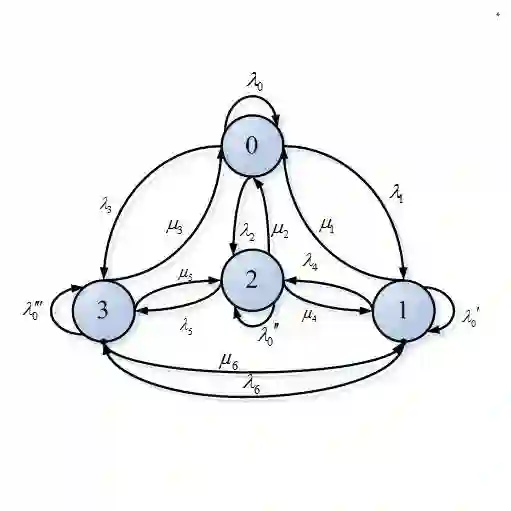
Trust management is a critical research pillar in Vehicular Ad Hoc Networks (VANETs), where the reliability of shared data depends entirely on driver integrity. In these networks, a driver's reputation is dynamically constructed based on the veracity of their recent message history: consistent reliability builds trust, while frequent misinformation leads to exclusion. This study analyses driver announcement characteristics by modelling behavioural transitions-specifically the frequency and nature of shifts between "good" and "bad" states. To facilitate this analysis, three distinct Markov chain-based behavioural models are evaluated with varying degrees of granularity: a 4-state model, a 7-state model, and a high-resolution 11-state model. By simulating announcement and reporting patterns, each model's ability to reflect nuanced behavioural shifts is assessed. Our results confirm that increasing the number of trust states significantly enhances the system's ability to capture complex, dynamic driver behaviours, providing a more robust framework for security in VANETs.
翻译:信任管理是车载自组织网络(VANETs)中的一个关键研究支柱,其中共享数据的可靠性完全取决于驾驶员的诚信度。在这些网络中,驾驶员的信誉是根据其近期消息历史的真实性动态构建的:持续可靠的行为建立信任,而频繁传播错误信息则会导致被排除。本研究通过建模行为转变——特别是“良好”与“不良”状态之间转换的频率与性质——来分析驾驶员公告特征。为便于分析,我们评估了三种具有不同粒度的、基于马尔可夫链的行为模型:一个4状态模型、一个7状态模型以及一个高分辨率的11状态模型。通过模拟公告与报告模式,评估了每个模型反映细微行为转变的能力。我们的结果证实,增加信任状态的数量能显著增强系统捕捉复杂、动态驾驶员行为的能力,从而为VANETs的安全性提供一个更稳健的框架。




相关内容

 微信扫码咨询专知VIP会员