

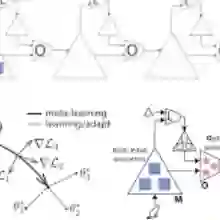
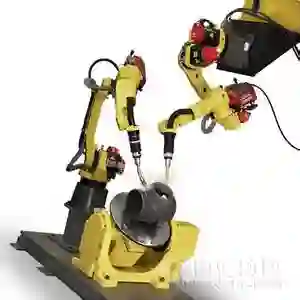
The assembly of printed circuit boards (PCBs) is one of the standard processes in chip production, directly contributing to the quality and performance of the chips. In the automated PCB assembly process, machine vision and coordinate localization methods are commonly employed to guide the positioning of assembly units. However, occlusion or poor lighting conditions can affect the effectiveness of machine vision-based methods. Additionally, the assembly of odd-form components requires highly specialized fixtures for assembly unit positioning, leading to high costs and low flexibility, especially for multi-variety and small-batch production. Drawing on these considerations, a vision-free, model-agnostic meta-method for compensating robotic position errors is proposed, which maximizes the probability of accurate robotic positioning through interactive feedback, thereby reducing the dependency on visual feedback and mitigating the impact of occlusions or lighting variations. The proposed method endows the robot with the capability to learn and adapt to various position errors, inspired by the human instinct for grasping under uncertainties. Furthermore, it is a self-adaptive method that can accelerate the robotic positioning process as more examples are incorporated and learned. Empirical studies show that the proposed method can handle a variety of odd-form components without relying on specialized fixtures, while achieving similar assembly efficiency to highly dedicated automation equipment. As of the writing of this paper, the proposed meta-method has already been implemented in a robotic-based assembly line for odd-form electronic components. Since PCB assembly involves various electronic components with different sizes, shapes, and functions, subsequent studies can focus on assembly sequence and assembly route optimization to further enhance assembly efficiency.
翻译:印刷电路板(PCB)组装是芯片生产中的标准工序之一,直接影响芯片的质量与性能。在自动化PCB组装过程中,通常采用机器视觉与坐标定位方法来引导组装单元的定位。然而,遮挡或光照条件不佳会影响基于机器视觉方法的有效性。此外,异形元件的组装需要高度专业化的夹具来实现组装单元定位,导致成本高昂且灵活性不足,尤其不利于多品种、小批量的生产模式。基于上述考量,本文提出一种无需视觉、模型无关的元学习方法用于补偿机器人位置误差,该方法通过交互反馈最大化机器人精准定位的概率,从而降低对视觉反馈的依赖,并减轻遮挡或光照变化的影响。该方法赋予机器人学习并适应各类位置误差的能力,其灵感来源于人类在不确定条件下抓取物体的本能。此外,这是一种自适应方法,能够随着更多样本的纳入与学习而加速机器人定位过程。实验研究表明,所提出的方法能够处理多种异形元件,且无需依赖专用夹具,同时实现与高度专业化自动化设备相当的组装效率。截至本文撰写时,该元学习方法已在基于机器人的异形电子元件组装线中得到实际应用。由于PCB组装涉及尺寸、形状与功能各异的电子元件,后续研究可聚焦于组装序列与组装路径的优化,以进一步提升组装效率。




相关内容



 微信扫码咨询专知VIP会员