

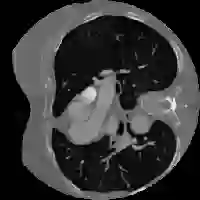
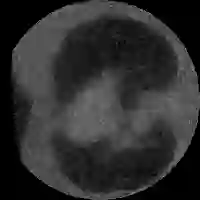
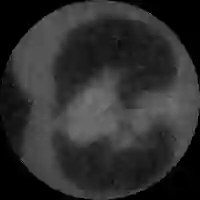
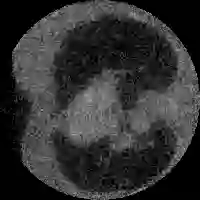
In imaging inverse problems with Poisson-distributed measurements, it is common to use objectives derived from the Poisson likelihood. But performance is often evaluated by mean squared error (MSE), which raises a practical question: how much does a Poisson objective matter for MSE, even at low dose? We analyze the MSE of Poisson and Gaussian surrogate reconstruction objectives under Poisson noise. In a stylized diagonal model, we show that the unregularized Poisson maximum-likelihood estimator can incur large MSE at low dose, while Poisson MAP mitigates this instability through regularization. We then study two Gaussian surrogate objectives: a heteroscedastic quadratic objective motivated by the normal approximation of Poisson data, and a homoscedastic quadratic objective that yields a simple linear estimator. We show that both surrogates can achieve MSE comparable to Poisson MAP in the low-dose regime, despite departing from the Poisson likelihood. Numerical computed tomography experiments indicate that these conclusions extend beyond the stylized setting of our theoretical analysis.
翻译:在具有泊松分布测量的成像逆问题中,通常使用源自泊松似然的目标函数。但性能常通过均方误差(MSE)评估,这引出一个实际问题:即使在低剂量下,泊松目标对MSE的影响有多大?我们分析了泊松噪声下泊松与高斯代理重建目标的MSE。在一个程式化的对角模型中,我们证明未正则化的泊松最大似然估计器在低剂量下可能产生较大MSE,而泊松最大后验概率估计通过正则化缓解了这种不稳定性。随后我们研究两种高斯代理目标:一种由泊松数据的正态近似导出的异方差二次目标,以及一种产生简单线性估计器的同方差二次目标。我们证明,尽管偏离了泊松似然,这两种代理目标在低剂量区域均可实现与泊松最大后验概率估计相当的MSE。数值计算机断层扫描实验表明,这些结论可推广至我们理论分析所设定的程式化场景之外。




相关内容


 微信扫码咨询专知VIP会员