

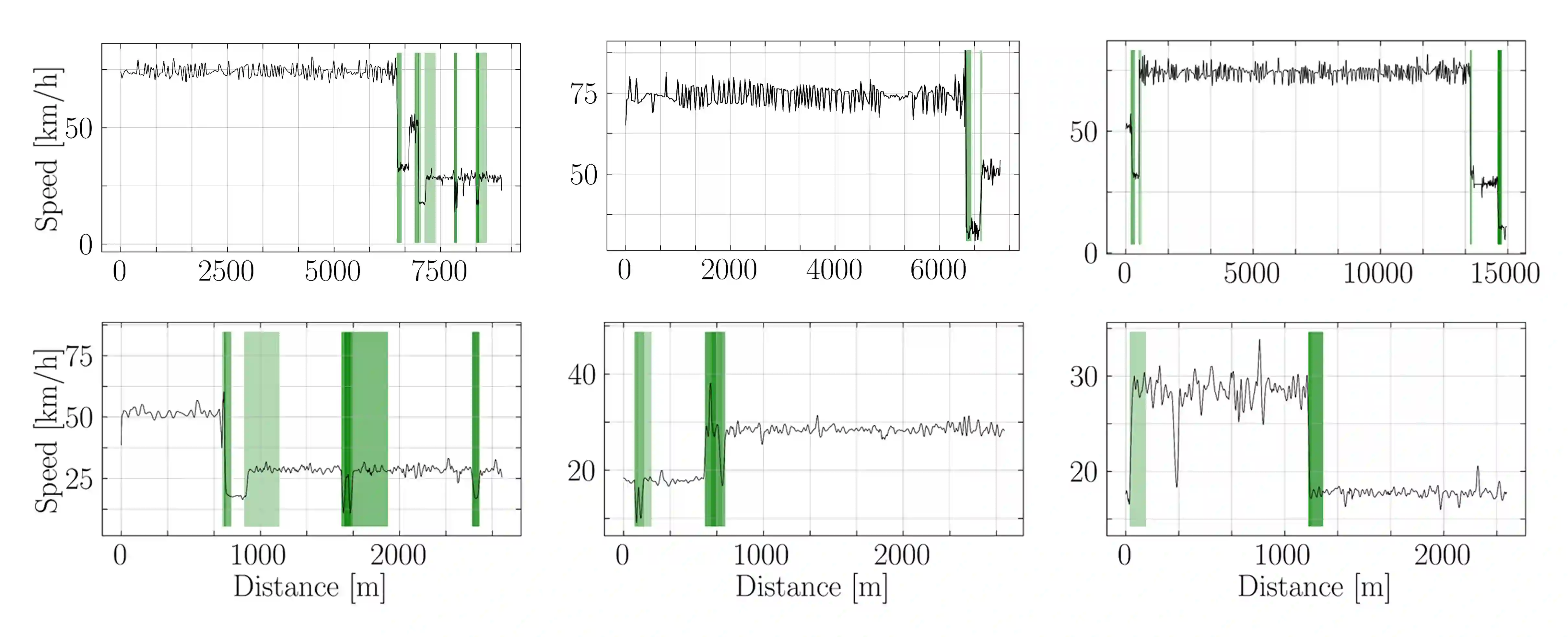
Automated Driving Systems (ADS) development relies on utilizing real-world vehicle data. The volume of data generated by modern vehicles presents transmission, storage, and computational challenges. Focusing on Dynamic Behavior (DB) offers a promising approach to distinguish relevant from irrelevant information for ADS functionalities, thereby reducing data. Time series pattern recognition is beneficial for this task as it can analyze the temporal context of vehicle driving behavior. However, existing state-of-the-art methods often lack the adaptability to identify variable-length patterns or provide analytical descriptions of discovered patterns. This contribution proposes a Behavior Forest framework for real-time data selection by constructing a Behavior Graph during vehicle operation, facilitating analytical descriptions without pre-training. The method demonstrates its performance using a synthetically generated and electrocardiogram data set. An automotive time series data set is used to evaluate the data reduction capabilities, in which this method discarded 96.01% of the incoming data stream, while relevant DB remain included.
翻译:自动驾驶系统(ADS)的开发依赖于利用真实世界的车辆数据。现代车辆产生的数据量在传输、存储和计算方面带来了挑战。聚焦于动态行为(DB)为区分与ADS功能相关及无关的信息提供了一种有前景的方法,从而减少数据量。时间序列模式识别对此任务有益,因为它可以分析车辆驾驶行为的时间上下文。然而,现有的最先进方法通常缺乏识别可变长度模式的适应性,或无法提供对发现模式的分析性描述。本文提出了一种行为森林框架,用于通过车辆运行期间构建行为图来实现实时数据选择,从而无需预训练即可促进分析性描述。该方法使用合成生成的数据集和心电图数据集展示了其性能。一个汽车时间序列数据集被用于评估数据缩减能力,其中该方法丢弃了96.01%的输入数据流,同时相关的动态行为仍被保留。




相关内容



 微信扫码咨询专知VIP会员