

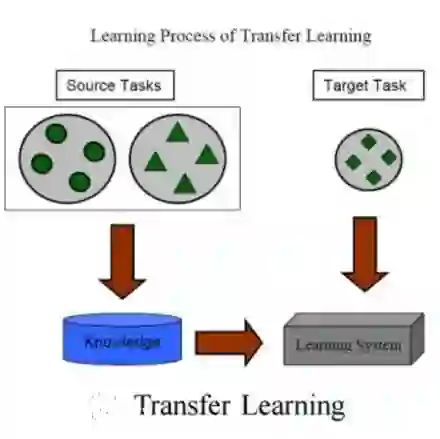
Human fingerprints serve as one unique and powerful characteristic for each person, from which policemen can recognize the identity. Similar to humans, many natural bodies and intrinsic mechanical qualities can also be uniquely identified from surface characteristics. To measure the elasto-plastic properties of one material, one formally sharp indenter is pushed into the measured body under constant force and retracted, leaving a unique residual imprint of the minute size from several micrometers to nanometers. However, one great challenge is how to map the optical image of this residual imprint into the real wanted mechanical properties, \ie, the tensile force curve. In this paper, we propose a novel method to use multi-fidelity neural networks (MFNN) to solve this inverse problem. We first build up the NN model via pure simulation data, and then bridge the sim-to-real gap via transfer learning. Considering the difficulty of collecting real experimental data, we use NN to dig out the unknown physics and also implant the known physics into the transfer learning framework, thus highly improving the model stability and decreasing the data requirement. The final constructed model only needs three-shot calibration of real materials. We tested the final model across 20 real materials and achieved satisfying accuracy. This work serves as one great example of applying machine learning into scientific research, especially under the constraints of data limitation and fidelity variance.
翻译:人类指纹是每个人独特且强大的特征,警察可通过它识别身份。与人类相似,许多自然物体及内在机械特性也可通过表面特征被唯一识别。为测量材料的弹塑性性能,研究人员将标准尖锐压头在恒定力作用下压入被测物体后回缩,留下从数微米到纳米量级的独特残余印痕。然而,如何将这种残余印痕的光学图像映射为实际所需的力学性能(即拉伸力曲线)仍是一大挑战。本文提出一种利用多保真度神经网络(MFNN)解决该逆问题的新方法。我们首先通过纯仿真数据构建神经网络模型,再借助迁移学习弥合仿真与真实场景的差异。考虑到真实实验数据采集的困难性,我们利用神经网络挖掘未知物理规律,并将已知物理知识植入迁移学习框架,从而显著提升模型稳定性并降低数据需求。最终构建的模型仅需三种真实材料的三次校准即可完成。我们在20种真实材料上测试了最终模型,达到了令人满意的精度。这项工作为机器学习在科学研究中的应用树立了典范,尤其在数据有限与保真度差异的约束条件下具有重要参考价值。




相关内容




 微信扫码咨询专知VIP会员