

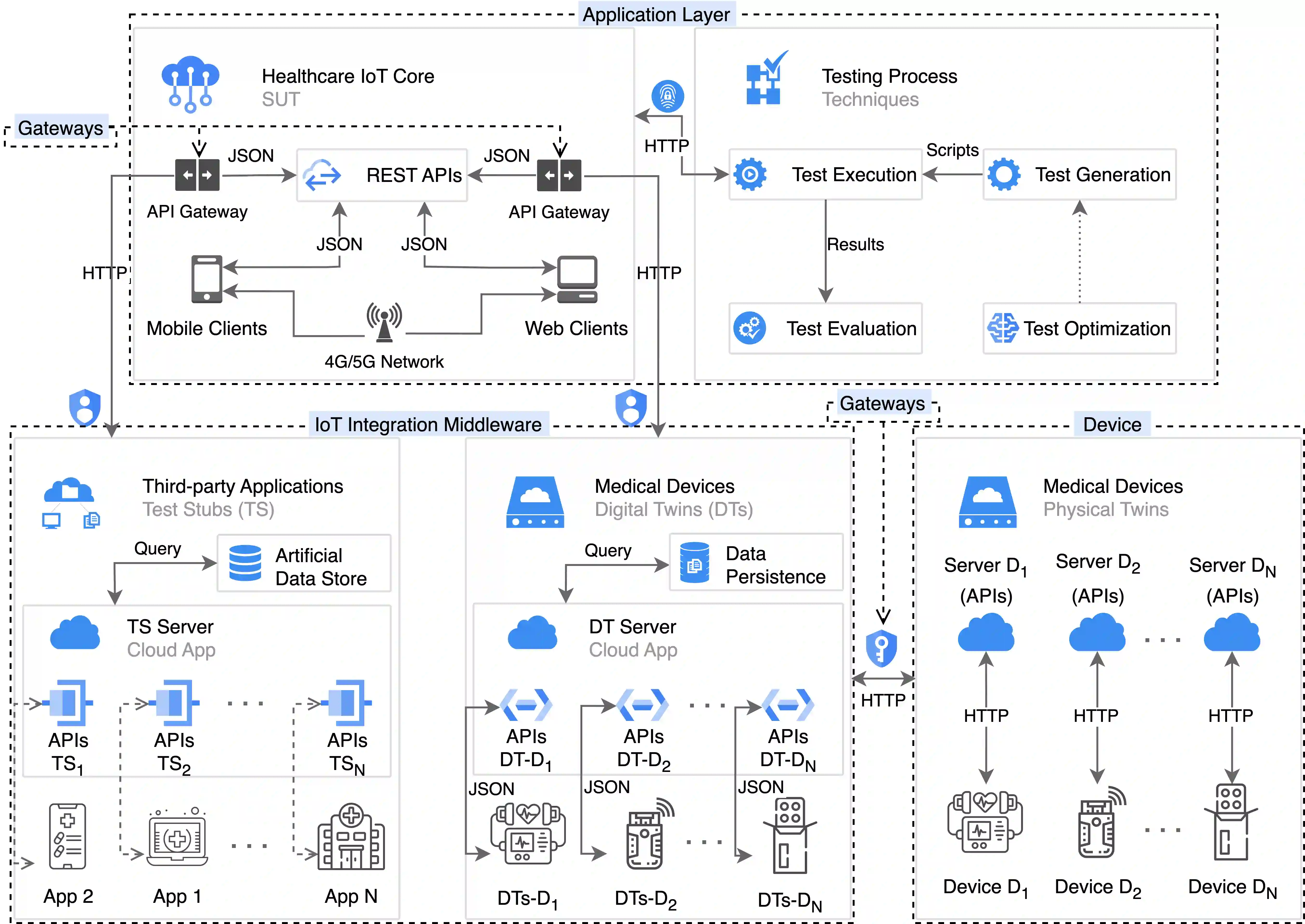
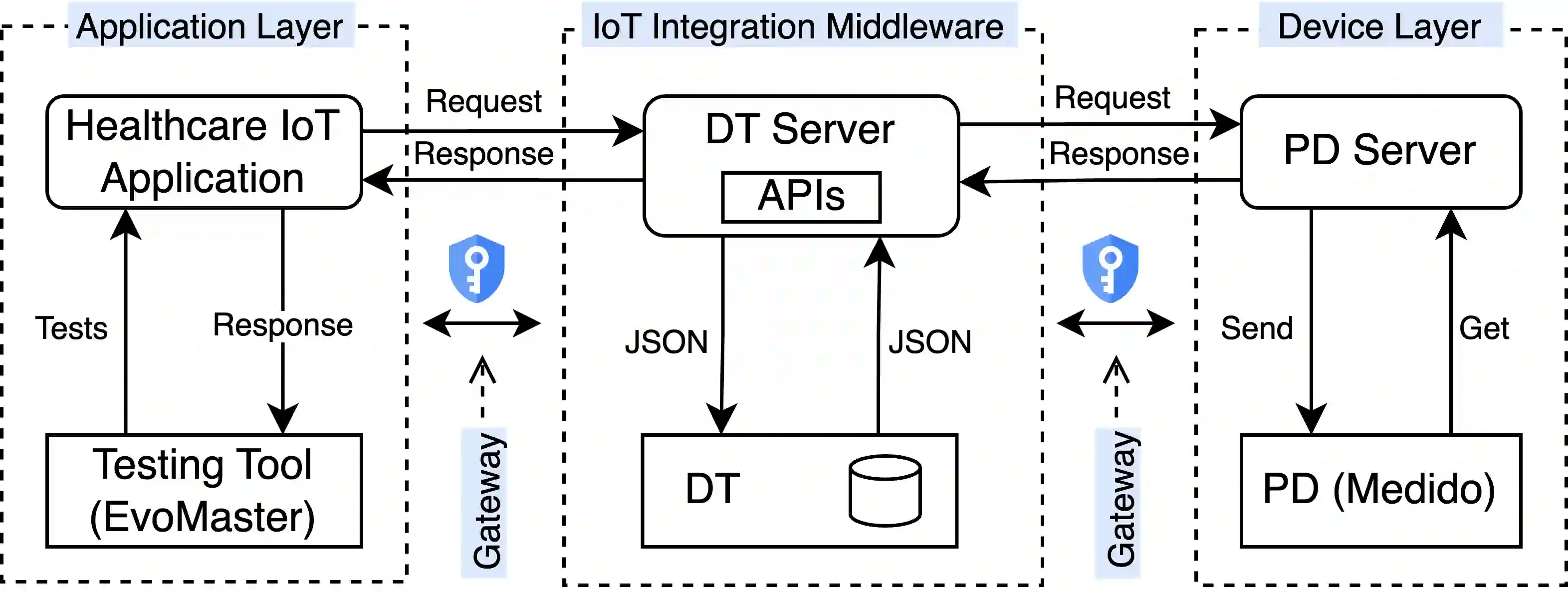
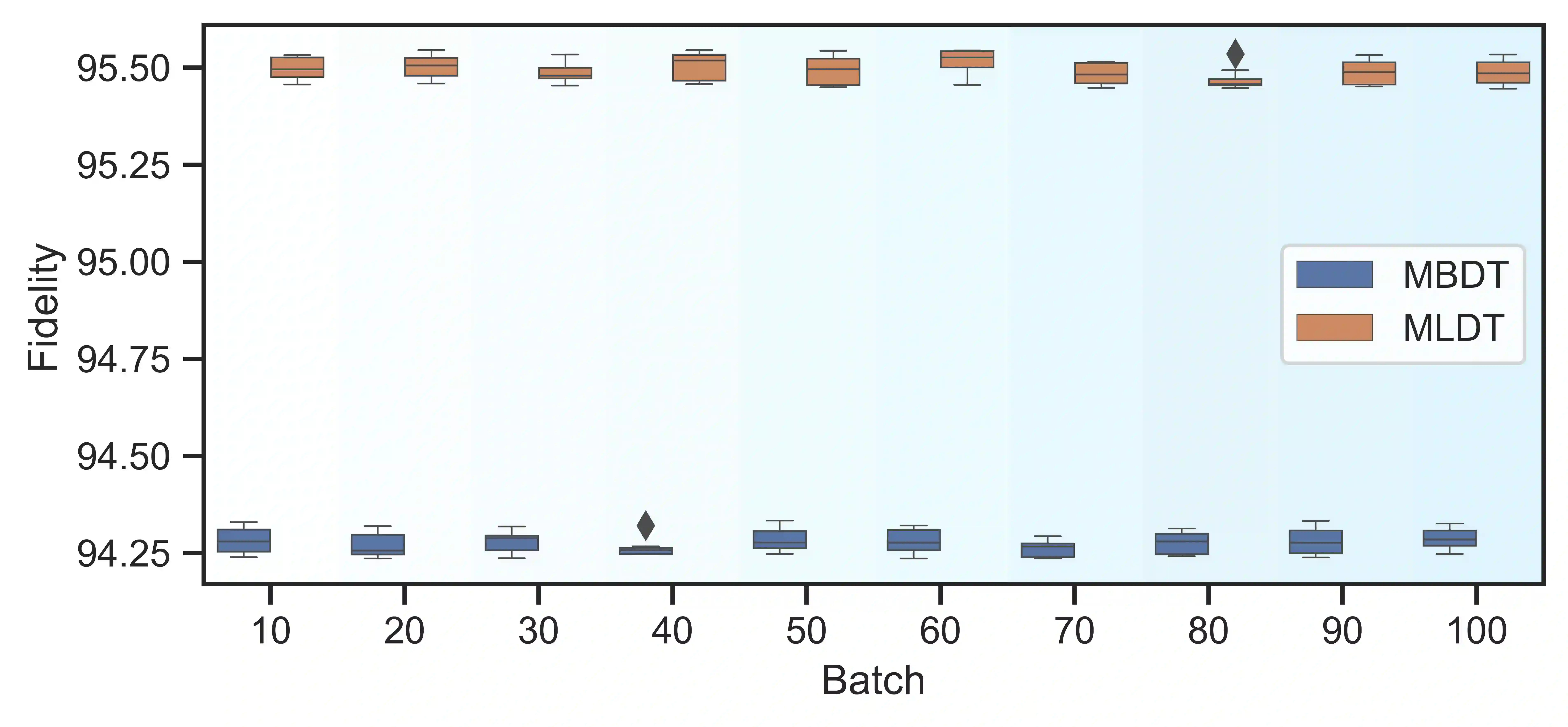
System-level testing of healthcare Internet of Things (IoT) applications requires creating a test infrastructure with integrated medical devices and third-party applications. A significant challenge in creating such test infrastructure is that healthcare IoT applications evolve continuously with the addition of new medical devices from different vendors and new services offered by different third-party organizations following different architectures. Moreover, creating test infrastructure with a large number of different types of medical devices is time-consuming, financially expensive, and practically infeasible. Oslo City's healthcare department faced these challenges while working with various healthcare IoT applications. To address these challenges, this paper presents a real-world test infrastructure software architecture (HITA) designed for healthcare IoT applications. We evaluated HITA's digital twin (DT) generation component implemented using model-based and machine learning (ML) approaches in terms of DT fidelity, scalability, and time cost of generating DTs. Results show that the fidelity of DTs created using model-based and ML approaches reach 94% and 95%, respectively. Results from operating 100 DTs concurrently show that the DT generation component is scalable and ML-based DTs have a higher time cost.
翻译:医疗物联网(IoT)应用的系统级测试需要构建一个集成医疗设备和第三方应用的测试基础设施。构建此类测试基础设施面临的一个重大挑战在于,医疗物联网应用会随着不同厂商的新医疗设备以及遵循不同架构的第三方组织提供的新服务而持续演进。此外,构建包含大量不同类型医疗设备的测试基础设施耗时、昂贵且实际上难以实现。奥斯陆市医疗部门在处理各类医疗物联网应用时便遇到了这些挑战。为应对这些挑战,本文提出了一种专为医疗物联网应用设计的真实世界测试基础设施软件架构(HITA)。我们评估了HITA中使用基于模型和机器学习(ML)方法实现的数字孪生(DT)生成组件,评估指标包括DT保真度、可扩展性以及生成DT的时间成本。结果表明,使用基于模型和ML方法创建的DT保真度分别达到94%和95%。同时运行100个DT的结果表明,DT生成组件具有良好的可扩展性,且基于ML的DT具有更高的时间成本。




相关内容




 微信扫码咨询专知VIP会员