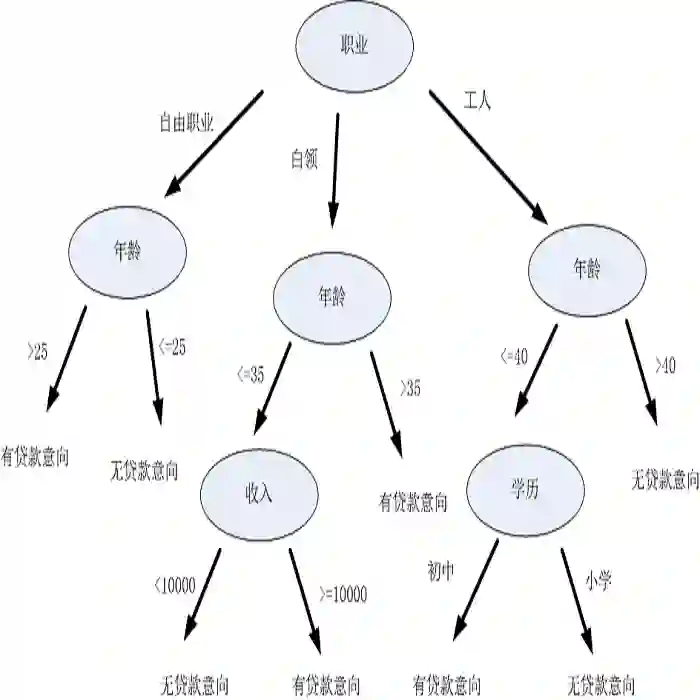
We study the problem of explainable k-medians clustering introduced by Dasgupta, Frost, Moshkovitz, and Rashtchian (2020). In this problem, the goal is to construct a threshold decision tree that partitions data into k clusters while minimizing the k-medians objective. These trees are interpretable because each internal node makes a simple decision by thresholding a single feature, allowing users to trace and understand how each point is assigned to a cluster. We present the first algorithm for explainable k-medians under lp norm for every finite p >= 1. Our algorithm achieves an O(p(log k)^{1 + 1/p - 1/p^2}) approximation to the optimal k-medians cost for any p >= 1. Previously, algorithms were known only for p = 1 and p = 2. For p = 2, our algorithm improves upon the existing bound of O(log^{3/2}k), and for p = 1, it matches the tight bound of log k + O(1) up to a multiplicative O(log log k) factor. We show how to implement our algorithm in a dynamic setting. The dynamic algorithm maintains an explainable clustering under a sequence of insertions and deletions, with amortized update time O(d log^3 k) and O(log k) recourse, making it suitable for large-scale and evolving datasets.


翻译:我们研究了由Dasgupta、Frost、Moshkovitz和Rashtchian(2020)提出的可解释k-中值聚类问题。在该问题中,目标在于构建一个阈值决策树,将数据划分为k个聚类,同时最小化k-中值目标函数。这些决策树具有可解释性,因为每个内部节点通过对单个特征进行阈值判断来做出简单决策,使用户能够追踪并理解每个数据点如何被分配到聚类中。我们提出了首个适用于所有有限p ≥ 1的lp范数下可解释k-中值聚类算法。该算法对任意p ≥ 1实现了与最优k-中值成本相比的O(p(log k)^{1 + 1/p - 1/p^2})近似比。此前,已知算法仅适用于p = 1和p = 2的情况。对于p = 2,我们的算法改进了现有的O(log^{3/2}k)界;对于p = 1,算法在乘法因子O(log log k)范围内达到了紧界log k + O(1)。我们进一步展示了如何在动态场景中实现该算法。该动态算法能够在数据插入和删除序列下维护可解释聚类,其摊销更新时间为O(d log^3 k),调整复杂度为O(log k),适用于大规模和动态演化的数据集。


0
下载
关闭预览

相关内容

在数学和计算机科学之中,算法(Algorithm)为一个计算的具体步骤,常用于计算、数据处理和自动推理。精确而言,算法是一个表示为有限长列表的有效方法。算法应包含清晰定义的指令用于计算函数。 来自维基百科: 算法
UnHiPPO:面向不确定性的状态空间模型初始化方法
专知会员服务
11+阅读 · 2025年6月6日
【ICML2024】基于正则化的持续学习的统计理论
专知会员服务
21+阅读 · 2024年6月11日
【CVPR2024】非自回归序列到序列的视觉-语言模型
专知会员服务
22+阅读 · 2024年3月5日
【CVPR2022】MSDN: 零样本学习的互语义蒸馏网络
专知会员服务
21+阅读 · 2022年3月8日
【ICLR2022】GNN-LM基于全局信息的图神经网络语义理解模型
NeurIPS 2021 | 寻找用于变分布泛化的隐式因果因子
专知会员服务
17+阅读 · 2021年12月7日
专知会员服务
19+阅读 · 2021年9月21日
专知会员服务
15+阅读 · 2021年8月29日
【NeurIPS2020】可处理的反事实推理的深度结构因果模型
专知会员服务
49+阅读 · 2020年9月28日
AAAI 2022 | ProtGNN:自解释图神经网络
专知
10+阅读 · 2022年2月28日
【ICML2021】因果匹配领域泛化
专知
12+阅读 · 2021年8月12日
【CVPR2021】跨模态检索的概率嵌入
专知
17+阅读 · 2021年3月2日
图节点嵌入(Node Embeddings)概述,9页pdf
专知
15+阅读 · 2020年8月22日
【NeurIPS2019】图变换网络:Graph Transformer Network
误差反向传播——CNN
统计学习与视觉计算组
31+阅读 · 2018年7月12日
MNIST入门:贝叶斯方法
Python程序员
23+阅读 · 2017年7月3日
国家自然科学基金
0+阅读 · 2016年12月31日
国家自然科学基金
1+阅读 · 2015年12月31日
国家自然科学基金
1+阅读 · 2015年12月31日
国家自然科学基金
0+阅读 · 2015年12月31日
国家自然科学基金
0+阅读 · 2015年12月31日
国家自然科学基金
0+阅读 · 2015年12月31日
国家自然科学基金
0+阅读 · 2014年12月31日
国家自然科学基金
0+阅读 · 2014年12月31日
国家自然科学基金
4+阅读 · 2014年12月31日
国家自然科学基金
0+阅读 · 2014年12月31日
Arxiv
18+阅读 · 2024年12月27日
A Survey of Large Language Models
Arxiv
499+阅读 · 2023年3月31日
VIP会员
相关VIP内容
UnHiPPO:面向不确定性的状态空间模型初始化方法
专知会员服务
11+阅读 · 2025年6月6日
【ICML2024】基于正则化的持续学习的统计理论
专知会员服务
21+阅读 · 2024年6月11日
【CVPR2024】非自回归序列到序列的视觉-语言模型
专知会员服务
22+阅读 · 2024年3月5日
【CVPR2022】MSDN: 零样本学习的互语义蒸馏网络
专知会员服务
21+阅读 · 2022年3月8日
【ICLR2022】GNN-LM基于全局信息的图神经网络语义理解模型
NeurIPS 2021 | 寻找用于变分布泛化的隐式因果因子
专知会员服务
17+阅读 · 2021年12月7日
专知会员服务
19+阅读 · 2021年9月21日
专知会员服务
15+阅读 · 2021年8月29日
【NeurIPS2020】可处理的反事实推理的深度结构因果模型
专知会员服务
49+阅读 · 2020年9月28日
相关资讯
AAAI 2022 | ProtGNN:自解释图神经网络
专知
10+阅读 · 2022年2月28日
【ICML2021】因果匹配领域泛化
专知
12+阅读 · 2021年8月12日
【CVPR2021】跨模态检索的概率嵌入
专知
17+阅读 · 2021年3月2日
图节点嵌入(Node Embeddings)概述,9页pdf
专知
15+阅读 · 2020年8月22日
【NeurIPS2019】图变换网络:Graph Transformer Network
误差反向传播——CNN
统计学习与视觉计算组
31+阅读 · 2018年7月12日
MNIST入门:贝叶斯方法
Python程序员
23+阅读 · 2017年7月3日
相关基金
国家自然科学基金
0+阅读 · 2016年12月31日
国家自然科学基金
1+阅读 · 2015年12月31日
国家自然科学基金
1+阅读 · 2015年12月31日
国家自然科学基金
0+阅读 · 2015年12月31日
国家自然科学基金
0+阅读 · 2015年12月31日
国家自然科学基金
0+阅读 · 2015年12月31日
国家自然科学基金
0+阅读 · 2014年12月31日
国家自然科学基金
0+阅读 · 2014年12月31日
国家自然科学基金
4+阅读 · 2014年12月31日
国家自然科学基金
0+阅读 · 2014年12月31日
Top
微信扫码咨询专知VIP会员